Vegetables and starchy roots
White mushrooms
Mushrooms are 92% water, so 100 g (3.5 oz) brings only 22 kcal and 1 g of fiber.
Estimated satietyHow it is calculated
Estimated satiety: 5 out of 5
| Starting point | +1 |
|---|---|
| Very low energy density | +2 |
| A lot of protein per calorie | +2 |
| A lot of fiber per calorie | +2 |
| High water content | +1 |
| Sum | 8 |
| Capped at 5 | 5 |
Our own estimate from the values per 100 g: useful for comparing foods with each other, not a measurement in people. Holt index (1995): this food was not measured.
- Prepared by
- Alex Gonzalez
- Last updated
- Next review
- Sources
- 8 primary
- Data
- USDA FDC 169251
No clinical review. No advertising from drug companies and no affiliate links.How we work
Nutrition facts
- Calories
- 22 kcal per serving
- 22 kcal per 100 g (3.5 oz)
- Protein
- 3.1 g per serving
- 3.1 g per 100 g (3.5 oz)
- Carbohydrates
- 3.3 g per serving
- 3.3 g per 100 g (3.5 oz)
- of which sugars
- 2 g per serving
- 2 g per 100 g (3.5 oz)
- Fiber
- 1 g per serving
- 1 g per 100 g (3.5 oz)
- Fat
- 0.3 g per serving
- 0.3 g per 100 g (3.5 oz)
- of which saturated
- 0.1 g per serving
- 0.1 g per 100 g (3.5 oz)
- Water
- 92.4 g per serving
- 92.4 g per 100 g (3.5 oz)
Source: USDA FoodData Central: Mushrooms, white, raw (FDC ID 169251), accessed September 23, 2026.
A typical 100 g (3.5 oz, about 1 1/2 cups) serving provides about 22 kcal, 3.1 g of protein, and 1 g of fiber.
What it is and how to eat it
The button mushroom (Agaricus bisporus) is the most common cultivated mushroom; brown or cremini mushrooms and portobellos, which are the same mushroom left to grow larger, belong to the same species. In Spain the name champiñón is kept for this species and other kinds, such as oyster mushrooms, are called setas, while much of Latin America speaks of hongos or champiñones. This page covers raw white mushrooms, with 22 kcal, 3.09 g of protein and 92.4 g of water per 100 g according to USDA.
A 100 g (3.5 oz) serving provides 22 kcal, 3.1 g of protein and 1 g of fiber, so it adds volume and flavor but is not enough as the protein part of the plate; with eggs, seafood or tofu it rounds it out, as in the scrambled eggs with mushrooms and shrimp, the egg white scramble with mushrooms or the stir-fried tofu with vegetables and brown rice. The 2025 nutrition advisory on GLP-1 therapy suggests starting meals with protein, so if you eat little, let the mushrooms take up the smaller part of the plate. The US National Institutes of Health list mushrooms among the foods that contain FODMAPs, carbohydrates that are hard to digest, and gas and abdominal bloating are common with semaglutide (Wegovy) in its 68-week trials, according to its label; if you notice they do not agree with you, try half a serving.
What the evidence says
Regular mushrooms have hardly any vitamin D, 0.2 µg per 100 g according to USDA, but mushrooms exposed to ultraviolet light reach 26.2 µg, and the Office of Dietary Supplements at the US National Institutes of Health explains that some mushrooms on the market are treated with UV light to increase their vitamin D2. At 0.2 µg, regular mushrooms fall short of the 0.75 µg per 100 g, 15% of the EU's 5 µg reference value, required for a "source of vitamin D" claim (Regulations (EC) No 1924/2006 and (EU) No 1169/2011). Protein provides more than half of their few calories, 14 g per 100 kcal, so they meet the 20% of energy the EU requires for a "high protein" claim, even though a 100 g serving provides only 3.1 g. I have not found trials showing that mushrooms themselves help with weight loss more than other low-calorie vegetables.
Recipes with this food
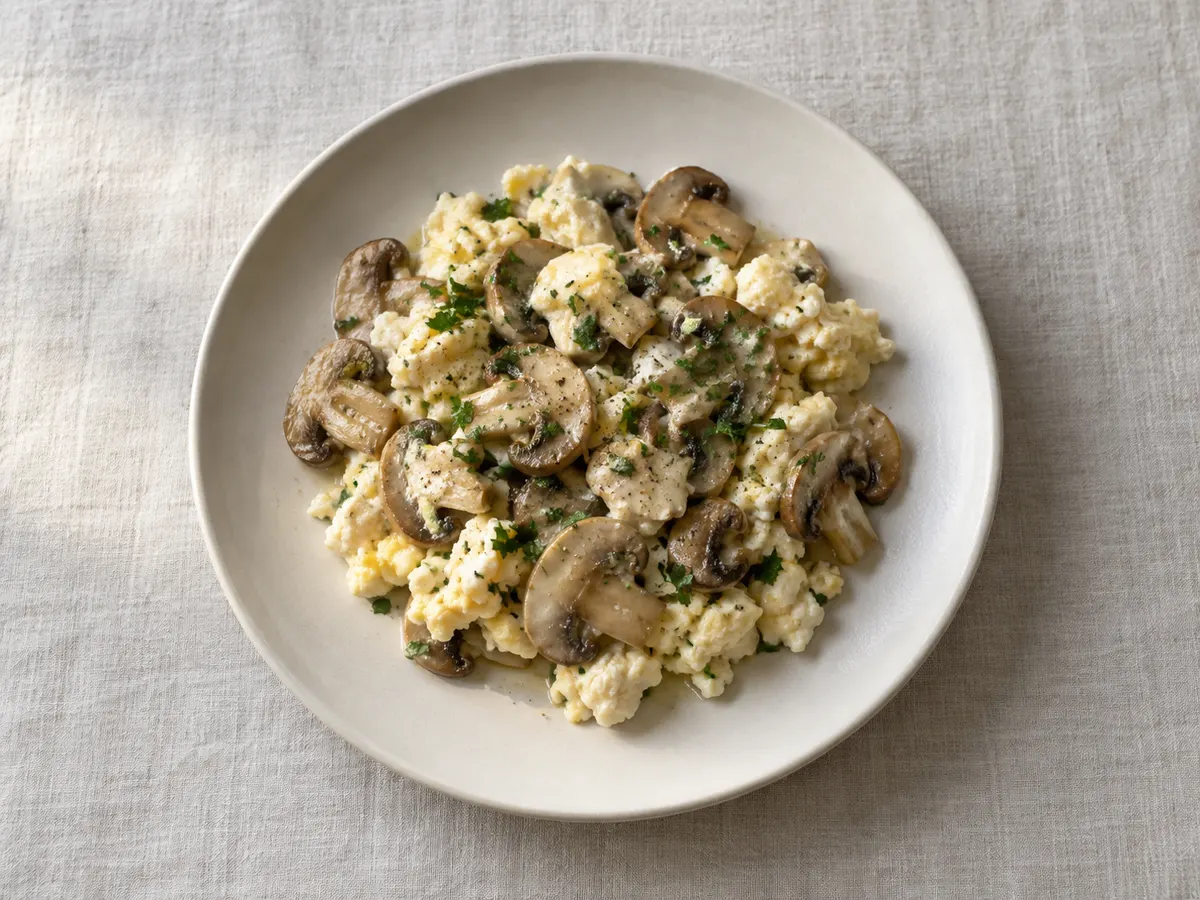 Egg white scramble with mushrooms23.1 g protein per serving
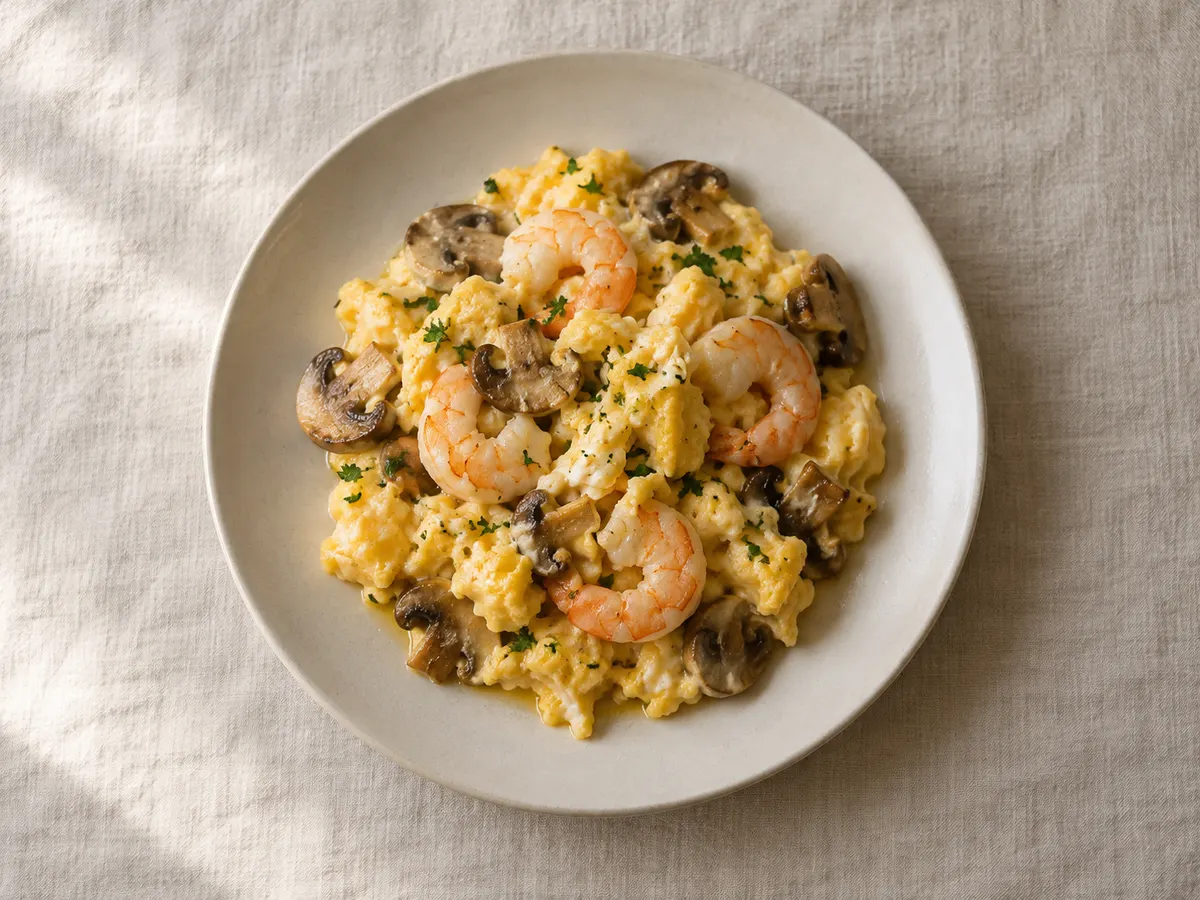 Scrambled eggs with mushrooms and shrimp30.6 g protein per serving
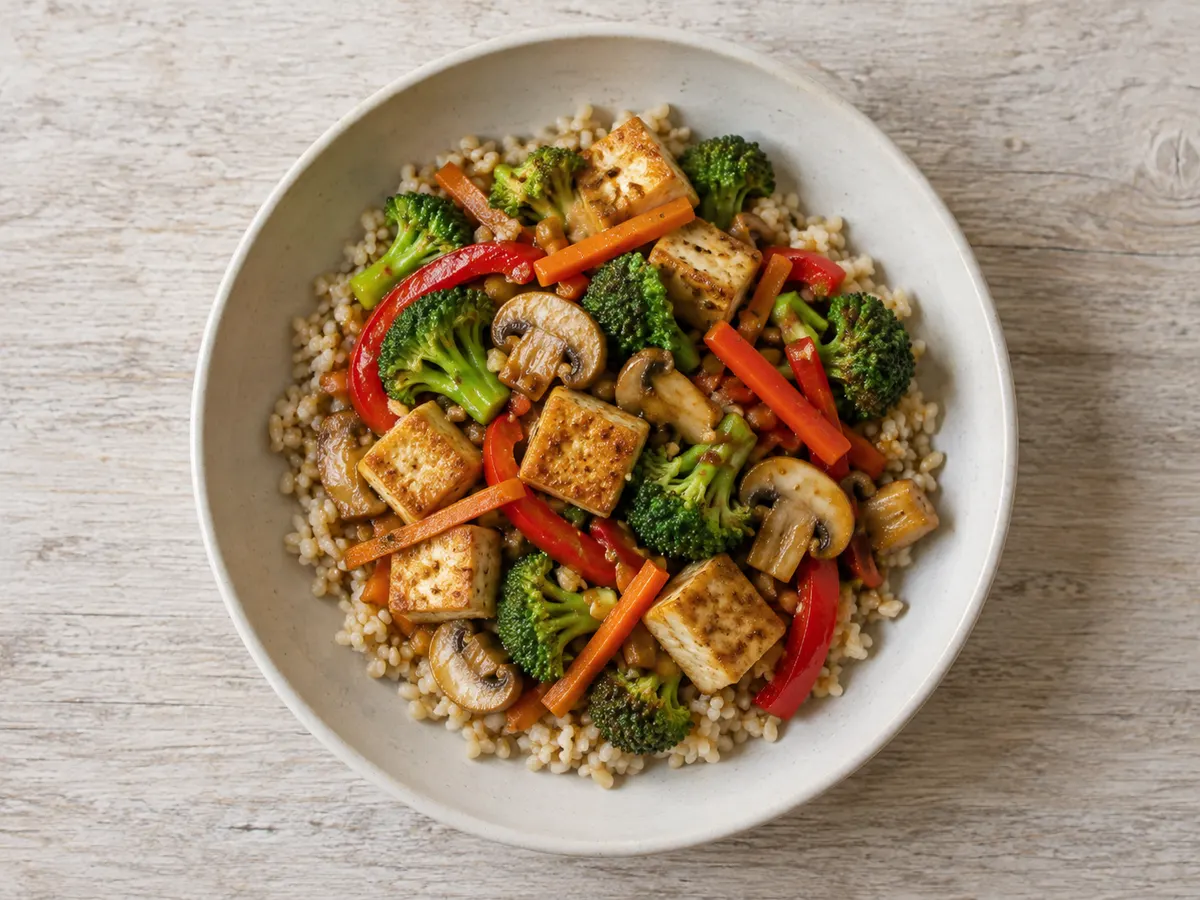 Stir-fried tofu with vegetables and brown rice18.6 g protein per serving
Satiety
The 1 to 5 score is our own estimate: it starts at 1 point, adds points for low energy density, for protein and fiber per 100 kcal, and for the water in solid foods, and subtracts points for drinks with calories. It is useful for comparing foods with each other; it is not a measurement in people.
What to keep in mind on a GLP-1 medication
Frequently asked questions about mushrooms
How many grams of protein are in a 100 g (3.5 oz) serving of mushrooms?
100 g (3.5 oz) of mushrooms has 3.1 g of protein. A typical 100 g (3.5 oz) serving has about 3.1 g of protein. That is 14 g of protein per 100 kcal.
How many kcal are in a 100 g (3.5 oz) serving of mushrooms?
100 g (3.5 oz) of mushrooms has 22 kcal. A typical 100 g (3.5 oz) serving has about 22 kcal. That is a very low energy density.
How much fiber is in a 100 g (3.5 oz) serving of mushrooms?
100 g (3.5 oz) of mushrooms has 1 g of fiber. A typical 100 g (3.5 oz) serving has about 1 g of fiber.
Do mushrooms keep you full?
Yes, very filling for the calories they provide: our estimated satiety score is 5 out of 5. It is based on: very low energy density; a lot of protein per calorie; a lot of fiber per calorie; high water content. It is an estimate based on its composition, not a measurement in people.
How do mushrooms fit into eating on Ozempic, Wegovy, Mounjaro, or Zepbound?
Based on our tags, this is what matters about mushrooms on a GLP-1 medication. “Low energy density”: plenty of volume for few calories; make sure it does not push protein foods off your plate. “Hydrating”: a lot of water, which contributes to hydration when you eat and drink less. These are general guidelines, not medical advice: everyone tolerates foods differently.
What is a typical serving of mushrooms?
We use 100 g (3.5 oz) as a typical serving, about 1 1/2 cups. That amount provides about 22 kcal, 3.1 g of protein, and 1 g of fiber. It is a reference for calculations, not a recommendation of how much to eat.
Similar foods
Sources
Sources for the data on this page, with the access date.
- Official databaseU.S. Department of Agriculture, Agricultural Research Service.USDA FoodData Central: Mushrooms, white, raw (FDC ID 169251).accessed .
- Official databaseU.S. Department of Agriculture, Agricultural Research Service.USDA FoodData Central: Mushroom, white, exposed to ultraviolet light, raw (FDC ID 169376).accessed .
- Clinical guidelineObesity (Wiley).Mozaffarian D, et al. Nutritional priorities to support GLP-1 therapy for obesity: A joint Advisory from the American College of Lifestyle Medicine, the American Society for Nutrition, the Obesity Medicine Association, and The Obesity Society. Obesity. 2025;33(8):1475-1503. doi:10.1002/oby.24336.accessed .
- InstitutionNational Institute of Diabetes and Digestive and Kidney Diseases (NIH).Eating, Diet, & Nutrition for Irritable Bowel Syndrome (low FODMAP diet).accessed .
- Drug labelEuropean Medicines Agency.Wegovy (semaglutide): EU Summary of Product Characteristics, section 4.8 (undesirable effects), current version.accessed .
- InstitutionNIH Office of Dietary Supplements.Vitamin D: Fact Sheet for Health Professionals.accessed .
- RegulatorOfficial Journal of the European Union (EUR-Lex).Regulation (EC) No 1924/2006 on nutrition and health claims made on foods (Annex).accessed .
- RegulatorOfficial Journal of the European Union (EUR-Lex).Regulation (EU) No 1169/2011 on the provision of food information to consumers (Annex XIII, nutrient reference values).accessed .