Vegetables and starchy roots
Spinach
Spinach is 91% water, so 100 g (3.5 oz) brings only 23 kcal and 2.2 g of fiber.
Estimated satietyHow it is calculated
Estimated satiety: 5 out of 5
| Starting point | +1 |
|---|---|
| Very low energy density | +2 |
| A lot of protein per calorie | +2 |
| A lot of fiber per calorie | +2 |
| High water content | +1 |
| Sum | 8 |
| Capped at 5 | 5 |
Our own estimate from the values per 100 g: useful for comparing foods with each other, not a measurement in people. Holt index (1995): this food was not measured.
- Prepared by
- Alex Gonzalez
- Last updated
- Next review
- Sources
- 7 primary and 1 supporting
- Data
- USDA FDC 168462
No clinical review. No advertising from drug companies and no affiliate links.How we work
Nutrition facts
- Calories
- 23 kcal per serving
- 23 kcal per 100 g (3.5 oz)
- Protein
- 2.9 g per serving
- 2.9 g per 100 g (3.5 oz)
- Carbohydrates
- 3.6 g per serving
- 3.6 g per 100 g (3.5 oz)
- of which sugars
- 0.4 g per serving
- 0.4 g per 100 g (3.5 oz)
- Fiber
- 2.2 g per serving
- 2.2 g per 100 g (3.5 oz)
- Fat
- 0.4 g per serving
- 0.4 g per 100 g (3.5 oz)
- of which saturated
- 0.1 g per serving
- 0.1 g per 100 g (3.5 oz)
- Water
- 91.4 g per serving
- 91.4 g per 100 g (3.5 oz)
Source: USDA FoodData Central: Spinach, raw (FDC ID 168462), accessed September 23, 2026.
A typical 100 g (3.5 oz, about 3 1/4 cups) serving provides about 23 kcal, 2.9 g of protein, and 2.2 g of fiber.
What it is and how to eat it
Spinach (Spinacia oleracea) is a leafy vegetable sold fresh in bunches, in bags of prewashed tender leaves, sometimes labeled baby spinach, and frozen, as leaves or portions. Raw it takes up a lot of space, and cooking shrinks it to a fraction of its volume. This page covers raw spinach, with 23 kcal, 2.86 g of protein, 2.2 g of fiber and 2.71 mg of iron per 100 g according to USDA.
A 100 g (3.5 oz) raw serving, a large bowl, provides only 23 kcal and 2.2 g of fiber, so it adds volume with few calories and is best served with protein, as in the French omelet with spinach and queso fresco, the baked egg whites with spinach and ricotta or the mild chicken curry with yogurt and spinach. Sautéed or pureed, it takes up much less space, which helps when appetite is small. The 2025 nutrition advisory on GLP-1 therapy suggests increasing fiber gradually, so in the first few days of treatment and after a dose increase it may sit better cooked than in a large salad. If you take a blood thinner such as warfarin, the Office of Dietary Supplements at the US National Institutes of Health advises getting about the same amount of vitamin K every day, and raw spinach has 483 µg per 100 g according to USDA, so any change in how much you eat is worth discussing with your doctor.
What the evidence says
The iron in spinach, like that in all plant foods, is nonheme iron, which is absorbed less well than the heme iron in meat and fish: according to the same NIH office, the body absorbs about 14% to 18% of the iron from mixed diets with substantial meat, seafood and vitamin C, which enhance nonheme iron absorption, and 5% to 12% from vegetarian diets. With 2.71 mg per 100 g it meets the 2.1 mg minimum for a "source of iron" claim in the EU (Regulations (EC) No 1924/2006 and (EU) No 1169/2011). A 1999 review places spinach among the common foods highest in oxalate, which binds calcium and other minerals, although soaking and cooking lower its content and eating it occasionally as part of a varied diet poses no particular problem (Asia Pacific Journal of Clinical Nutrition). In a trial with 13 healthy adults, 5.1% of the calcium in spinach was absorbed, against 27.6% of the calcium in milk (American Journal of Clinical Nutrition, 1988).
Recipes with this food
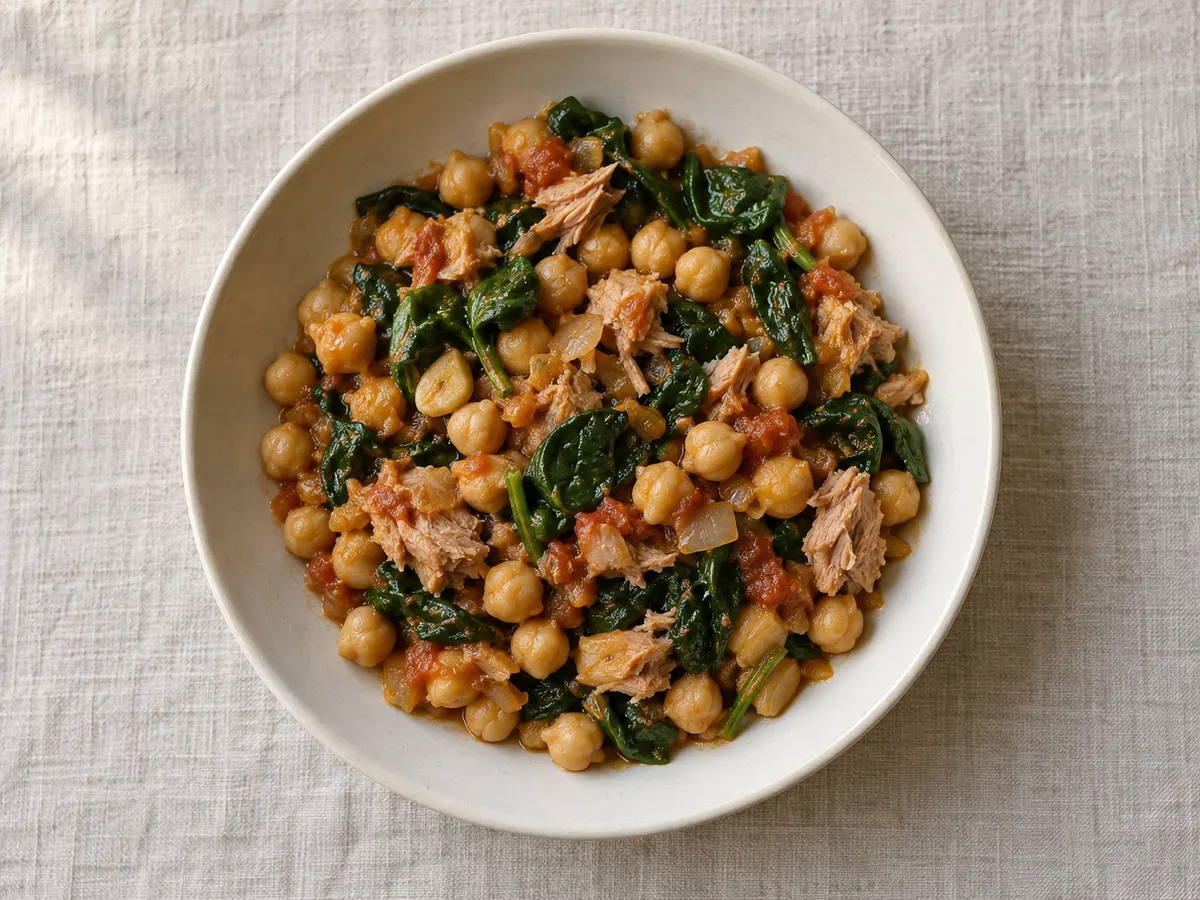 Sautéed chickpeas with spinach and tuna30.9 g protein per serving
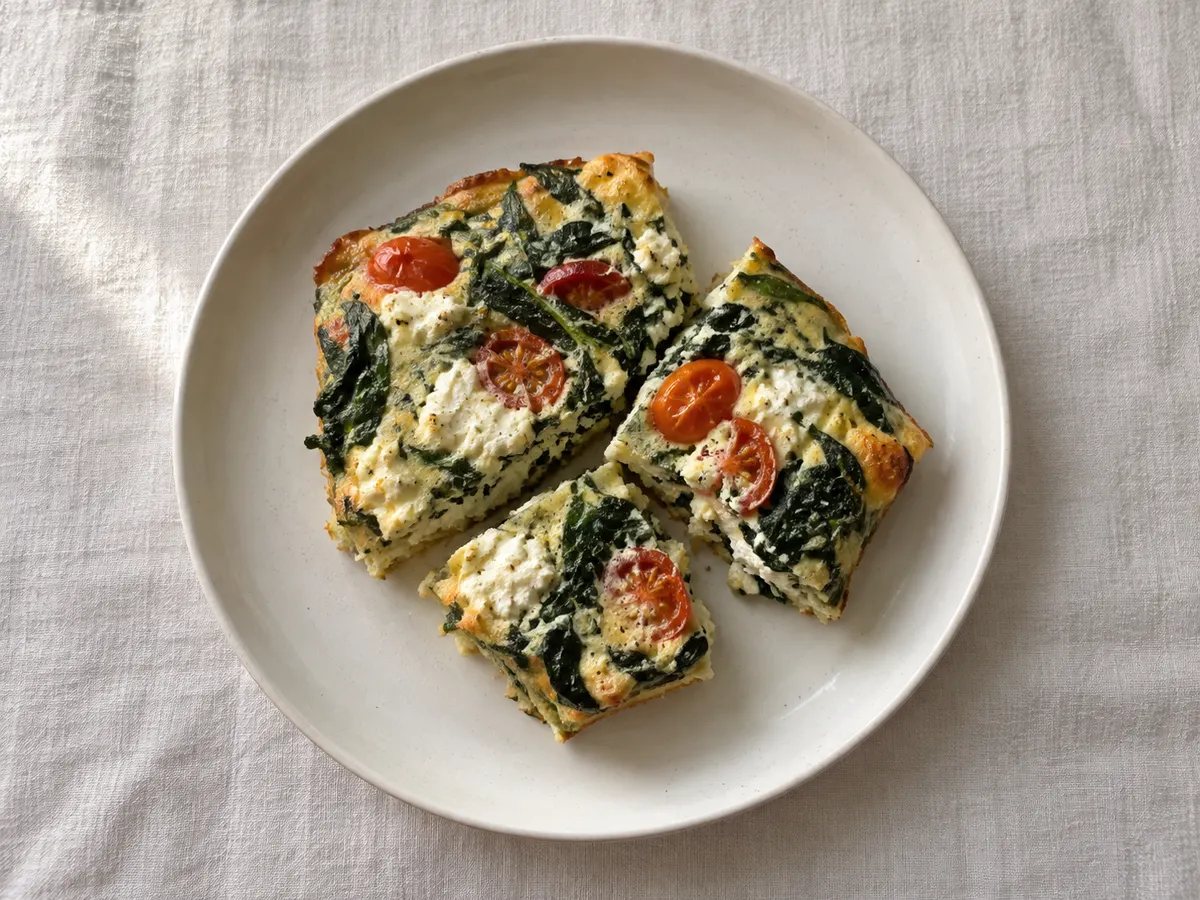 Baked egg whites with spinach and ricotta28.8 g protein per serving
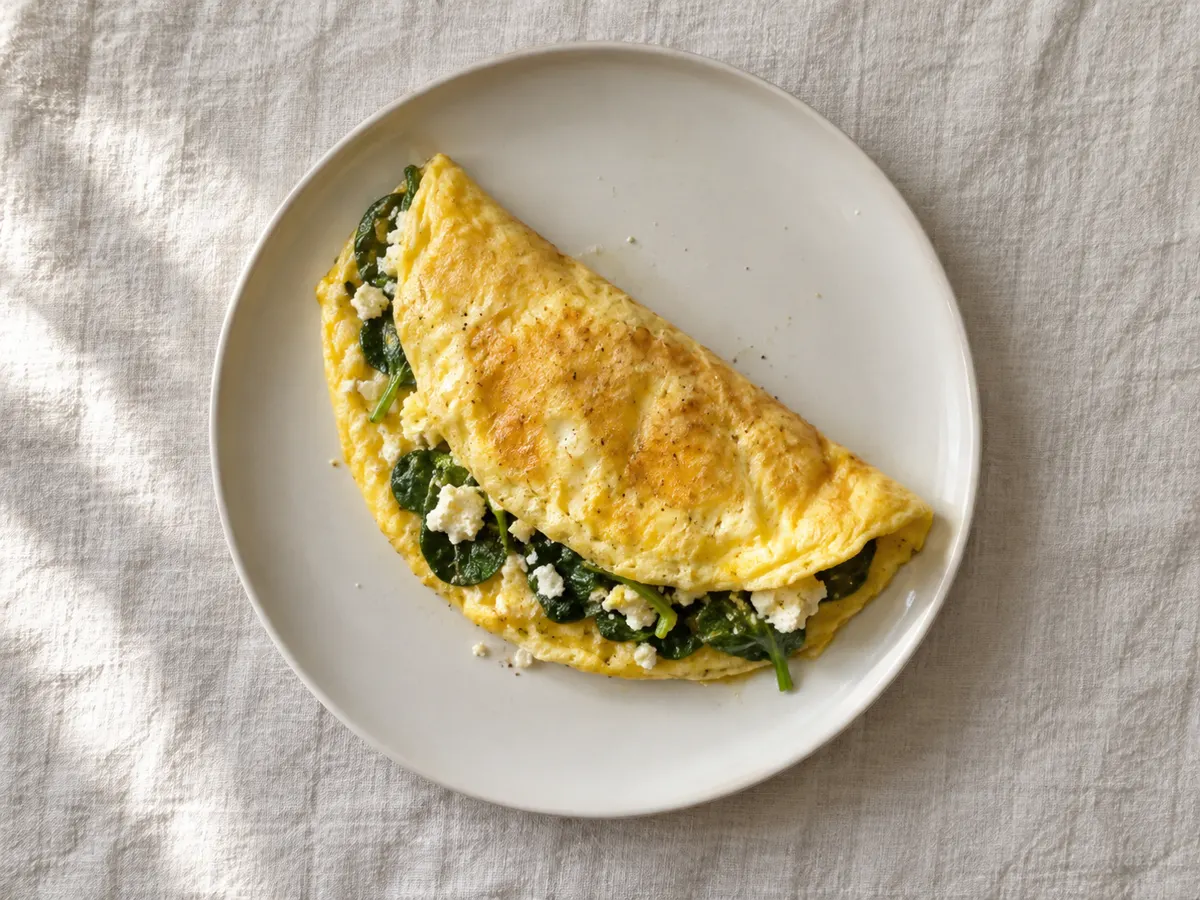 French omelet with spinach and queso fresco19.2 g protein per serving
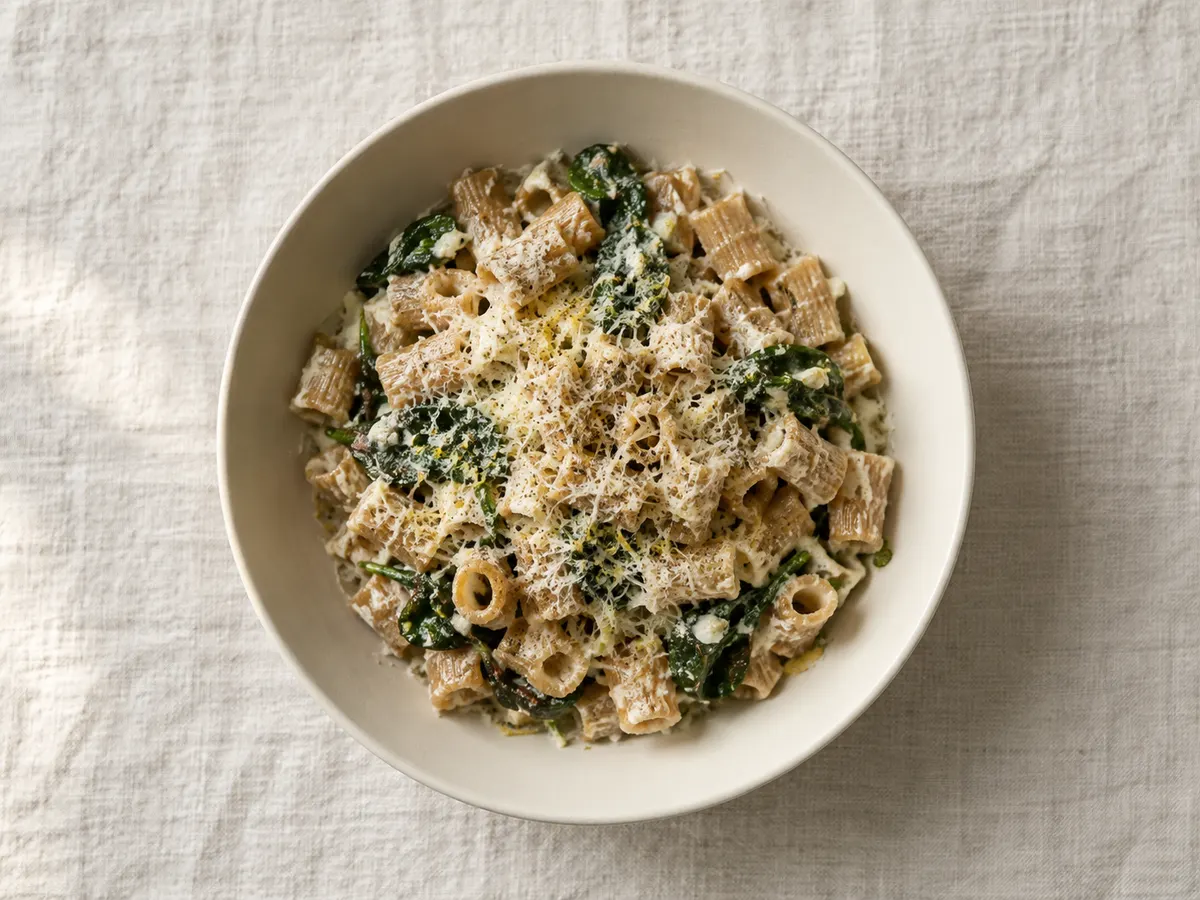 Whole-wheat pasta with ricotta, spinach, and lemon23.2 g protein per serving
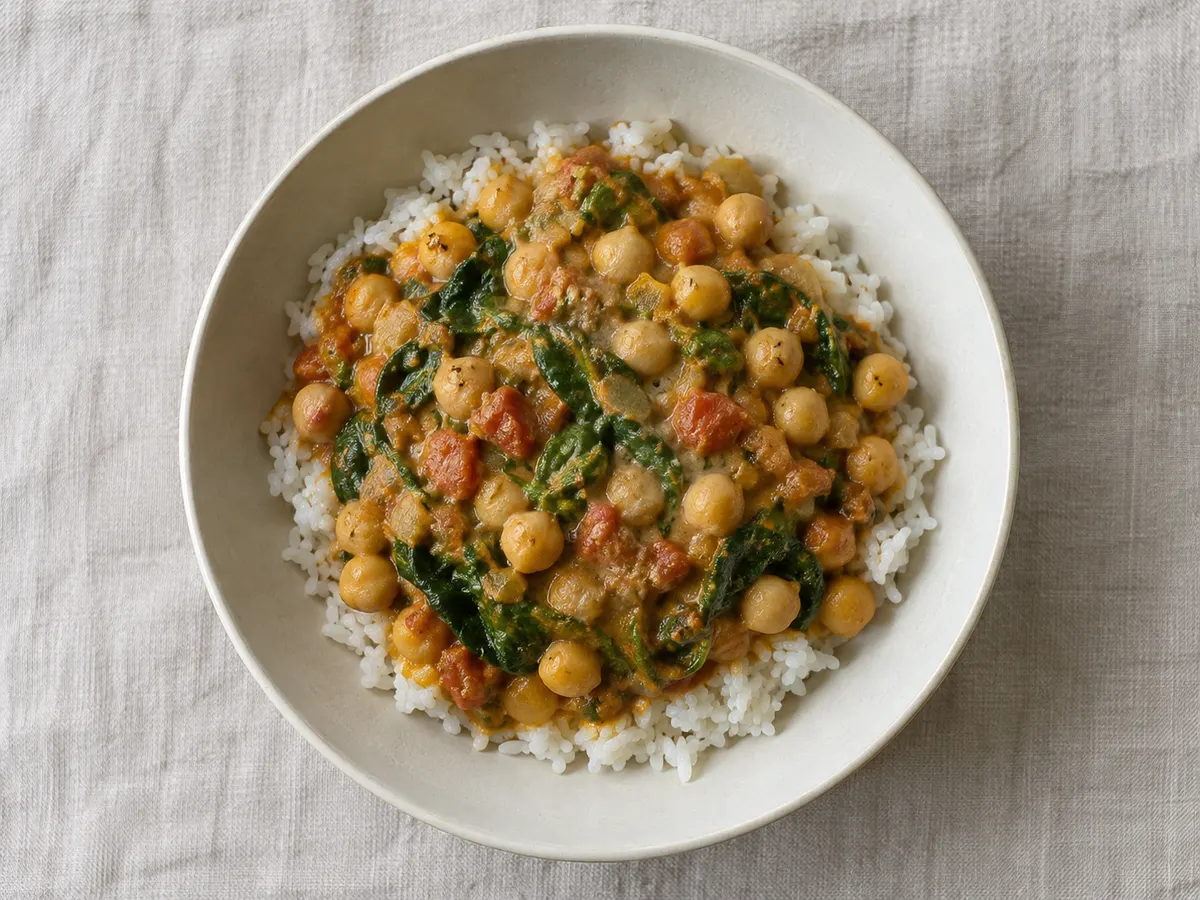 Mild chickpea and spinach curry20.1 g protein per serving
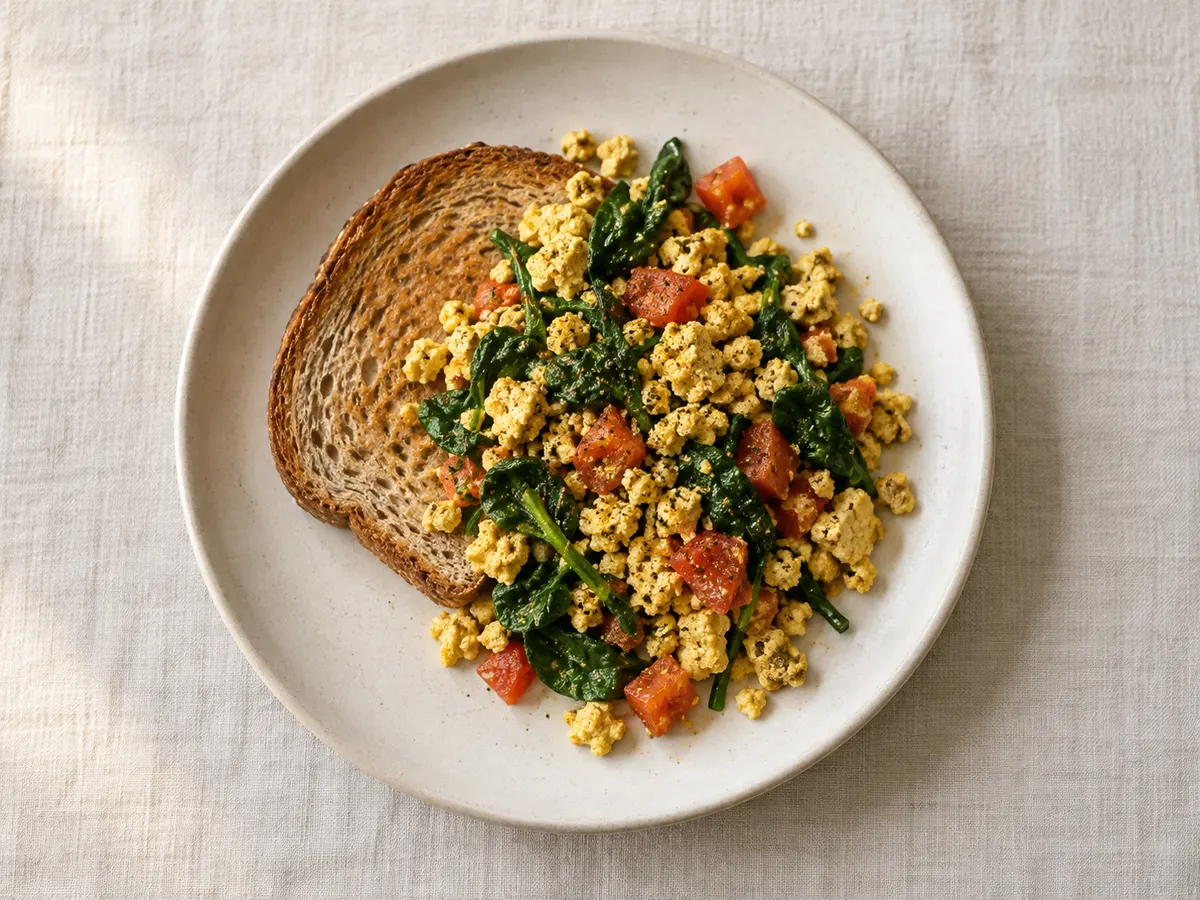 Tofu scramble with spinach and tomato19 g protein per serving
Satiety
The 1 to 5 score is our own estimate: it starts at 1 point, adds points for low energy density, for protein and fiber per 100 kcal, and for the water in solid foods, and subtracts points for drinks with calories. It is useful for comparing foods with each other; it is not a measurement in people.
What to keep in mind on a GLP-1 medication
Frequently asked questions about spinach
How many grams of protein are in a 100 g (3.5 oz) serving of spinach?
100 g (3.5 oz) of spinach has 2.9 g of protein. A typical 100 g (3.5 oz) serving has about 2.9 g of protein. That is 12.4 g of protein per 100 kcal.
How many kcal are in a 100 g (3.5 oz) serving of spinach?
100 g (3.5 oz) of spinach has 23 kcal. A typical 100 g (3.5 oz) serving has about 23 kcal. That is a very low energy density.
How much fiber is in a 100 g (3.5 oz) serving of spinach?
100 g (3.5 oz) of spinach has 2.2 g of fiber. A typical 100 g (3.5 oz) serving has about 2.2 g of fiber.
Does spinach keep you full?
Yes, very filling for the calories it provides: our estimated satiety score is 5 out of 5. It is based on: very low energy density; a lot of protein per calorie; a lot of fiber per calorie; high water content. It is an estimate based on its composition, not a measurement in people.
How does spinach fit into eating on Ozempic, Wegovy, Mounjaro, or Zepbound?
Based on our tags, this is what matters about spinach on a GLP-1 medication. “Low energy density”: plenty of volume for few calories; make sure it does not push protein foods off your plate. “Hydrating”: a lot of water, which contributes to hydration when you eat and drink less. These are general guidelines, not medical advice: everyone tolerates foods differently.
What is a typical serving of spinach?
We use 100 g (3.5 oz) as a typical serving, about 3 1/4 cups. That amount provides about 23 kcal, 2.9 g of protein, and 2.2 g of fiber. It is a reference for calculations, not a recommendation of how much to eat.
Compare with…
Similar foods
Sources
Sources for the data on this page, with the access date.
- Official databaseU.S. Department of Agriculture, Agricultural Research Service.USDA FoodData Central: Spinach, raw (FDC ID 168462).accessed .
- Clinical guidelineObesity (Wiley).Mozaffarian D, et al. Nutritional priorities to support GLP-1 therapy for obesity: A joint Advisory from the American College of Lifestyle Medicine, the American Society for Nutrition, the Obesity Medicine Association, and The Obesity Society. Obesity. 2025;33(8):1475-1503. doi:10.1002/oby.24336.accessed .
- InstitutionNIH Office of Dietary Supplements.Vitamin K: Fact Sheet for Consumers.accessed .
- InstitutionNIH Office of Dietary Supplements.Iron: Fact Sheet for Health Professionals.accessed .
- RegulatorOfficial Journal of the European Union (EUR-Lex).Regulation (EC) No 1924/2006 on nutrition and health claims made on foods (Annex).accessed .
- RegulatorOfficial Journal of the European Union (EUR-Lex).Regulation (EU) No 1169/2011 on the provision of food information to consumers (Annex XIII, nutrient reference values).accessed .
- Other sourceAsia Pacific Journal of Clinical Nutrition.Noonan SC, Savage GP. Oxalate content of foods and its effect on humans. Asia Pac J Clin Nutr. 1999;8(1):64-74. doi:10.1046/j.1440-6047.1999.00038.x.accessed .
- Clinical trialAmerican Journal of Clinical Nutrition.Heaney RP, Weaver CM, Recker RR. Calcium absorbability from spinach. Am J Clin Nutr. 1988;47(4):707-709. doi:10.1093/ajcn/47.4.707.accessed .