Meat, fish, and eggs
Cooked chicken breast
Cooked chicken breast provides 29 g of protein for 151 kcal per 100 g (3.5 oz), or 19.2 g of protein for every 100 kcal.
Estimated satietyHow it is calculated
Estimated satiety: 4 out of 5
| Starting point | +1 |
|---|---|
| Low energy density: 151 kcal/100 g | +1 |
| Protein: 19.2 g/100 kcal | +2 |
| Fiber: 0.0 g/100 kcal | 0 |
| Solid food with 68.3 g of water, under 70 | 0 |
Our own estimate from the values per 100 g: useful for comparing foods with each other, not a measurement in people. Holt index (1995): this food was not measured.
- Prepared by
- Alex Gonzalez
- Last updated
- Next review
- Sources
- 9 primary
- Data
- USDA FDC 171478
No clinical review. No advertising from drug companies and no affiliate links.How we work
Nutrition facts
- Calories
- 151 kcal per serving
- 151 kcal per 100 g (3.5 oz)
- Protein
- 29 g per serving
- 29 g per 100 g (3.5 oz)
- Carbohydrates
- 0 g per serving
- 0 g per 100 g (3.5 oz)
- of which sugars
- 0 g per serving
- 0 g per 100 g (3.5 oz)
- Fiber
- 0 g per serving
- 0 g per 100 g (3.5 oz)
- Fat
- 3 g per serving
- 3 g per 100 g (3.5 oz)
- of which saturated
- 0.9 g per serving
- 0.9 g per 100 g (3.5 oz)
- Water
- 68.3 g per serving
- 68.3 g per 100 g (3.5 oz)
Source: USDA FoodData Central: Chicken, broilers or fryers, breast, meat only, cooked, stewed (FDC ID 171478), accessed September 23, 2026.
A typical 100 g (3.5 oz) serving provides about 151 kcal, 29 g of protein, and 0 g of fiber.
What it is and how to eat it
This is chicken breast simmered in broth or water and then shredded, deshebrada in Spanish, which the Dictionary of the Spanish Language defines as breaking something into very thin, thread-like pieces, or desmenuzada, meaning divided into small pieces. Cooking drives out water and concentrates the protein: this page, based on USDA's stewed skinless breast, has 29 g of protein, 151 kcal and 3.03 g of fat per 100 g, against 22.5 g of protein in raw breast. It is the base of many dishes, such as tacos, arepas, soups and fillings.
A 100 g (3.5 oz) serving provides 29 g of protein and 151 kcal, and half a serving, 50 g (1.8 oz), already adds up to 14.5 g. The 2025 nutrition advisory on GLP-1 therapy includes lean poultry among the proteins to encourage and suggests starting meals with the protein, and shredded and moist from the broth it is usually easier to chew than a dry fillet when you are nauseous or have little appetite. It works in the shredded chicken with vegetables and rice, the chicken and nopal tacos, the arepa stuffed with shredded chicken and avocado or the light tortilla soup with chicken. If you cook a batch, the USDA Food Safety and Inspection Service advises refrigerating leftovers within 2 hours of cooking and eating them within 3 to 4 days.
What the evidence says
Protein provides 77% of its energy, far above the 20% the EU requires for a "high protein" claim, and the EU authorizes saying that protein contributes to the maintenance of muscle mass (Regulations (EC) No 1924/2006 and (EU) No 432/2012). With 8.47 mg of niacin per 100 g it provides more than half of the EU reference value of 16 mg, and with 22.3 µg of selenium, 41% of the 55 µg (Regulation (EU) No 1169/2011). The 2025 advisory stresses that sufficient protein should be a priority during treatment to help preserve muscle mass. I have not found studies showing that cooked chicken, in itself, helps people lose more weight than other lean proteins.
Recipes with this food
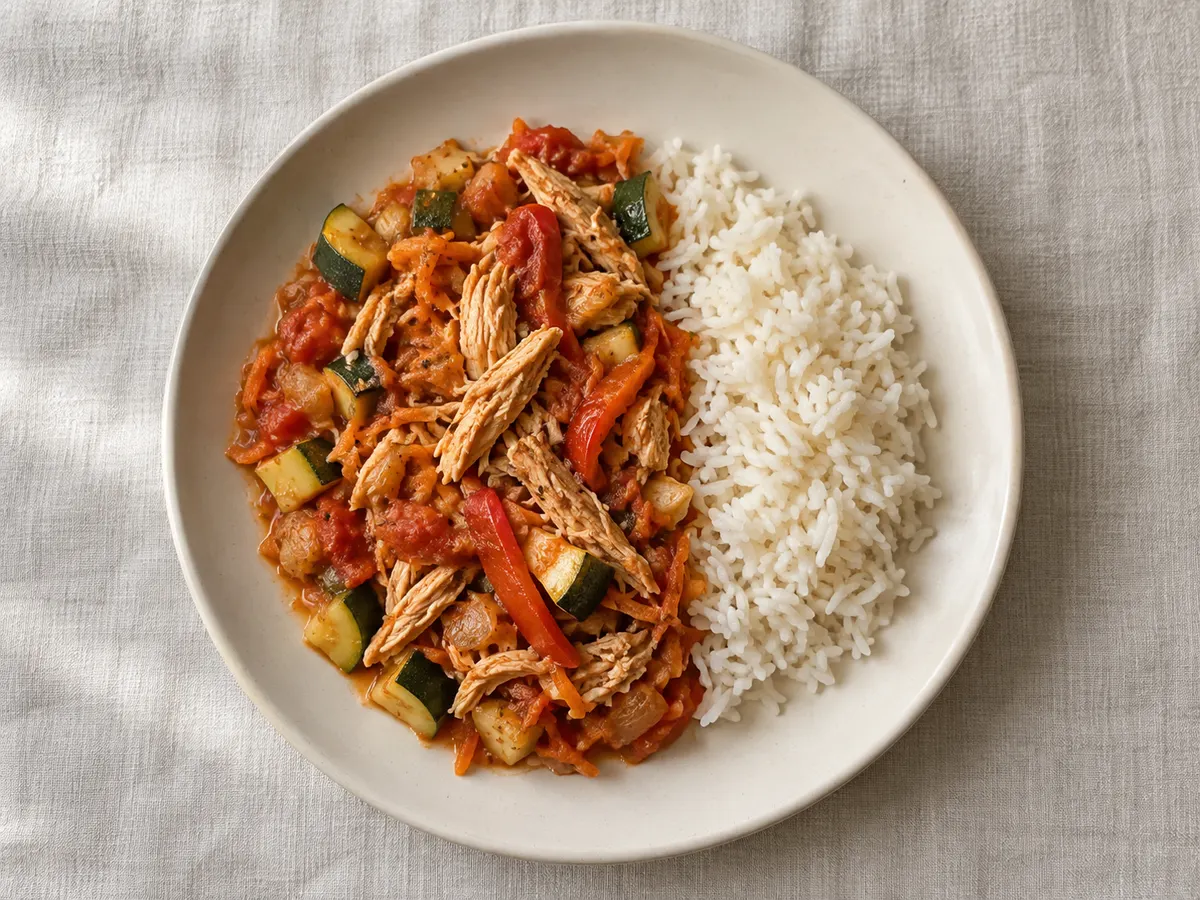 Shredded chicken with vegetables and rice33.7 g protein per serving
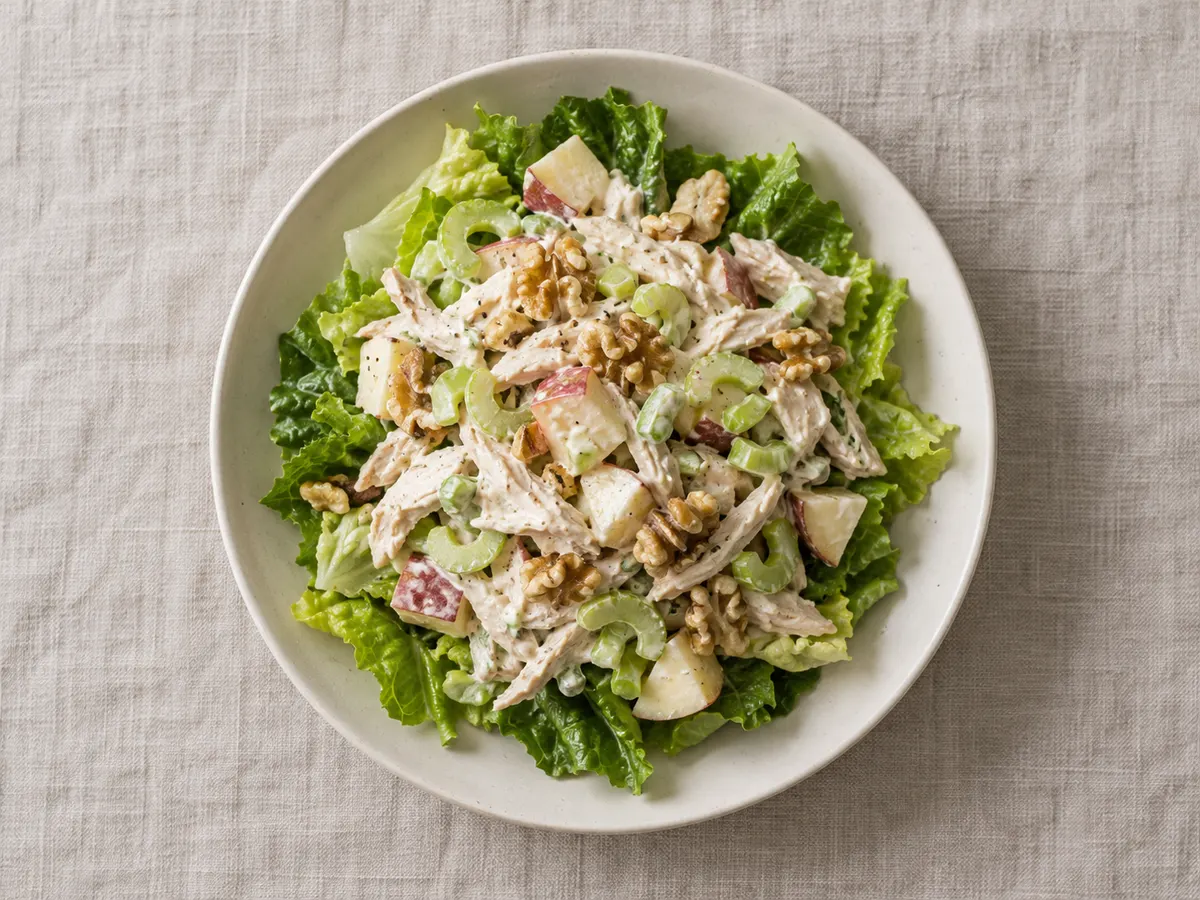 Chicken salad with apple, celery, and yogurt33.5 g protein per serving
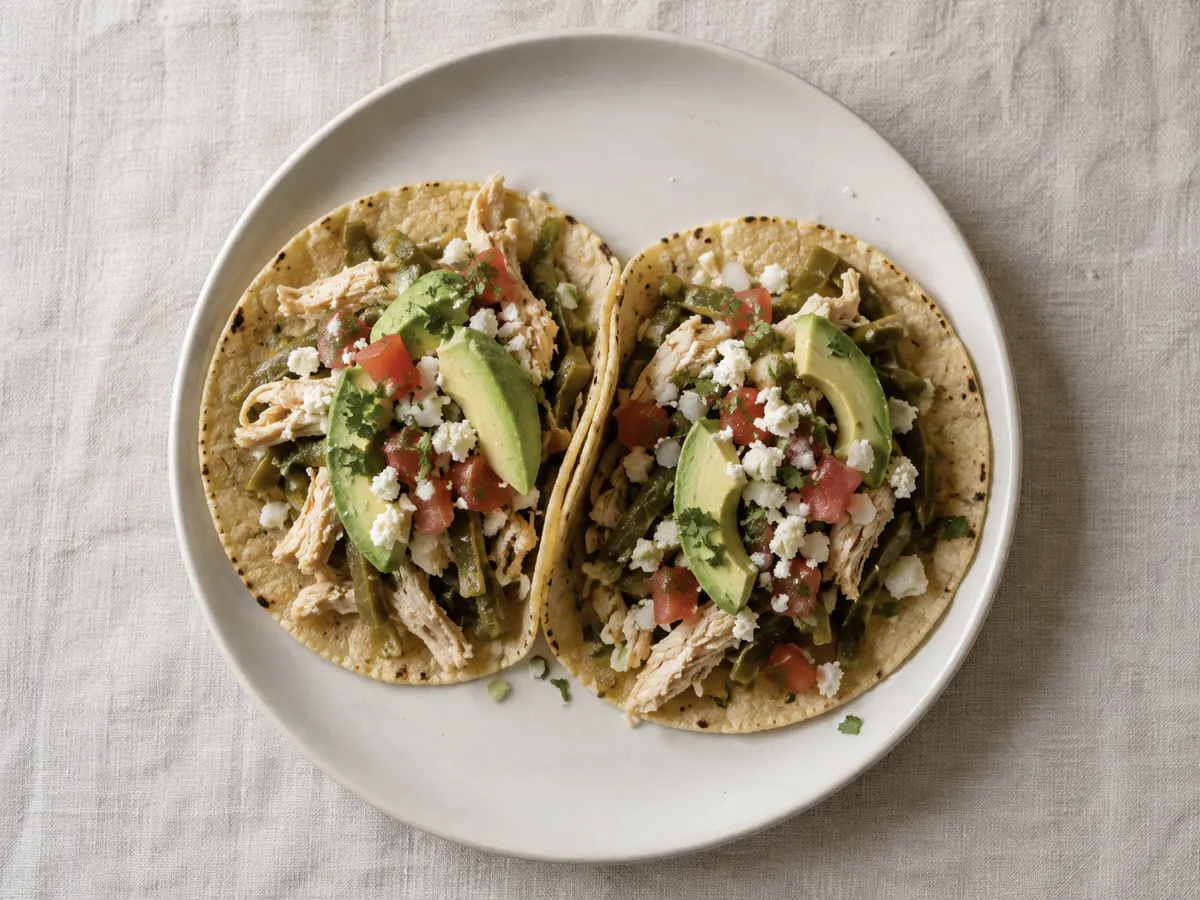 Chicken and nopal tacos31.6 g protein per serving
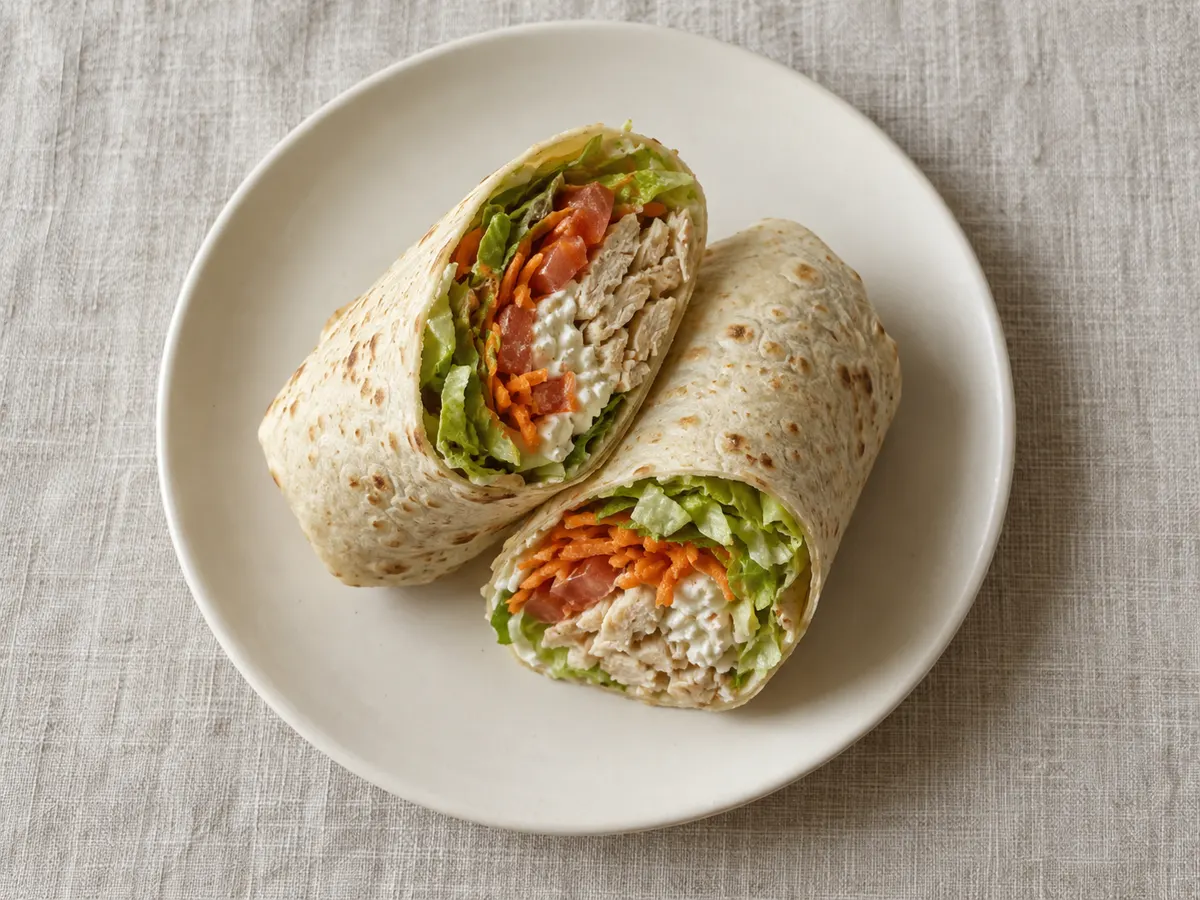 Chicken wrap with cottage cheese and vegetables35.3 g protein per serving
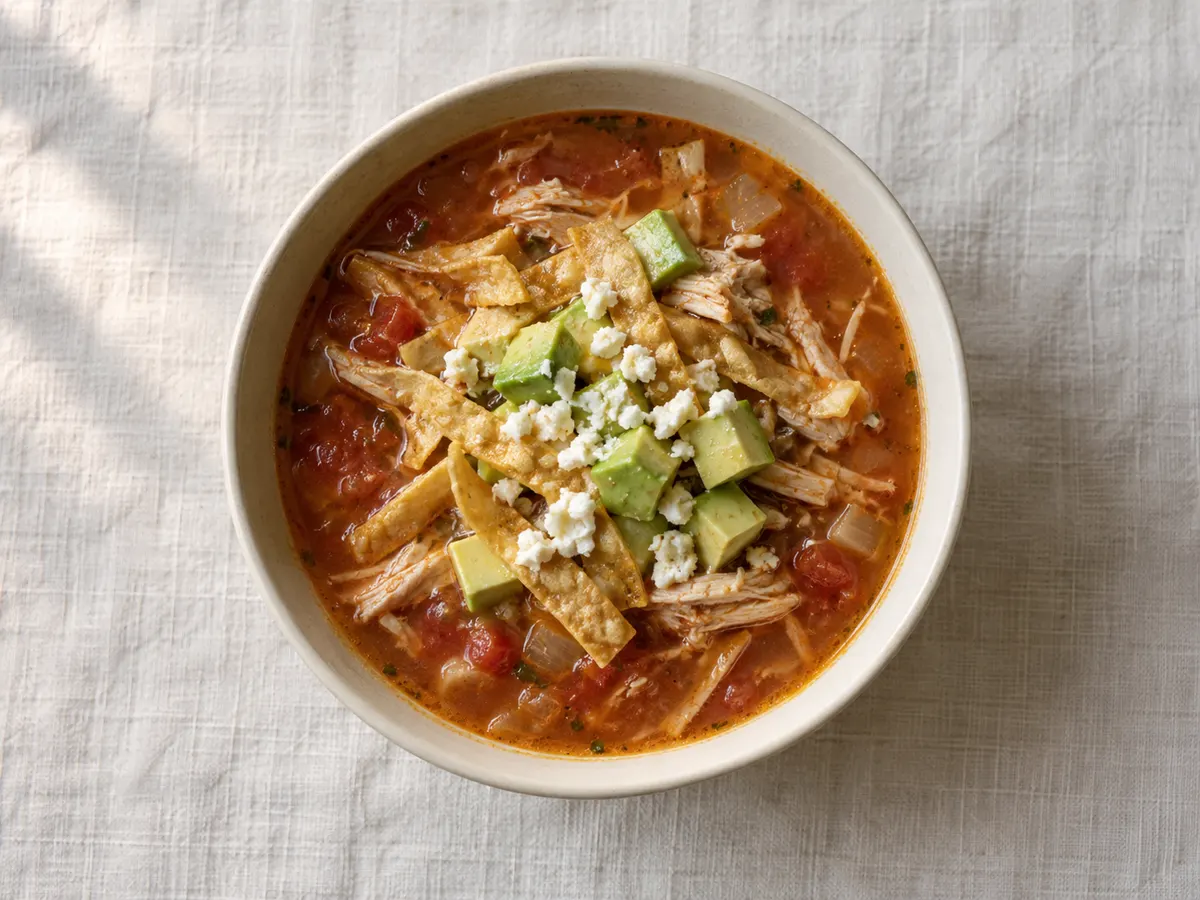 Light tortilla soup with chicken31.8 g protein per serving
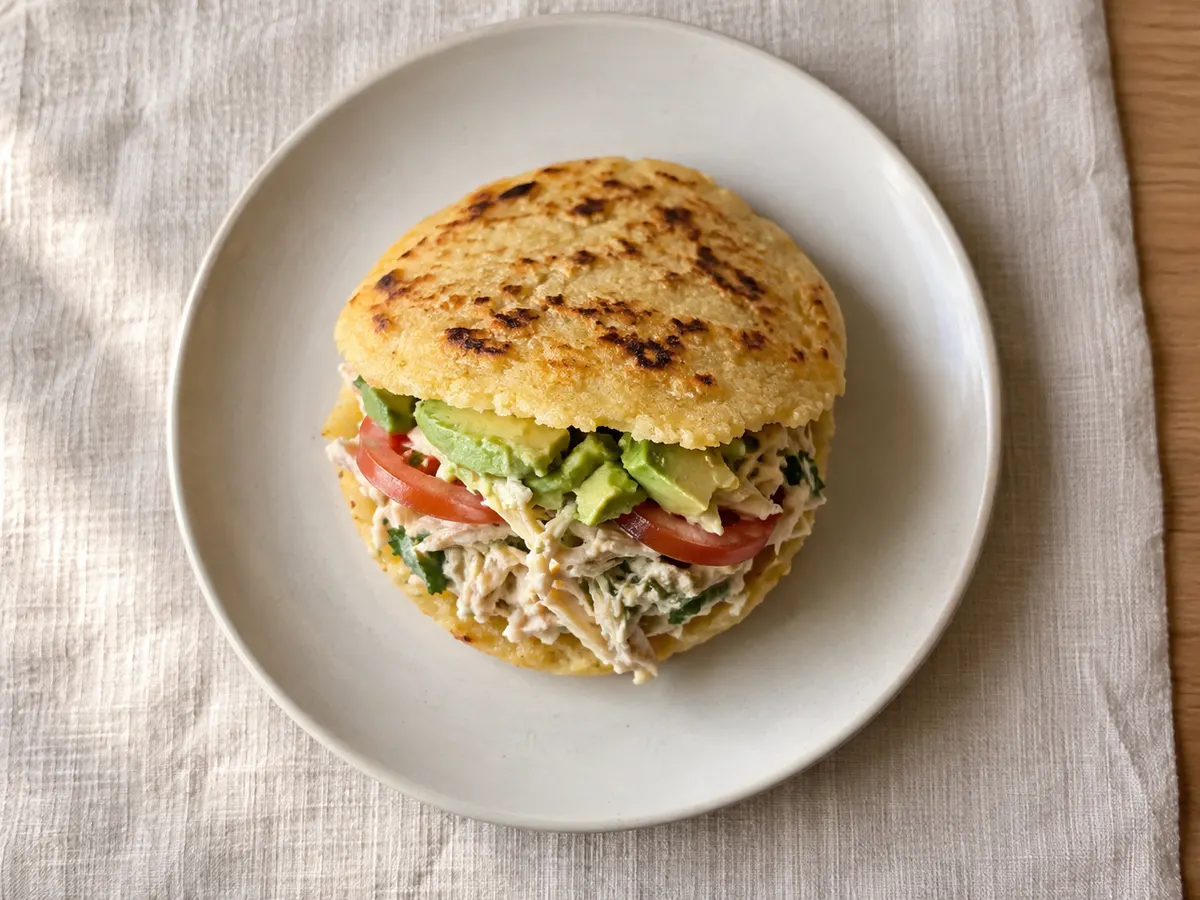 Arepa stuffed with shredded chicken and avocado27 g protein per serving
Satiety
The 1 to 5 score is our own estimate: it starts at 1 point, adds points for low energy density, for protein and fiber per 100 kcal, and for the water in solid foods, and subtracts points for drinks with calories. It is useful for comparing foods with each other; it is not a measurement in people.
What to keep in mind on a GLP-1 medication
Frequently asked questions about cooked chicken breast
How much protein is in a 100 g (3.5 oz) serving of cooked chicken breast?
100 g (3.5 oz) of cooked chicken breast has 29 g of protein. A typical 100 g (3.5 oz) serving has about 29 g of protein. That is 19.2 g of protein per 100 kcal, which is why it carries our “High in protein” tag.
How many calories does a 100 g (3.5 oz) serving of cooked chicken breast have?
100 g (3.5 oz) of cooked chicken breast has 151 kcal. A typical 100 g (3.5 oz) serving has about 151 kcal. That is a low energy density.
Is cooked chicken breast filling?
Yes, fairly filling for the calories it provides: our estimated satiety score is 4 out of 5. Calculation: 1 (base) + 1 (low energy density: 151 kcal/100 g) + 2 (protein: 19.2 g/100 kcal) + 0 (fiber: 0.0 g/100 kcal) + 0 (solid food with 68.3 g of water, under 70) = 4. It is an estimate based on its composition, not a measurement in people.
How does cooked chicken breast sit with nausea from a GLP-1 medication?
Based on our tags, this is what matters about cooked chicken breast on a GLP-1 medication. “High in protein”: plenty of protein per calorie; protein helps preserve muscle mass when you eat less. “Easy to digest”: a soft or low-fat food that many people tolerate well when they feel nauseous or get full quickly. These are general guidelines, not medical advice: everyone tolerates foods differently.
What counts as a normal serving of cooked chicken breast?
We use 100 g (3.5 oz) as a typical serving. That amount provides about 151 kcal, 29 g of protein, and 0 g of fiber. It is a reference for calculations, not a recommendation of how much to eat.
Similar foods
Sources
Sources for the data on this page, with the access date.
- Official databaseU.S. Department of Agriculture, Agricultural Research Service.USDA FoodData Central: Chicken, broilers or fryers, breast, meat only, cooked, stewed (FDC ID 171478).accessed .
- InstitutionRoyal Spanish Academy and Association of Academies of the Spanish Language (RAE-ASALE).Diccionario de la lengua española (Dictionary of the Spanish Language, 23rd ed., online version): "deshebrar" (in Spanish).accessed .
- InstitutionRoyal Spanish Academy and Association of Academies of the Spanish Language (RAE-ASALE).Diccionario de la lengua española (Dictionary of the Spanish Language, 23rd ed., online version): "desmenuzar" (in Spanish).accessed .
- Official databaseU.S. Department of Agriculture, Agricultural Research Service.USDA FoodData Central: Chicken, broiler or fryers, breast, skinless, boneless, meat only, raw (FDC ID 171077).accessed .
- Clinical guidelineObesity (Wiley).Mozaffarian D, et al. Nutritional priorities to support GLP-1 therapy for obesity: A joint Advisory from the American College of Lifestyle Medicine, the American Society for Nutrition, the Obesity Medicine Association, and The Obesity Society. Obesity. 2025;33(8):1475-1503. doi:10.1002/oby.24336.accessed .
- RegulatorU.S. Department of Agriculture, Food Safety and Inspection Service (USDA FSIS).Leftovers and Food Safety.accessed .
- RegulatorOfficial Journal of the European Union (EUR-Lex).Regulation (EC) No 1924/2006 on nutrition and health claims made on foods (Annex).accessed .
- RegulatorOfficial Journal of the European Union (EUR-Lex).Commission Regulation (EU) No 432/2012 establishing a list of permitted health claims made on foods.accessed .
- RegulatorOfficial Journal of the European Union (EUR-Lex).Regulation (EU) No 1169/2011 on the provision of food information to consumers (Annex XIII, nutrient reference values).accessed .