Breakfast
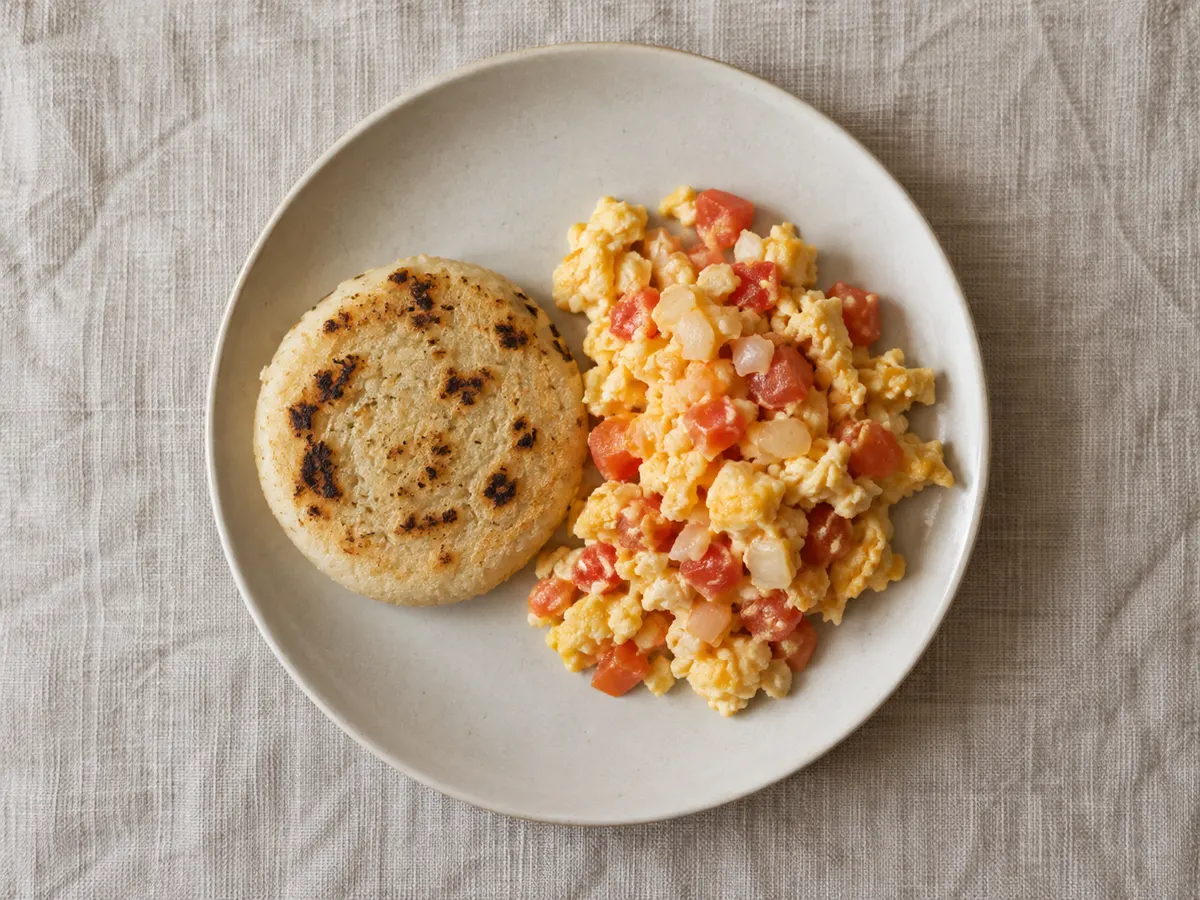
Small arepa with perico scrambled eggs
Each serving has 334 kcal, 17.9 g of protein, and 2.6 g of fiber, or 5.4 g of protein per 100 kcal. Ready in 15 minutes; makes 1 serving.
Per serving
- 334 kcalCalories
- 17.9 gProtein
- 2.6 gFiber
Calculated ingredient by ingredient from USDA FoodData Central. 5.4 g of protein per 100 kcal.
- Prepared by
- Alex Gonzalez
- Published
- Sources
- 6 primary
No clinical review. No advertising from drug companies and no affiliate links.How we work
Ingredients
- 60 g2 ozsmall ready-made corn arepa
- 110 g4 ozeggs (2 large)
- 60 g2 ozchopped tomato (about 1/3 cup)
- 20 g0.7 ozchopped onion or scallion (about 2 tablespoons)
- 3 golive oil (1/2 teaspoon)
- Salt to taste
Directions
- Heat the arepa in a skillet or toaster until golden on the outside.
- In another skillet, cook the onion in the oil for 2 minutes.
- Add the tomato and cook 2 minutes more.
- Beat the eggs with salt, pour them in, and stir over low heat until they set.
- Split the arepa and fill it with the perico, or serve the eggs on the side.
Why it is filling
Huevos pericos, eggs scrambled with tomato and onion, are a classic breakfast in Colombia and Venezuela. The arepa is small here so that most of the plate is egg, which is where the protein comes from, and the tomato adds volume and water. It is a soft, warm dish that is easy to eat slowly.
In numbers, each serving has 17.9 g of protein and 2.6 g of fiber, with an energy density of 132 kcal per 100 g of the dish. In the satiety index by Holt and colleagues (1995), the foods that were most filling per calorie were those with more protein, fiber, and water and less fat.
If your appetite is small
- If a whole arepa fills you up too much, have half with all the perico.
- Ready-made arepas freeze well and reheat straight from frozen in a skillet.
Nutrition facts
| Nutrient | Per serving |
|---|---|
| Calories | 334 kcal |
| Protein | 17.9 g |
| Carbohydrates | 27.3 g |
| Fiber | 2.6 g |
| Fat | 16.8 g |
| Approximate weight | 253 g (9 oz) |
How it is calculated
Each ingredient contributes its per-100 g values from the site’s food database, multiplied by the amount in the recipe. Seasonings, water, and lemon or lime juice are not counted. It is an approximation: the actual size of the foods and how you cook them shift the result a little.
To plan your meals
- Daily protein calculator: an indicative protein range per day and per meal, to see how much of it this recipe covers.
- Weekly menu for small appetites: seven days of small portions with the protein spread across meals, ready to print.
More recipes
318 kcal27 grams of protein15 min
337 kcal22.1 grams of protein20 min
215 kcal20.9 grams of protein8 min
Sources
Nutrition values for each ingredient (USDA FoodData Central) and the satiety reference, with the access date.
- U.S. Department of Agriculture, Agricultural Research Service.USDA FoodData Central: Restaurant, Latino, arepa (unleavened cornmeal bread) (FDC ID 168070).accessed .
- U.S. Department of Agriculture, Agricultural Research Service.USDA FoodData Central: Egg, whole, raw, fresh (FDC ID 171287).accessed .
- U.S. Department of Agriculture, Agricultural Research Service.USDA FoodData Central: Tomatoes, red, ripe, raw, year round average (FDC ID 170457).accessed .
- U.S. Department of Agriculture, Agricultural Research Service.USDA FoodData Central: Onions, raw (FDC ID 170000).accessed .
- U.S. Department of Agriculture, Agricultural Research Service.USDA FoodData Central: Oil, olive, salad or cooking (FDC ID 171413).accessed .
- European Journal of Clinical Nutrition (PubMed).Holt SH, Miller JC, Petocz P, Farmakalidis E. A satiety index of common foods. Eur J Clin Nutr. 1995;49(9):675-90.accessed .