Breakfast
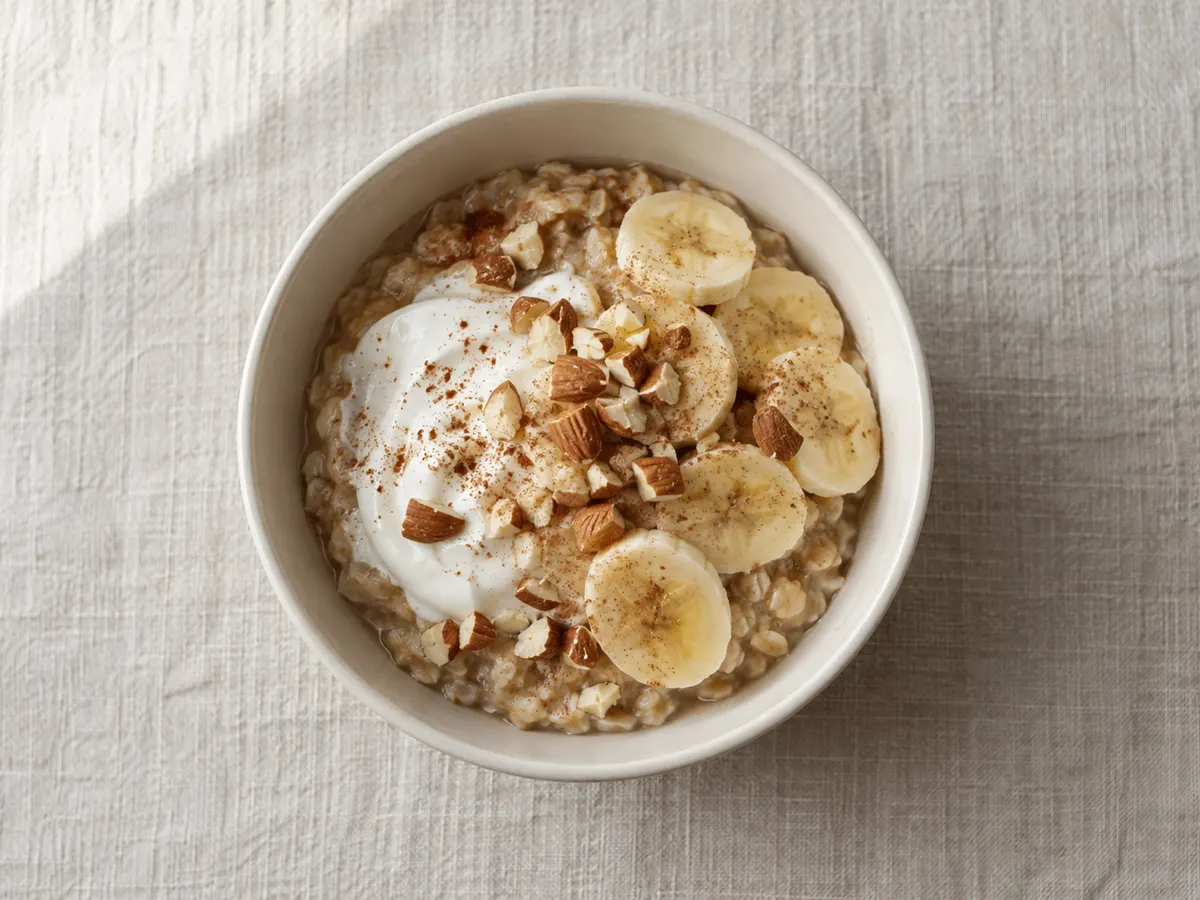
Oatmeal with Greek yogurt and banana
Each serving has 370 kcal, 20.3 g of protein, and 5.6 g of fiber, or 5.5 g of protein per 100 kcal. Ready in 10 minutes; makes 1 serving.
Per serving
- 370 kcalCalories
- 20.3 gProtein
- 5.6 gFiber
Calculated ingredient by ingredient from USDA FoodData Central. 5.5 g of protein per 100 kcal.
- Prepared by
- Alex Gonzalez
- Published
- Sources
- 5 primary
No clinical review. No advertising from drug companies and no affiliate links.How we work
Ingredients
- 200 g7 ozoatmeal cooked in water (about 1/2 cup rolled oats and 2/3 cup water)
- 150 g5.5 ozplain Greek yogurt (about 2/3 cup)
- 60 g2 ozsliced banana (1/2 banana)
- 5 gchopped almonds (about 4)
- Cinnamon to taste
Directions
- Cook the oats in the water over medium heat, stirring, for 4 to 5 minutes.
- Take the pot off the heat and let the oatmeal cool for 2 minutes.
- Stir in the Greek yogurt: it adds protein and makes the oatmeal creamier.
- Top with the banana slices and chopped almonds.
- Sprinkle with cinnamon if you like.
Why it is filling
Cooked oats are mostly water, so they take up a lot of room for the energy they provide, but on their own they have little protein. Stirring in Greek yogurt adds protein while keeping the soft, warm texture many people tolerate well in the morning. The banana sweetens it with no added sugar, and the almonds add fiber and a bit of crunch.
In numbers, each serving has 20.3 g of protein and 5.6 g of fiber, with an energy density of 89 kcal per 100 g of the dish. In the satiety index by Holt and colleagues (1995), the foods that were most filling per calorie were those with more protein, fiber, and water and less fat.
If your appetite is small
- If you don’t finish the bowl, refrigerate the rest: it is good cold the next day, too.
- You can soak the oats in the yogurt overnight and skip the cooking.
Nutrition facts
| Nutrient | Per serving |
|---|---|
| Calories | 370 kcal |
| Protein | 20.3 g |
| Carbohydrates | 44.7 g |
| Fiber | 5.6 g |
| Fat | 13.2 g |
| Approximate weight | 415 g (15 oz) |
How it is calculated
Each ingredient contributes its per-100 g values from the site’s food database, multiplied by the amount in the recipe. Seasonings, water, and lemon or lime juice are not counted. It is an approximation: the actual size of the foods and how you cook them shift the result a little.
| Ingredient | Amount | Calories | Protein | Fiber |
|---|---|---|---|---|
| Oatmeal | 200 g | 142 kcal | 5.1 g | 3.4 g |
| Plain Greek yogurt | 150 g | 146 kcal | 13.5 g | 0 g |
| Banana | 60 g | 53 kcal | 0.7 g | 1.6 g |
| Almonds | 5 g | 29 kcal | 1.1 g | 0.6 g |
To plan your meals
- Daily protein calculator: an indicative protein range per day and per meal, to see how much of it this recipe covers.
- Weekly menu for small appetites: seven days of small portions with the protein spread across meals, ready to print.
More recipes
318 kcal27 grams of protein15 min
337 kcal22.1 grams of protein20 min
215 kcal20.9 grams of protein8 min
Sources
Nutrition values for each ingredient (USDA FoodData Central) and the satiety reference, with the access date.
- U.S. Department of Agriculture, Agricultural Research Service.USDA FoodData Central: Cereals, oats, regular and quick, unenriched, cooked with water (includes boiling and microwaving), without salt (FDC ID 173905).accessed .
- U.S. Department of Agriculture, Agricultural Research Service.USDA FoodData Central: Yogurt, Greek, plain, whole milk (FDC ID 171304).accessed .
- U.S. Department of Agriculture, Agricultural Research Service.USDA FoodData Central: Bananas, raw (FDC ID 173944).accessed .
- U.S. Department of Agriculture, Agricultural Research Service.USDA FoodData Central: Nuts, almonds (FDC ID 170567).accessed .
- European Journal of Clinical Nutrition (PubMed).Holt SH, Miller JC, Petocz P, Farmakalidis E. A satiety index of common foods. Eur J Clin Nutr. 1995;49(9):675-90.accessed .