Meat, fish, and eggs
Cod
Cod provides 17.8 g of protein for 82 kcal per 100 g (3.5 oz), or 21.7 g of protein for every 100 kcal.
Estimated satietyHow it is calculated
Estimated satiety: 5 out of 5
| Starting point | +1 |
|---|---|
| Low energy density | +1 |
| A lot of protein per calorie | +2 |
| High water content | +1 |
Our own estimate from the values per 100 g: useful for comparing foods with each other, not a measurement in people. Holt index (1995): this food was not measured.
- Prepared by
- Alex Gonzalez
- Last updated
- Next review
- Sources
- 10 primary
- Data
- USDA FDC 171955
No clinical review. No advertising from drug companies and no affiliate links.How we work
Nutrition facts
- Calories
- 123 kcal per serving
- 82 kcal per 100 g (3.5 oz)
- Protein
- 26.7 g per serving
- 17.8 g per 100 g (3.5 oz)
- Carbohydrates
- 0 g per serving
- 0 g per 100 g (3.5 oz)
- of which sugars
- 0 g per serving
- 0 g per 100 g (3.5 oz)
- Fiber
- 0 g per serving
- 0 g per 100 g (3.5 oz)
- Fat
- 1 g per serving
- 0.7 g per 100 g (3.5 oz)
- of which saturated
- 0.2 g per serving
- 0.1 g per 100 g (3.5 oz)
- Water
- 121.8 g per serving
- 81.2 g per 100 g (3.5 oz)
Source: USDA FoodData Central: Fish, cod, Atlantic, raw (FDC ID 171955), accessed September 23, 2026.
A typical 150 g (5.5 oz) serving provides about 123 kcal, 26.7 g of protein, and 0 g of fiber.
What it is and how to eat it
Atlantic cod (Gadus morhua) is a cold-water white fish sold in Spain fresh or frozen, as loins or steaks, and also salted; the Codex Alimentarius standard for salted fish of the Gadidae family, the cod family, applies to fish salted to full saturation or to at least 12% salt by weight. In Mexico, bacalao a la vizcaína, a stew made with dried salted cod, is very popular, and the Ministry of Agriculture counts it among the most prepared dishes of the December holidays. This page covers fresh raw cod, with 82 kcal, 17.8 g of protein and only 0.67 g of fat per 100 g according to USDA.
A 150 g (5.3 oz) raw serving provides 26.7 g of protein and 123 kcal with barely 1 g of fat; it loses water when cooked, and 100 g of baked cod has 22.8 g of protein according to USDA. The 2025 nutrition advisory on GLP-1 therapy lists fish among the low-volume proteins to prioritize and suggests avoiding fatty foods in the first few days of treatment, so in those days it usually sits better steamed, baked or in a light stew, as in the fresh cod with tomato sauce and potato, than battered or fried. If you eat little, start with the fish and leave the potato for last.
What the evidence says
Fresh cod has 54 mg of sodium per 100 g, but dried salted cod reaches 7,030 mg according to USDA, equivalent to 17.6 g of salt (the EU calculates salt as sodium times 2.5) and more than three times the 2,000 mg of sodium a day that WHO recommends not exceeding. Before cooking, salt cod is soaked in cold water that is changed several times, but the USDA figure is for cod that has not been desalted, and how much sodium remains depends on the soaking, so it is best not to add more salt. The FDA and EPA list cod among the "best choices" in their mercury advice for pregnant and breastfeeding people and children. With 17.8 g of protein and 82 kcal per 100 g, protein provides 87% of its energy, far above the 20% the EU requires for a "high protein" claim (Regulation (EC) No 1924/2006).
Recipes with this food
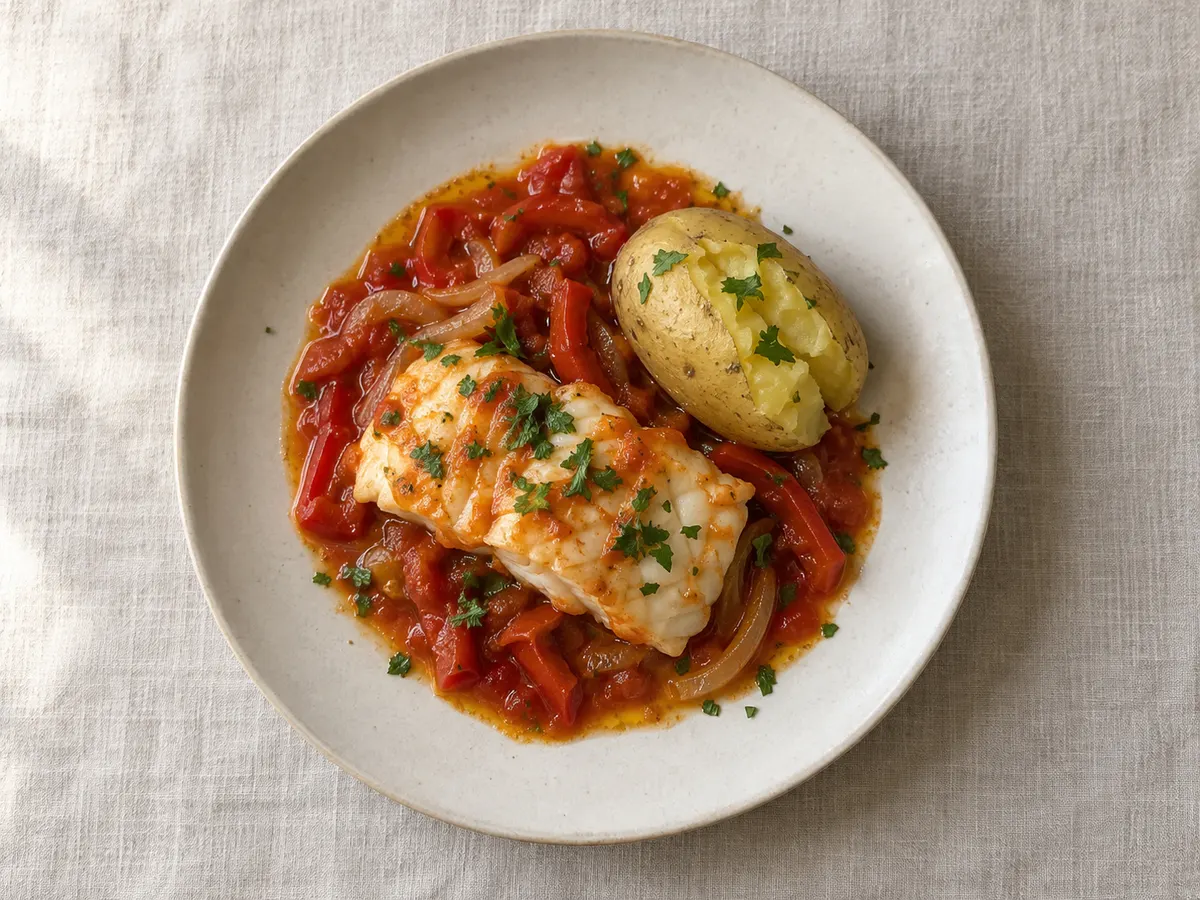 Fresh cod with tomato sauce and potato30.7 g protein per serving
Satiety
The 1 to 5 score is our own estimate: it starts at 1 point, adds points for low energy density, for protein and fiber per 100 kcal, and for the water in solid foods, and subtracts points for drinks with calories. It is useful for comparing foods with each other; it is not a measurement in people.
What to keep in mind on a GLP-1 medication
Frequently asked questions about cod
How much protein is in a 150 g (5.5 oz) serving of cod?
100 g (3.5 oz) of cod has 17.8 g of protein. A typical 150 g (5.5 oz) serving has about 26.7 g of protein. That is 21.7 g of protein per 100 kcal, which is why it carries our “High in protein” tag.
How many calories does a 150 g (5.5 oz) serving of cod have?
100 g (3.5 oz) of cod has 82 kcal. A typical 150 g (5.5 oz) serving has about 123 kcal. That is a low energy density.
Is cod filling?
Yes, very filling for the calories it provides: our estimated satiety score is 5 out of 5. It is based on: low energy density; a lot of protein per calorie; high water content. It is an estimate based on its composition, not a measurement in people.
How does cod sit with nausea from a GLP-1 medication?
Based on our tags, this is what matters about cod on a GLP-1 medication. “High in protein”: plenty of protein per calorie; protein helps preserve muscle mass when you eat less. “Easy to digest”: a soft or low-fat food that many people tolerate well when they feel nauseous or get full quickly. “Low energy density”: plenty of volume for few calories; make sure it does not push protein foods off your plate. These are general guidelines, not medical advice: everyone tolerates foods differently.
What counts as a normal serving of cod?
We use 150 g (5.5 oz) as a typical serving. That amount provides about 123 kcal, 26.7 g of protein, and 0 g of fiber. It is a reference for calculations, not a recommendation of how much to eat.
Compare with…
Similar foods
Sources
Sources for the data on this page, with the access date.
- Official databaseU.S. Department of Agriculture, Agricultural Research Service.USDA FoodData Central: Fish, cod, Atlantic, raw (FDC ID 171955).accessed .
- InstitutionCodex Alimentarius (FAO/WHO).Standard for Salted Fish and Dried Salted Fish of the Gadidae Family of Fishes (CXS 167-1989, section 1).accessed .
- InstitutionMinistry of Agriculture and Rural Development (Mexico).¿Por qué comer bacalao a la vizcaína en estas fechas? (Why eat bacalao a la vizcaína at this time of year?; in Spanish).accessed .
- Official databaseU.S. Department of Agriculture, Agricultural Research Service.USDA FoodData Central: Fish, cod, Atlantic, cooked, dry heat (FDC ID 171956).accessed .
- Clinical guidelineObesity (Wiley).Mozaffarian D, et al. Nutritional priorities to support GLP-1 therapy for obesity: A joint Advisory from the American College of Lifestyle Medicine, the American Society for Nutrition, the Obesity Medicine Association, and The Obesity Society. Obesity. 2025;33(8):1475-1503. doi:10.1002/oby.24336.accessed .
- Official databaseU.S. Department of Agriculture, Agricultural Research Service.USDA FoodData Central: Fish, cod, Atlantic, dried and salted (FDC ID 174190).accessed .
- RegulatorOfficial Journal of the European Union (EUR-Lex).Regulation (EU) No 1169/2011 on the provision of food information to consumers (Annex I, point 11, definition of salt).accessed .
- InstitutionWorld Health Organization.Sodium reduction.accessed .
- RegulatorU.S. Food and Drug Administration (FDA) and U.S. Environmental Protection Agency (EPA).Advice about Eating Fish: For Those Who Might Become or Are Pregnant or Breastfeeding and Children Ages 1-11 Years.accessed .
- RegulatorOfficial Journal of the European Union (EUR-Lex).Regulation (EC) No 1924/2006 on nutrition and health claims made on foods (Annex).accessed .