Meat, fish, and eggs
Dry-cured ham (prosciutto)
Dry-cured ham (prosciutto) provides 27.8 g of protein for 195 kcal per 100 g (3.5 oz), or 14.3 g of protein for every 100 kcal.
Estimated satietyHow it is calculated
Estimated satiety: 3 out of 5
| Starting point | +1 |
|---|---|
| Moderate energy density: 195 kcal/100 g | 0 |
| Protein: 14.3 g/100 kcal | +2 |
| Fiber: 0.0 g/100 kcal | 0 |
| Solid food with 55.9 g of water, under 70 | 0 |
Our own estimate from the values per 100 g: useful for comparing foods with each other, not a measurement in people. Holt index (1995): this food was not measured.
- Prepared by
- Alex Gonzalez
- Last updated
- Next review
- Sources
- 7 primary
- Data
- USDA FDC 2705879
No clinical review. No advertising from drug companies and no affiliate links.How we work
Nutrition facts
- Calories
- 59 kcal per serving
- 195 kcal per 100 g (3.5 oz)
- Protein
- 8.3 g per serving
- 27.8 g per 100 g (3.5 oz)
- Carbohydrates
- 0.1 g per serving
- 0.3 g per 100 g (3.5 oz)
- of which sugars
- 0 g per serving
- 0 g per 100 g (3.5 oz)
- Fiber
- 0 g per serving
- 0 g per 100 g (3.5 oz)
- Fat
- 2.5 g per serving
- 8.3 g per 100 g (3.5 oz)
- of which saturated
- 0.8 g per serving
- 2.8 g per 100 g (3.5 oz)
- Water
- 16.8 g per serving
- 55.9 g per 100 g (3.5 oz)
Source: USDA FoodData Central (FNDDS 2021-2023): Ham, prosciutto (FDC ID 2705879), accessed September 23, 2026.
A typical 30 g (1 oz) serving provides about 59 kcal, 8.3 g of protein, and 0 g of fiber.
What it is and how to eat it
Dry-cured ham is the pig's hind leg, salted and cured for months; the front leg is called paleta. Spain distinguishes jamón serrano, from white pigs, from jamón ibérico, whose quality standard (Royal Decree 4/2014) requires a black seal (100% Iberian, acorn-fed), red (Iberian, acorn-fed), green (Iberian, pasture- and feed-raised) or white (Iberian, feed-raised); in Argentina and Uruguay it is called jamón crudo, and in Italy, prosciutto. This page uses USDA's prosciutto, as USDA has no serrano ham entry, with 195 kcal, 27.8 g of protein and 8.32 g of fat per 100 g; serrano and ibérico ham may differ by piece and curing.
A 30 g (1.1 oz) serving, two or three thin slices, provides 8.3 g of protein and about 59 kcal: a lot of protein in little volume, with no cooking and served cold, which helps when appetite is small. The 2025 nutrition advisory on GLP-1 therapy suggests eating the protein part of a meal first and avoiding fatty foods in the first few days of treatment, so in those days, and after each dose increase, trim the visible fat. Because of the salt, it works better in small amounts to add protein and flavor to a dish, as in the gazpacho with hard-boiled egg and serrano ham, than as a main course.
What the evidence says
In 2015 the International Agency for Research on Cancer (IARC) classified processed meat, meaning meat transformed through salting, curing or other processes, ham included, as carcinogenic to humans (Group 1) because of its link with colorectal cancer, and estimated that each 50 g portion eaten daily increases that risk by about 18%. IARC itself explains that being in the same group as tobacco smoking does not mean being equally dangerous: the classification describes the strength of the evidence, not the size of the risk. According to USDA, this ham has 2,695 mg of sodium per 100 g, so a 30 g serving provides about 810 mg, around 40% of the 2,000 mg a day that WHO recommends not exceeding. Spain's Ministry of Social Rights, Consumer Affairs and 2030 Agenda advises pregnant women who are not immune to toxoplasmosis (something to check with a doctor) to avoid raw cured meat products, cured ham included.
Recipes with this food
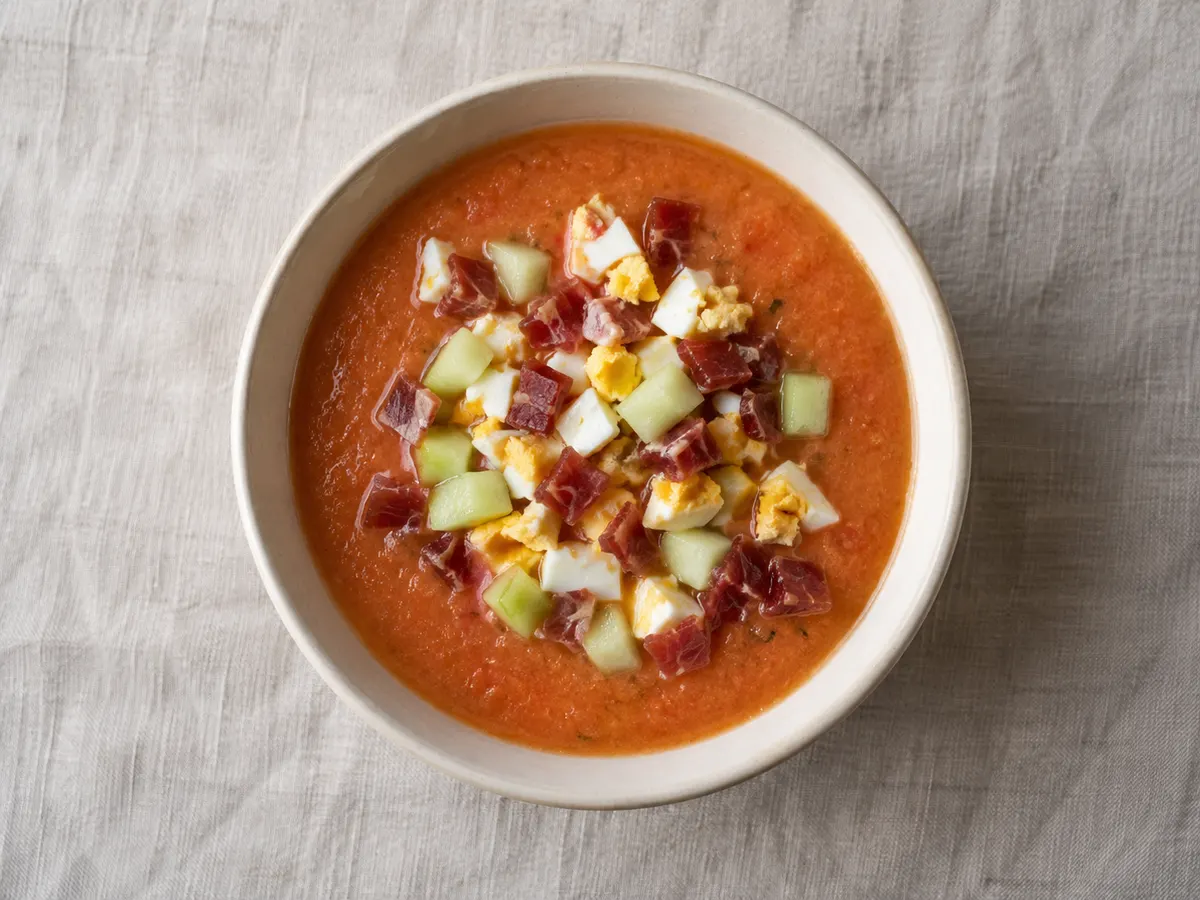 Gazpacho with hard-boiled egg and serrano ham18 g protein per serving
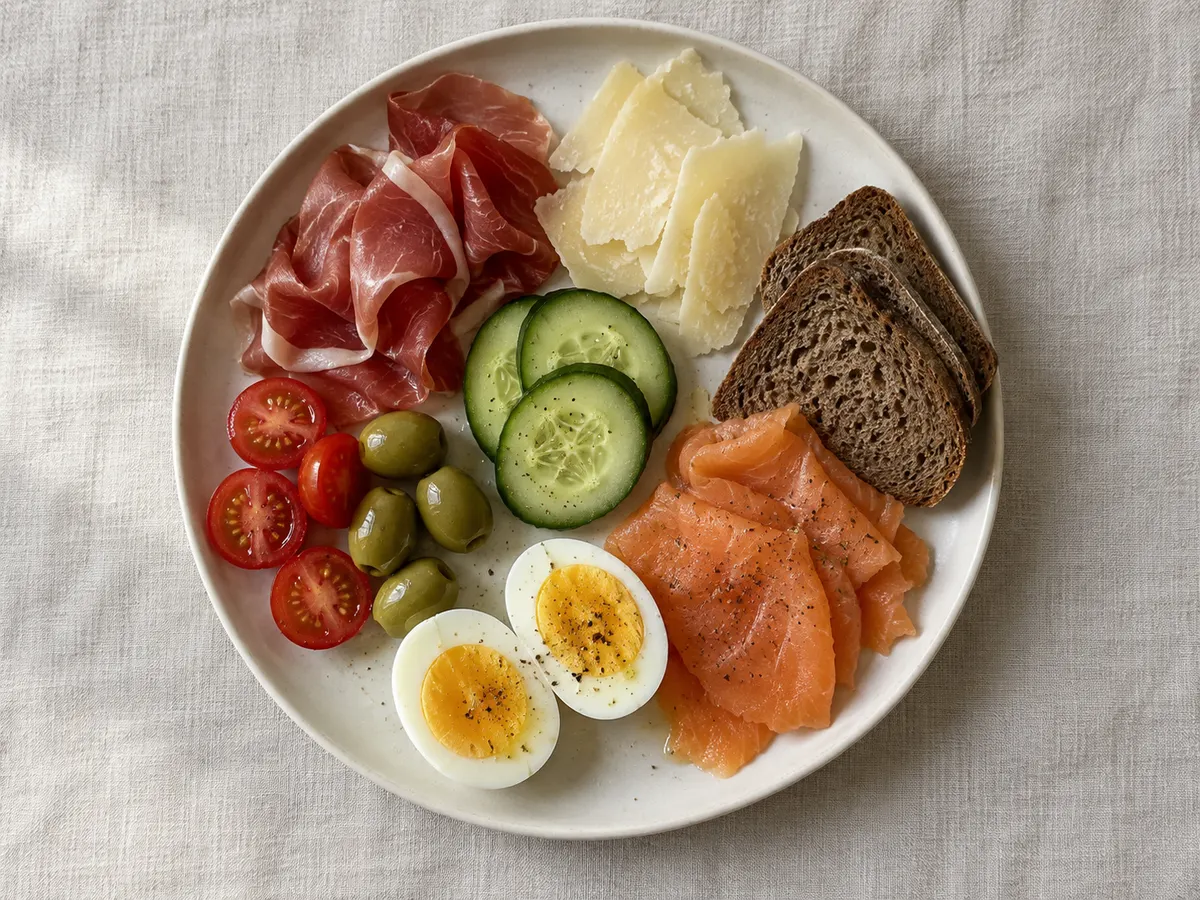 Holiday appetizer board with ham, smoked salmon, and eggs16.5 g protein per serving
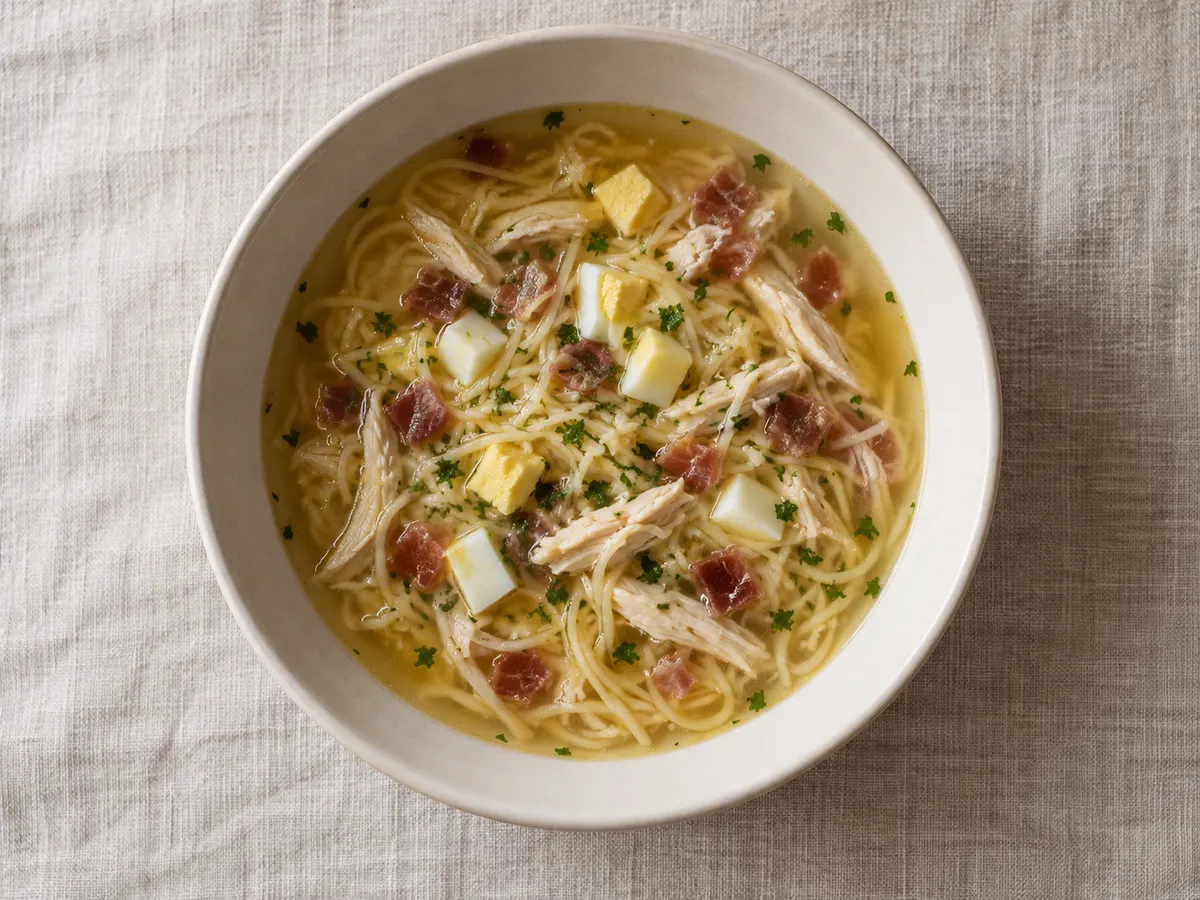 Light Spanish picadillo soup with chicken, egg, and ham18.4 g protein per serving
Satiety
The 1 to 5 score is our own estimate: it starts at 1 point, adds points for low energy density, for protein and fiber per 100 kcal, and for the water in solid foods, and subtracts points for drinks with calories. It is useful for comparing foods with each other; it is not a measurement in people.
What to keep in mind on a GLP-1 medication
Frequently asked questions about dry-cured ham (prosciutto)
How much protein is in a 30 g (1 oz) serving of dry-cured ham (prosciutto)?
100 g (3.5 oz) of dry-cured ham (prosciutto) has 27.8 g of protein. A typical 30 g (1 oz) serving has about 8.3 g of protein. That is 14.3 g of protein per 100 kcal, which is why it carries our “High in protein” tag.
How many calories does a 30 g (1 oz) serving of dry-cured ham (prosciutto) have?
100 g (3.5 oz) of dry-cured ham (prosciutto) has 195 kcal. A typical 30 g (1 oz) serving has about 59 kcal. That is a moderate energy density.
Is dry-cured ham (prosciutto) filling?
Moderately: our estimated satiety score is 3 out of 5. Calculation: 1 (base) + 0 (moderate energy density: 195 kcal/100 g) + 2 (protein: 14.3 g/100 kcal) + 0 (fiber: 0.0 g/100 kcal) + 0 (solid food with 55.9 g of water, under 70) = 3. It is an estimate based on its composition, not a measurement in people.
What should I know about dry-cured ham (prosciutto) on a GLP-1 medication?
Based on our tags, this is what matters about dry-cured ham (prosciutto) on a GLP-1 medication. “High in protein”: plenty of protein per calorie; protein helps preserve muscle mass when you eat less. “Nutritious in small servings”: a lot of nutrition in a small volume, which is practical when you eat little. These are general guidelines, not medical advice: everyone tolerates foods differently.
What counts as a normal serving of dry-cured ham (prosciutto)?
We use 30 g (1 oz) as a typical serving. That amount provides about 59 kcal, 8.3 g of protein, and 0 g of fiber. It is a reference for calculations, not a recommendation of how much to eat.
Compare with…
Similar foods
Sources
Sources for the data on this page, with the access date.
- Official databaseU.S. Department of Agriculture, Agricultural Research Service.USDA FoodData Central (FNDDS 2021-2023): Ham, prosciutto (FDC ID 2705879).accessed .
- RegulatorBoletín Oficial del Estado (Spain).Real Decreto 4/2014, de 10 de enero, por el que se aprueba la norma de calidad para la carne, el jamón, la paleta y la caña de lomo ibérico (Spain's quality standard for Iberian pork products, Articles 2 and 9).accessed .
- Clinical guidelineObesity (Wiley).Mozaffarian D, et al. Nutritional priorities to support GLP-1 therapy for obesity: A joint Advisory from the American College of Lifestyle Medicine, the American Society for Nutrition, the Obesity Medicine Association, and The Obesity Society. Obesity. 2025;33(8):1475-1503. doi:10.1002/oby.24336.accessed .
- InstitutionThe Lancet Oncology.Bouvard V, Loomis D, Guyton KZ, et al. Carcinogenicity of consumption of red and processed meat. Lancet Oncol. 2015;16(16):1599-1600. doi:10.1016/S1470-2045(15)00444-1.accessed .
- InstitutionInternational Agency for Research on Cancer (IARC/WHO).Q&A on the carcinogenicity of the consumption of red meat and processed meat (IARC Monographs, Volume 114).accessed .
- InstitutionWorld Health Organization.Sodium reduction.accessed .
- RegulatorMinistry of Social Rights, Consumer Affairs and 2030 Agenda (Spain).Alimentación segura durante el embarazo (Safe eating during pregnancy).accessed .