Vegetables and starchy roots
Cooked nopales
Cooked nopales are 94% water, so 100 g (3.5 oz) brings only 15 kcal and 2 g of fiber.
Estimated satietyHow it is calculated
Estimated satiety: 5 out of 5
| Starting point | +1 |
|---|---|
| Very low energy density: 15 kcal/100 g | +2 |
| Protein: 9.0 g/100 kcal | +2 |
| Fiber: 13.3 g/100 kcal | +2 |
| Solid food with 94.3 g of water | +1 |
| Sum | 8 |
| Capped at 5 | 5 |
Our own estimate from the values per 100 g: useful for comparing foods with each other, not a measurement in people. Holt index (1995): this food was not measured.
- Prepared by
- Alex Gonzalez
- Last updated
- Next review
- Sources
- 5 primary
- Data
- USDA FDC 169388
No clinical review. No advertising from drug companies and no affiliate links.How we work
Nutrition facts
- Calories
- 23 kcal per serving
- 15 kcal per 100 g (3.5 oz)
- Protein
- 2 g per serving
- 1.4 g per 100 g (3.5 oz)
- Carbohydrates
- 4.9 g per serving
- 3.3 g per 100 g (3.5 oz)
- of which sugars
- 1.7 g per serving
- 1.1 g per 100 g (3.5 oz)
- Fiber
- 3 g per serving
- 2 g per 100 g (3.5 oz)
- Fat
- 0.1 g per serving
- 0.1 g per 100 g (3.5 oz)
- of which saturated
- 0 g per serving
- 0 g per 100 g (3.5 oz)
- Water
- 141.5 g per serving
- 94.3 g per 100 g (3.5 oz)
Source: USDA FoodData Central: Nopales, cooked, without salt (FDC ID 169388), accessed September 23, 2026.
A typical 150 g (5.5 oz, about 1 cup) serving provides about 23 kcal, 2 g of protein, and 3 g of fiber.
What it is and how to eat it
Nopales are the tender pads, or cladodes, of the nopal cactus (Opuntia ficus-indica), the same cactus that produces the prickly pear, known in Spain as chumbera and its fruit as higo chumbo. They are a staple in Mexico, where they are sold whole, already cleaned of spines, cut into strips (nopalitos) or in jars, plain or pickled, and outside Mexico they are found mostly canned or in Latin American grocery stores. This page covers nopales cooked without salt, with 15 kcal, 2 g of fiber and 164 mg of calcium per 100 g according to USDA.
A 150 g (5.3 oz) serving provides about 23 kcal, 3 g of fiber and 2 g of protein: a lot of volume for very little energy, so they work as a side to the protein, which the 2025 nutrition advisory on GLP-1 therapy suggests eating first, as in the chicken and nopal tacos or the nopales salad with black beans and queso fresco. When appetite is low, avoid filling up on vegetables before eating the protein part of the meal. The same advisory suggests increasing fiber gradually, so in the weeks after a dose increase it may sit better to start with half a serving, well cooked and rinsed to remove the slime.
What the evidence says
In a controlled trial in 14 people with type 2 diabetes, published in 2014 in the Journal of the Academy of Nutrition and Dietetics, adding 300 g of steamed nopal to a high-carbohydrate breakfast lowered the area under the post-meal glucose curve by 35%, from 443 to 287, compared with the same breakfast without nopal, and it also lowered the insulin response. An earlier study, published in Diabetes Care in 2007 in people with type 2 diabetes, found a smaller rise in glucose when nopal was added to three Mexican breakfasts: chilaquiles, burritos and quesadillas. These are small, single-meal studies, so they do not show that eating nopales improves long-term diabetes control or that they can replace treatment. The US National Institute of Diabetes and Digestive and Kidney Diseases (NIDDK) advises people with diabetes to fill half the plate with nonstarchy vegetables, a group that includes nopales.
Recipes with this food
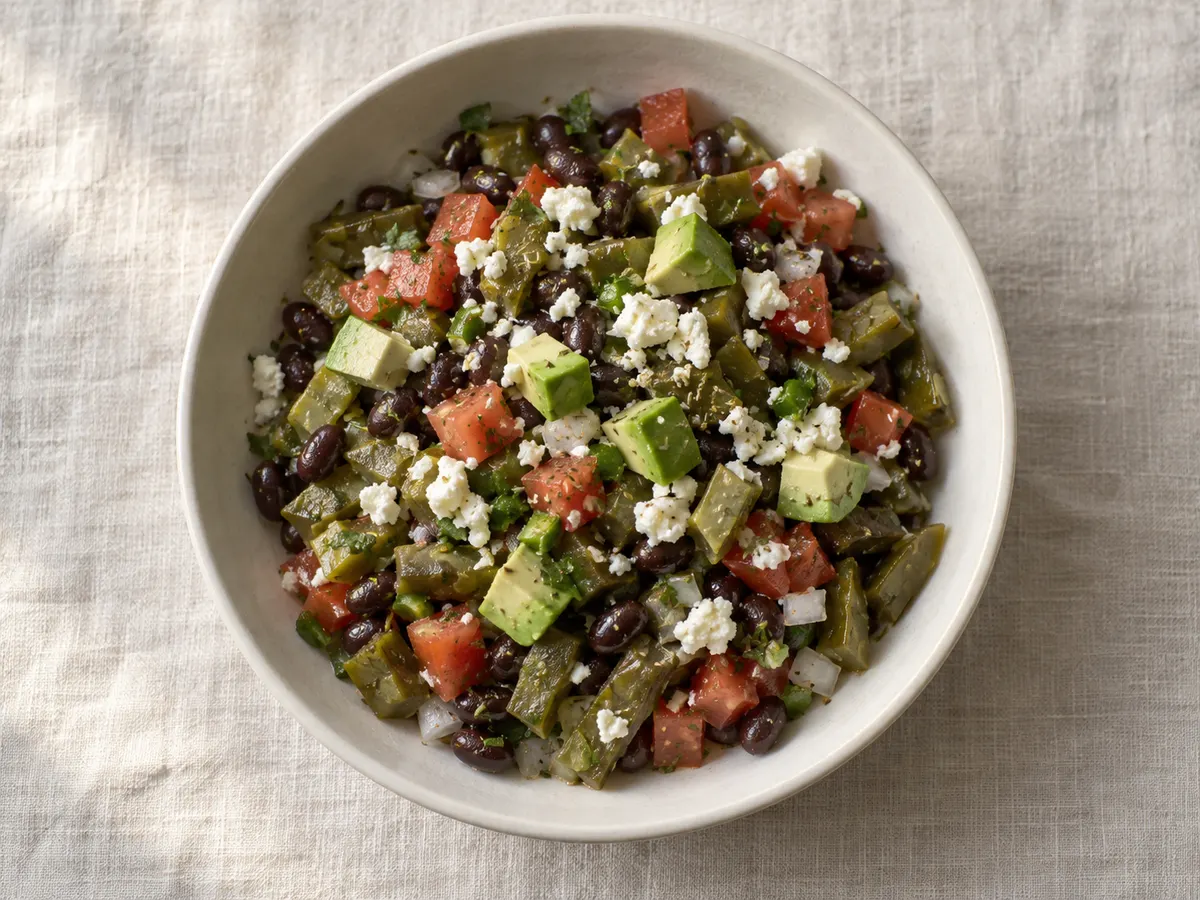 Nopales salad with black beans and queso fresco21.5 g protein per serving
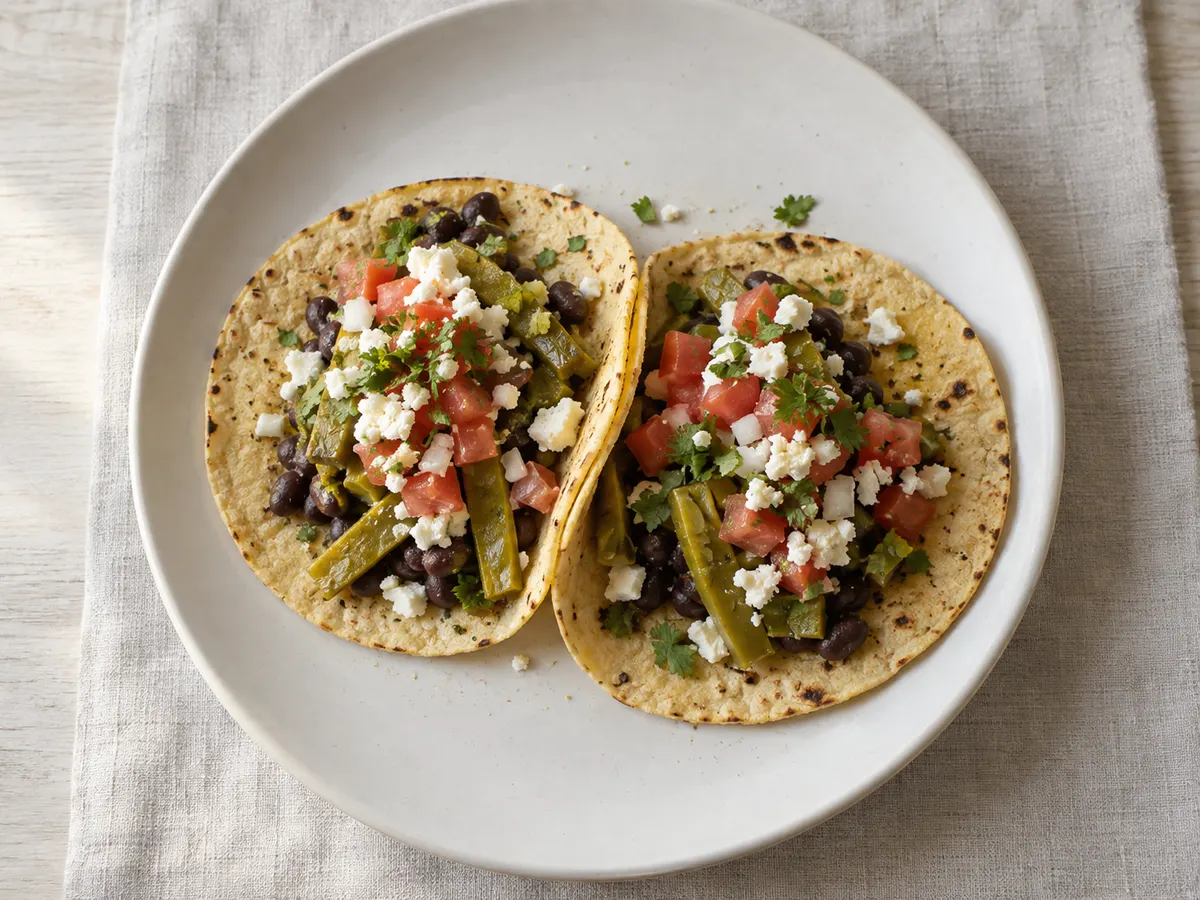 Nopal and black bean tacos with queso fresco16.8 g protein per serving
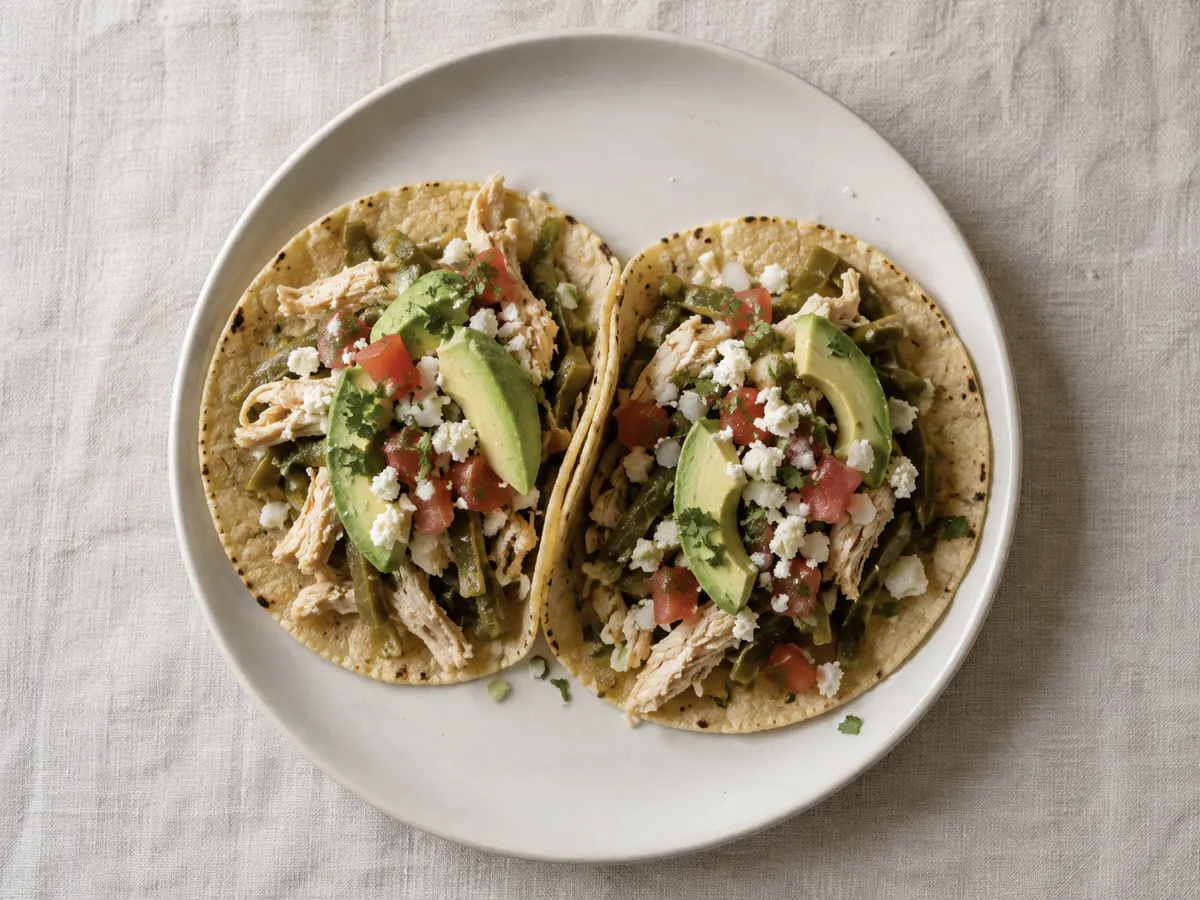 Chicken and nopal tacos31.6 g protein per serving
Satiety
The 1 to 5 score is our own estimate: it starts at 1 point, adds points for low energy density, for protein and fiber per 100 kcal, and for the water in solid foods, and subtracts points for drinks with calories. It is useful for comparing foods with each other; it is not a measurement in people.
What to keep in mind on a GLP-1 medication
Frequently asked questions about cooked nopales
How many grams of protein are in a 150 g (5.5 oz) serving of cooked nopales?
100 g (3.5 oz) of cooked nopales has 1.4 g of protein. A typical 150 g (5.5 oz) serving has about 2 g of protein. That is 9 g of protein per 100 kcal.
How many kcal are in a 150 g (5.5 oz) serving of cooked nopales?
100 g (3.5 oz) of cooked nopales has 15 kcal. A typical 150 g (5.5 oz) serving has about 23 kcal. That is a very low energy density.
How much fiber is in a 150 g (5.5 oz) serving of cooked nopales?
100 g (3.5 oz) of cooked nopales has 2 g of fiber. A typical 150 g (5.5 oz) serving has about 3 g of fiber.
Do cooked nopales keep you full?
Yes, very filling for the calories they provide: our estimated satiety score is 5 out of 5. Calculation: 1 (base) + 2 (very low energy density: 15 kcal/100 g) + 2 (protein: 9.0 g/100 kcal) + 2 (fiber: 13.3 g/100 kcal) + 1 (solid food with 94.3 g of water) = 8; capped at 5. It is an estimate based on its composition, not a measurement in people.
How do cooked nopales fit into eating on Ozempic, Wegovy, Mounjaro, or Zepbound?
Based on our tags, this is what matters about cooked nopales on a GLP-1 medication. “Low energy density”: plenty of volume for few calories; make sure it does not push protein foods off your plate. “Hydrating”: a lot of water, which contributes to hydration when you eat and drink less. These are general guidelines, not medical advice: everyone tolerates foods differently.
What is a typical serving of cooked nopales?
We use 150 g (5.5 oz) as a typical serving, about 1 cup. That amount provides about 23 kcal, 2 g of protein, and 3 g of fiber. It is a reference for calculations, not a recommendation of how much to eat.
Similar foods
Sources
Sources for the data on this page, with the access date.
- Official databaseU.S. Department of Agriculture, Agricultural Research Service.USDA FoodData Central: Nopales, cooked, without salt (FDC ID 169388).accessed .
- Clinical guidelineObesity (Wiley).Mozaffarian D, et al. Nutritional priorities to support GLP-1 therapy for obesity: A joint Advisory from the American College of Lifestyle Medicine, the American Society for Nutrition, the Obesity Medicine Association, and The Obesity Society. Obesity. 2025;33(8):1475-1503. doi:10.1002/oby.24336.accessed .
- Clinical trialJournal of the Academy of Nutrition and Dietetics (Elsevier).López-Romero P, Pichardo-Ontiveros E, Avila-Nava A, et al. The effect of nopal (Opuntia ficus indica) on postprandial blood glucose, incretins, and antioxidant activity in Mexican patients with type 2 diabetes after consumption of two different composition breakfasts. J Acad Nutr Diet. 2014;114(11):1811-1818. doi:10.1016/j.jand.2014.06.352.accessed .
- Clinical trialDiabetes Care (American Diabetes Association).Bacardi-Gascon M, Dueñas-Mena D, Jimenez-Cruz A. Lowering effect on postprandial glycemic response of nopales added to Mexican breakfasts. Diabetes Care. 2007;30(5):1264-1265. doi:10.2337/dc06-2506.accessed .
- InstitutionNational Institute of Diabetes and Digestive and Kidney Diseases (NIH).Healthy Living with Diabetes.accessed .