Vegetables and starchy roots
Radishes
Radishes is 95% water, so 100 g (3.5 oz) brings only 16 kcal and 1.6 g of fiber.
Estimated satietyHow it is calculated
Estimated satiety: 5 out of 5
| Starting point | +1 |
|---|---|
| Very low energy density: 16 kcal/100 g | +2 |
| Protein: 4.2 g/100 kcal | +1 |
| Fiber: 10.0 g/100 kcal | +2 |
| Solid food with 95.3 g of water | +1 |
| Sum | 7 |
| Capped at 5 | 5 |
Our own estimate from the values per 100 g: useful for comparing foods with each other, not a measurement in people. Holt index (1995): this food was not measured.
- Prepared by
- Alex Gonzalez
- Last updated
- Next review
- Sources
- 8 primary
- Data
- USDA FDC 169276
No clinical review. No advertising from drug companies and no affiliate links.How we work
Nutrition facts
- Calories
- 8 kcal per serving
- 16 kcal per 100 g (3.5 oz)
- Protein
- 0.3 g per serving
- 0.7 g per 100 g (3.5 oz)
- Carbohydrates
- 1.7 g per serving
- 3.4 g per 100 g (3.5 oz)
- of which sugars
- 0.9 g per serving
- 1.9 g per 100 g (3.5 oz)
- Fiber
- 0.8 g per serving
- 1.6 g per 100 g (3.5 oz)
- Fat
- 0.1 g per serving
- 0.1 g per 100 g (3.5 oz)
- of which saturated
- 0 g per serving
- 0 g per 100 g (3.5 oz)
- Water
- 47.7 g per serving
- 95.3 g per 100 g (3.5 oz)
Source: USDA FoodData Central: Radishes, raw (FDC ID 169276), accessed September 23, 2026.
A typical 50 g (2 oz) serving provides about 8 kcal, 0.3 g of protein, and 0.8 g of fiber.
What it is and how to eat it
The radish (Raphanus sativus) is a crunchy, slightly peppery root in the cabbage family; the most common ones are small, round, red outside and white inside, and there are also elongated varieties and daikon, a large white radish of Asian origin. It has the same name, rábano, in Spain and Latin America, and is sold in bunches with the leaves or cleaned in bags. This page covers raw radishes, with 16 kcal, 95.3 g of water and 1.6 g of fiber per 100 g according to USDA.
A 50 g (1.8 oz) serving, about five or six large radishes, provides 8 kcal, 0.3 g of protein and 0.8 g of fiber: a crunchy snack, sliced into salads or, as in Mexico, served with tacos and pozole, which does not replace the protein the 2025 nutrition advisory on GLP-1 therapy suggests eating first. Pickled radishes contain added salt, so check the label. They are cruciferous and give some people burps or gas, so in the first few days of treatment and after a dose increase, start with a few slices.
What the evidence says
The NIDDK, part of the US National Institutes of Health, lists cruciferous vegetables, the radish's family, among the foods that can cause gas, and gas and burping are common with these medications according to the Wegovy label. With 14.8 mg of vitamin C per 100 g, radishes just clear the EU's 12 mg minimum for a "source of vitamin C" claim, so they could carry the authorized claim "vitamin C contributes to the normal function of the immune system", but a 50 g serving provides 7.4 mg, 9% of the 80 mg reference value (Regulations (EC) No 1924/2006, (EU) No 1169/2011 and (EU) No 432/2012). The EU register lists as non-authorized the assessed claims that credited radishes, black radish included, with benefits for digestion, the liver or bile flow. I have not found trials showing that radishes themselves help with weight loss.
Recipes with this food
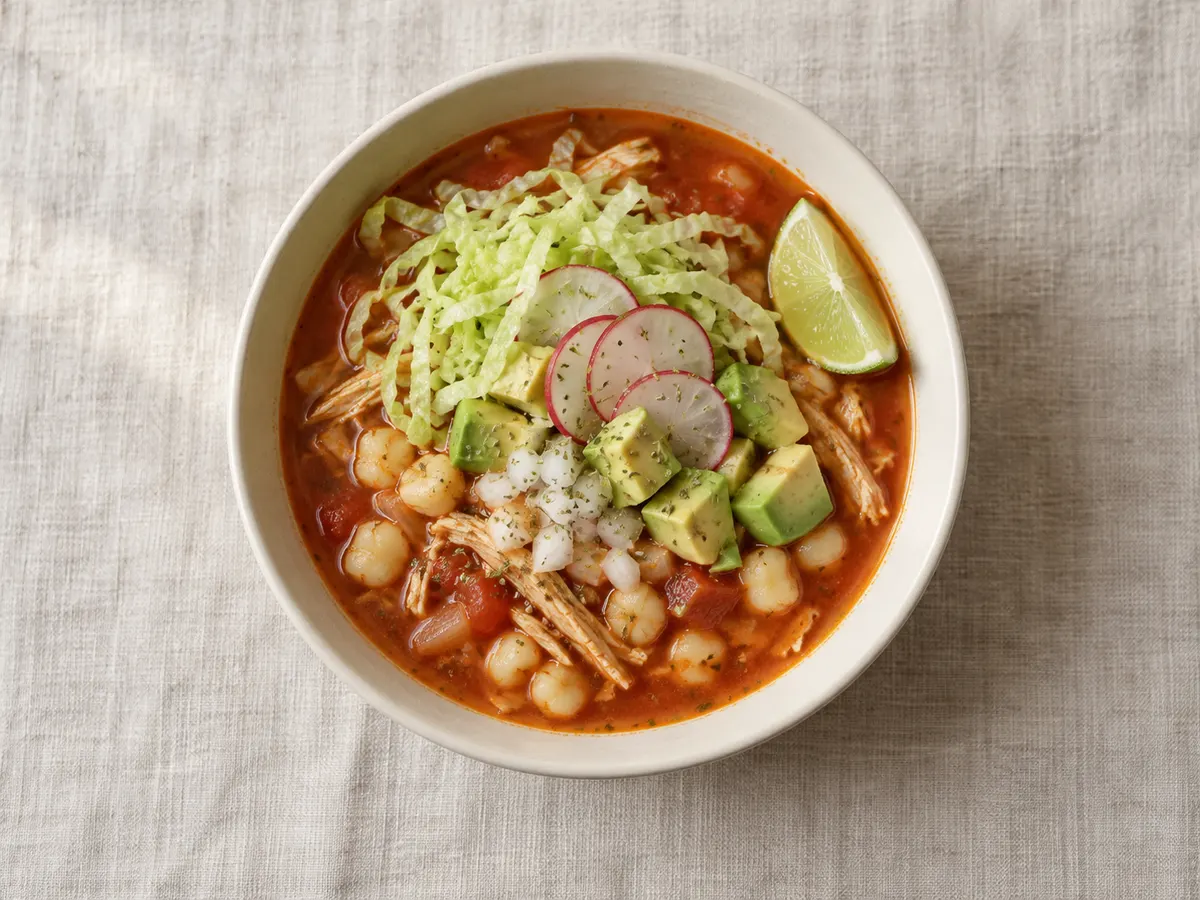 Light red pozole with chicken31.6 g protein per serving
Satiety
The 1 to 5 score is our own estimate: it starts at 1 point, adds points for low energy density, for protein and fiber per 100 kcal, and for the water in solid foods, and subtracts points for drinks with calories. It is useful for comparing foods with each other; it is not a measurement in people.
What to keep in mind on a GLP-1 medication
Frequently asked questions about radishes
How many grams of protein are in a 50 g (2 oz) serving of radishes?
100 g (3.5 oz) of radishes has 0.7 g of protein. A typical 50 g (2 oz) serving has about 0.3 g of protein. That is 4.3 g of protein per 100 kcal.
How many kcal are in a 50 g (2 oz) serving of radishes?
100 g (3.5 oz) of radishes has 16 kcal. A typical 50 g (2 oz) serving has about 8 kcal. That is a very low energy density.
How much fiber is in a 50 g (2 oz) serving of radishes?
100 g (3.5 oz) of radishes has 1.6 g of fiber. A typical 50 g (2 oz) serving has about 0.8 g of fiber.
Does radishes keep you full?
Yes, very filling for the calories it provides: our estimated satiety score is 5 out of 5. Calculation: 1 (base) + 2 (very low energy density: 16 kcal/100 g) + 1 (protein: 4.2 g/100 kcal) + 2 (fiber: 10.0 g/100 kcal) + 1 (solid food with 95.3 g of water) = 7; capped at 5. It is an estimate based on its composition, not a measurement in people.
How does radishes fit into eating on Ozempic, Wegovy, Mounjaro, or Zepbound?
Based on our tags, this is what matters about radishes on a GLP-1 medication. “Low energy density”: plenty of volume for few calories; make sure it does not push protein foods off your plate. “Hydrating”: a lot of water, which contributes to hydration when you eat and drink less. “May cause bloating”: it can cause gas or bloating in some people, and on a GLP-1 medication that feeling can be more noticeable. These are general guidelines, not medical advice: everyone tolerates foods differently.
What is a typical serving of radishes?
We use 50 g (2 oz) as a typical serving. That amount provides about 8 kcal, 0.3 g of protein, and 0.8 g of fiber. It is a reference for calculations, not a recommendation of how much to eat.
Similar foods
Sources
Sources for the data on this page, with the access date.
- Official databaseU.S. Department of Agriculture, Agricultural Research Service.USDA FoodData Central: Radishes, raw (FDC ID 169276).accessed .
- Clinical guidelineObesity (Wiley).Mozaffarian D, et al. Nutritional priorities to support GLP-1 therapy for obesity: A joint Advisory from the American College of Lifestyle Medicine, the American Society for Nutrition, the Obesity Medicine Association, and The Obesity Society. Obesity. 2025;33(8):1475-1503. doi:10.1002/oby.24336.accessed .
- InstitutionNational Institute of Diabetes and Digestive and Kidney Diseases (NIH).Eating, Diet, & Nutrition for Gas in the Digestive Tract.accessed .
- Drug labelEuropean Medicines Agency.Wegovy (semaglutide): EU Summary of Product Characteristics, section 4.8 (undesirable effects), current version.accessed .
- RegulatorOfficial Journal of the European Union (EUR-Lex).Regulation (EC) No 1924/2006 on nutrition and health claims made on foods (Annex).accessed .
- RegulatorOfficial Journal of the European Union (EUR-Lex).Regulation (EU) No 1169/2011 on the provision of food information to consumers (Annex XIII, nutrient reference values).accessed .
- RegulatorOfficial Journal of the European Union (EUR-Lex).Commission Regulation (EU) No 432/2012 establishing a list of permitted health claims made on foods.accessed .
- RegulatorEuropean Commission.EU Register of nutrition and health claims made on foods.accessed .