Nuts and seeds
Walnuts
Walnuts pack 654 kcal into 100 g (3.5 oz), so a typical 25 g (0.9 oz) serving already adds up to about 164 kcal.
Estimated satietyHow it is calculated
Estimated satiety: 1 out of 5
| Starting point | +1 |
|---|---|
| Very high energy density | −2 |
| Sum | −1 |
| Raised to the minimum of 1 | 1 |
Our own estimate from the values per 100 g: useful for comparing foods with each other, not a measurement in people. Holt index (1995): this food was not measured.
- Prepared by
- Alex Gonzalez
- Last updated
- Next review
- Sources
- 5 primary
- Data
- USDA FDC 170187
No clinical review. No advertising from drug companies and no affiliate links.How we work
Nutrition facts
- Calories
- 164 kcal per serving
- 654 kcal per 100 g (3.5 oz)
- Protein
- 3.8 g per serving
- 15.2 g per 100 g (3.5 oz)
- Carbohydrates
- 3.4 g per serving
- 13.7 g per 100 g (3.5 oz)
- of which sugars
- 0.7 g per serving
- 2.6 g per 100 g (3.5 oz)
- Fiber
- 1.7 g per serving
- 6.7 g per 100 g (3.5 oz)
- Fat
- 16.3 g per serving
- 65.2 g per 100 g (3.5 oz)
- of which saturated
- 1.5 g per serving
- 6.1 g per 100 g (3.5 oz)
- Water
- 1 g per serving
- 4.1 g per 100 g (3.5 oz)
Source: USDA FoodData Central: Nuts, walnuts, english (FDC ID 170187), accessed September 23, 2026.
A typical 25 g (0.9 oz) serving provides about 164 kcal, 3.8 g of protein, and 1.7 g of fiber.
What it is and how to eat it
The common walnut is the seed of the walnut tree (Juglans regia); in Mexico it is usually called nuez de Castilla, because there plain "nuez" usually means pecan. Walnuts are sold in the shell or shelled, in halves or pieces, raw or toasted, and sometimes salted or candied. This page covers shelled, untoasted walnuts, with 654 kcal, 65.2 g of fat and 9.08 g of alpha-linolenic acid (ALA), the plant omega-3, per 100 g according to USDA.
A 25 g (0.9 oz) serving, about twelve halves, provides about 164 kcal, 3.8 g of protein, 1.7 g of fiber and 16.3 g of fat: a lot of energy in little volume, which does not replace the protein part of the plate. The 2025 nutrition advisory on GLP-1 therapy notes that foods high in protein or fat can further slow gastric emptying and suggests avoiding fatty foods in the first few days of treatment; in those days, and after each dose increase, two or three chopped halves over a dairy food may sit better than a whole serving. Use them alongside protein, as in the cottage cheese with peach and walnuts, the ricotta with honey and walnuts or the chicken salad with apple, celery, and yogurt.
What the evidence says
With 9.08 g of ALA per 100 g, a 25 g serving provides 2.3 g, more than the 2 g a day with which, according to the EU, the effect of the authorized claim "ALA contributes to the maintenance of normal blood cholesterol levels" is obtained (Regulation (EU) No 432/2012). The EU also authorizes a walnut-specific claim, "walnuts contribute to the improvement of the elasticity of blood vessels", only for foods that provide a daily intake of 30 g of walnuts and with consumers told that the effect comes with that amount; it rests on a 2011 EFSA opinion that assessed endothelium-dependent vasodilation. In the WAHA trial, 356 healthy older adults in California ate 28 to 56 g of walnuts a day, about 15% of their energy, or none, for 2 years, and there was no significant difference in weight between the groups (the walnut group lost 0.4 kg and the control group 0.6 kg); it was funded by the California Walnut Commission (Nutrients, 2018).
Recipes with this food
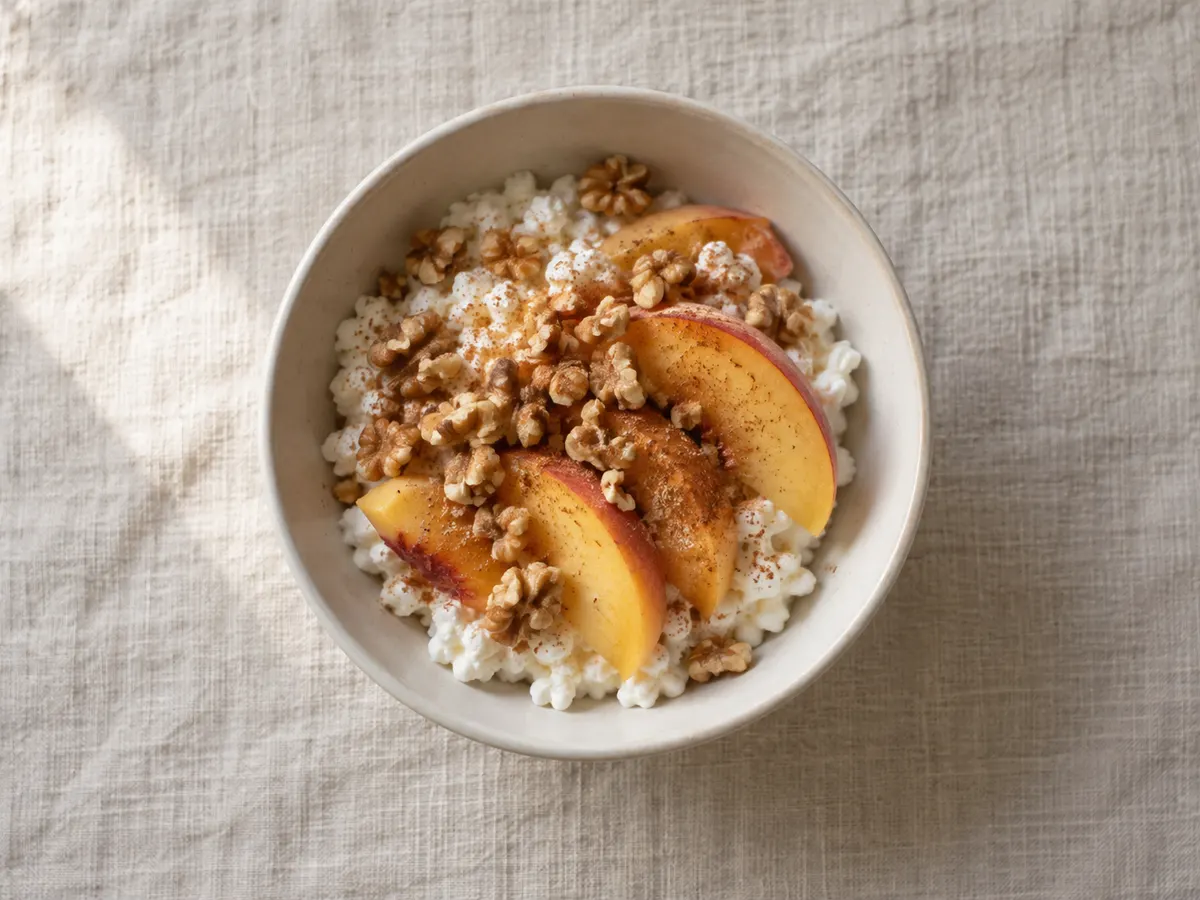 Cottage cheese with peach and walnuts18.2 g protein per serving
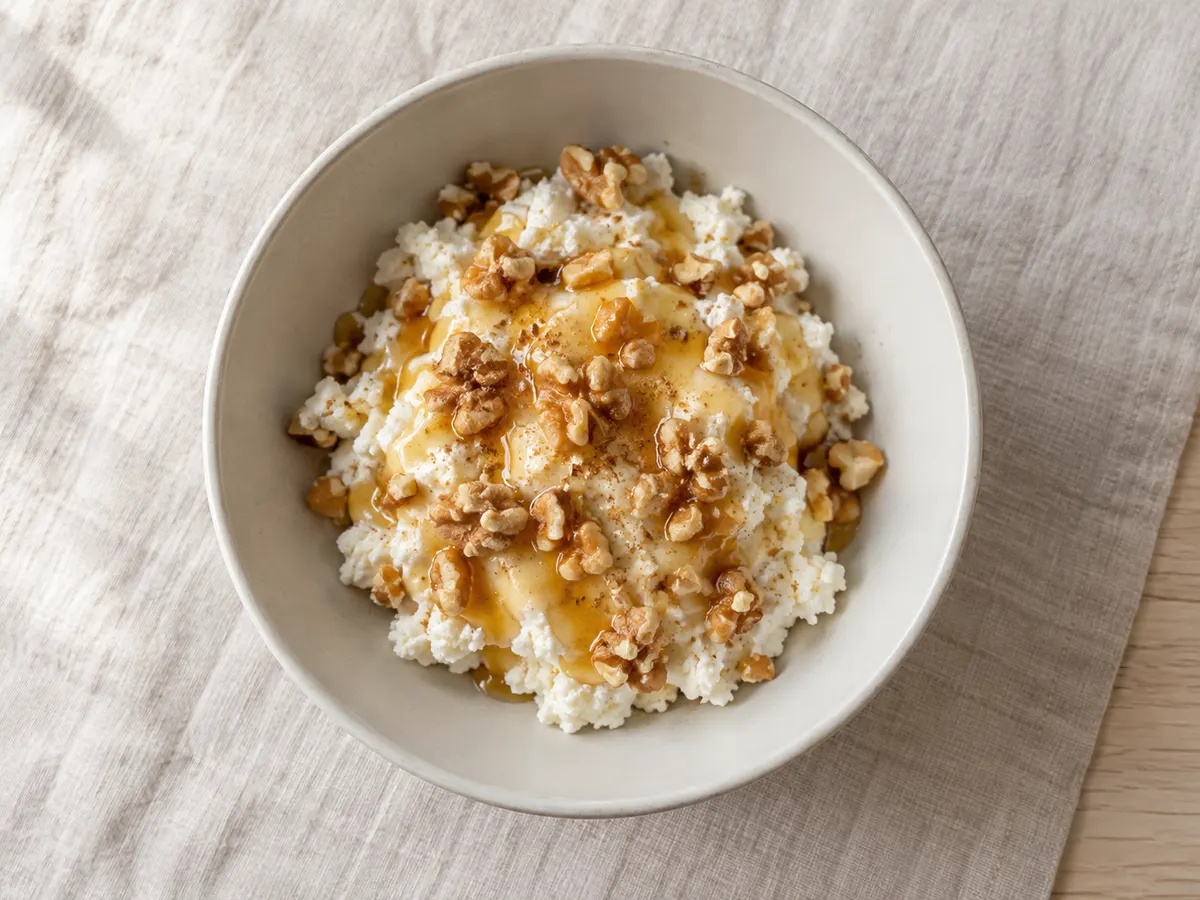 Ricotta with honey and walnuts16.4 g protein per serving
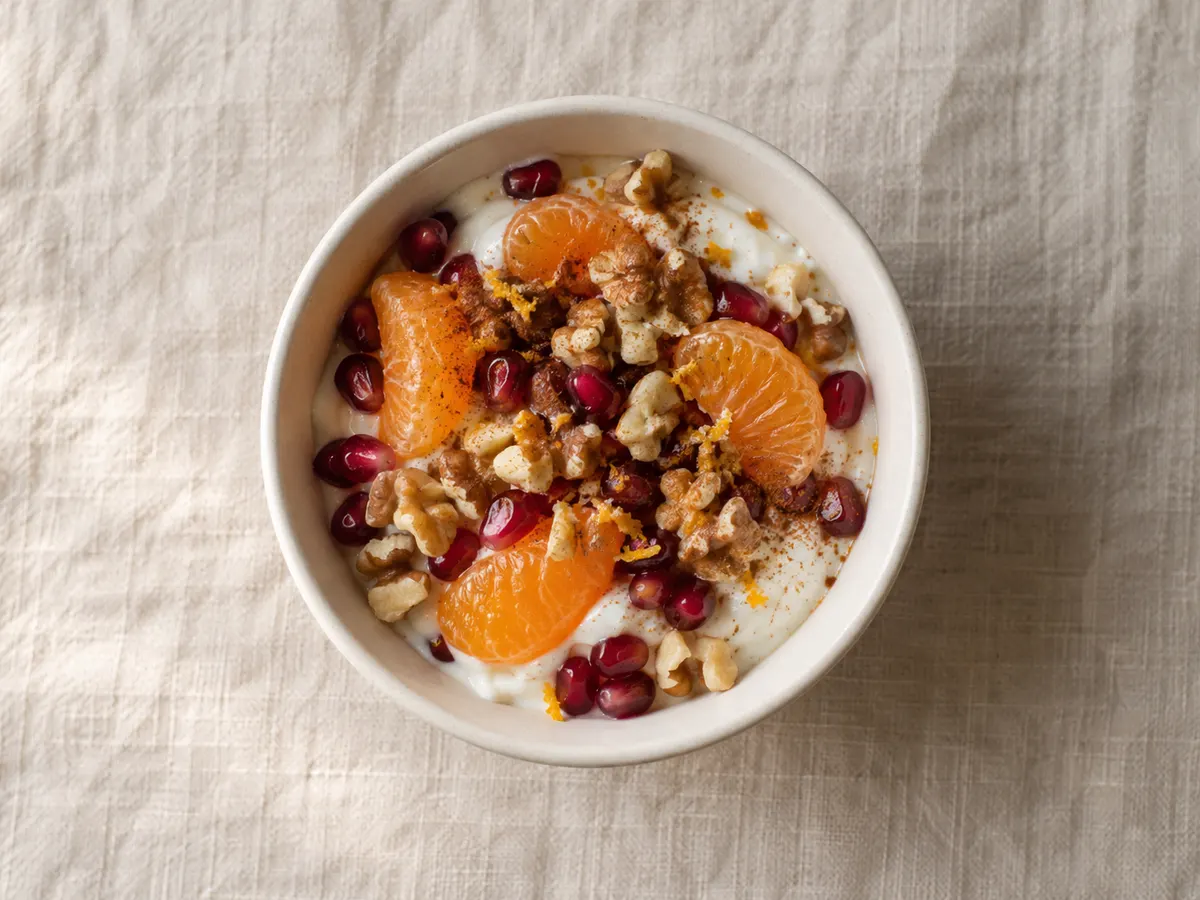 Greek yogurt cup with pomegranate, mandarin, and walnuts17.8 g protein per serving
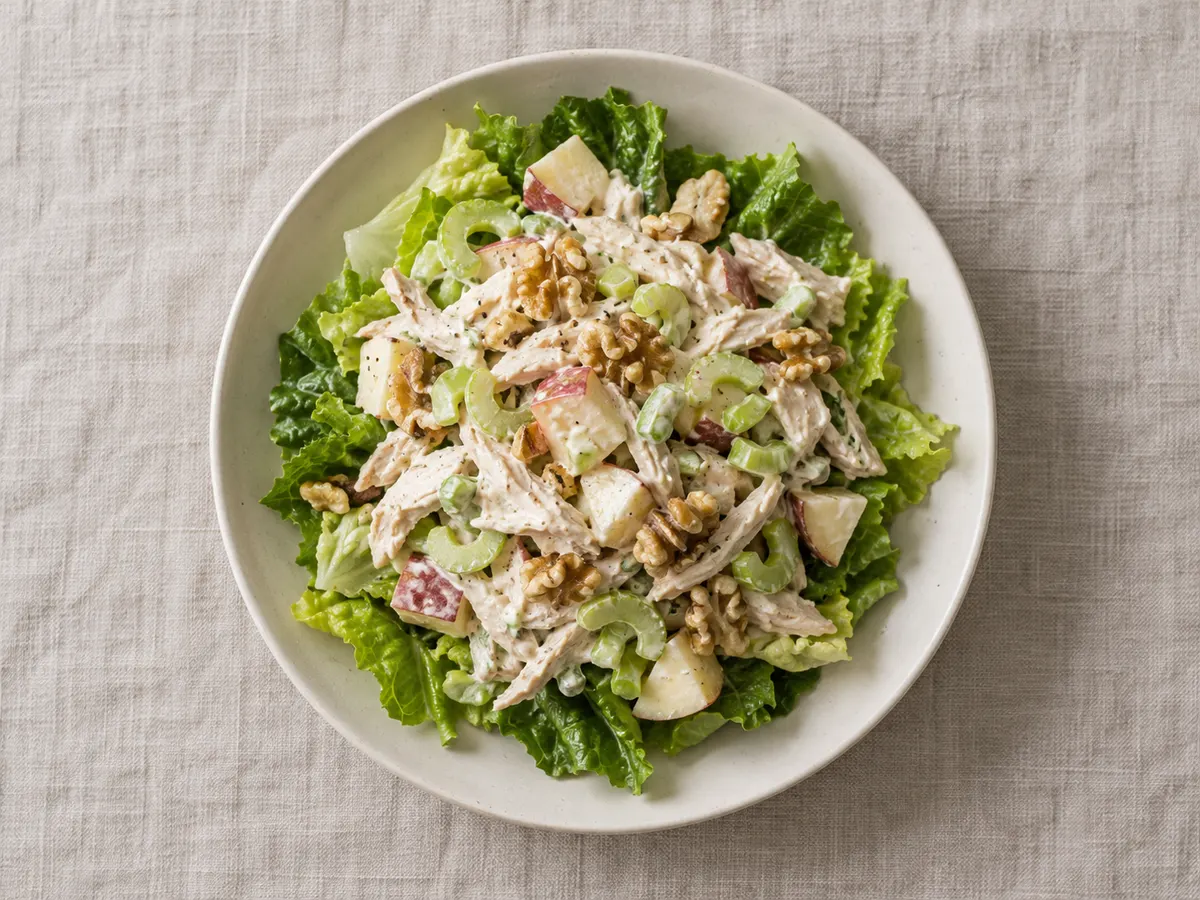 Chicken salad with apple, celery, and yogurt33.5 g protein per serving
Satiety
The 1 to 5 score is our own estimate: it starts at 1 point, adds points for low energy density, for protein and fiber per 100 kcal, and for the water in solid foods, and subtracts points for drinks with calories. It is useful for comparing foods with each other; it is not a measurement in people.
What to keep in mind on a GLP-1 medication
Frequently asked questions about walnuts
How much protein is in a small handful of walnuts?
A small handful of walnuts, our reference serving of 25 g (0.9 oz), has about 3.8 g of protein. 100 g (3.5 oz) of walnuts has 15.2 g of protein. That is 2.3 g of protein per 100 kcal.
How many calories does a small handful of walnuts have?
A small handful of walnuts, our reference serving of 25 g (0.9 oz), has about 164 kcal. 100 g (3.5 oz) of walnuts has 654 kcal. That is a very high energy density.
Do walnuts have fiber?
A small handful of walnuts, our reference serving of 25 g (0.9 oz), has about 1.7 g of fiber. 100 g (3.5 oz) of walnuts has 6.7 g of fiber. They carry our “High in fiber” tag.
Are walnuts filling?
Barely filling for the calories they provide: our estimated satiety score is 1 out of 5. It is based on: very high energy density. It is an estimate based on its composition, not a measurement in people.
What should I know about walnuts on a GLP-1 medication?
Based on our tags, this is what matters about walnuts on a GLP-1 medication. “High in fiber”: a good amount of fiber, which helps keep you regular; it is easier to tolerate when you increase it gradually and drink enough water. “Nutritious in small servings”: a lot of nutrition in a small volume, which is practical when you eat little. “High energy density”: a lot of energy in a small volume; when your appetite is very low, a small serving can help you meet your needs. These are general guidelines, not medical advice: everyone tolerates foods differently.
What counts as a normal serving of walnuts?
We use 25 g (0.9 oz) as a typical serving, roughly a small handful of walnuts. That amount provides about 164 kcal, 3.8 g of protein, and 1.7 g of fiber. It is a reference for calculations, not a recommendation of how much to eat.
Compare with…
Similar foods
Sources
Sources for the data on this page, with the access date.
- Official databaseU.S. Department of Agriculture, Agricultural Research Service.USDA FoodData Central: Nuts, walnuts, english (FDC ID 170187).accessed .
- Clinical guidelineObesity (Wiley).Mozaffarian D, et al. Nutritional priorities to support GLP-1 therapy for obesity: A joint Advisory from the American College of Lifestyle Medicine, the American Society for Nutrition, the Obesity Medicine Association, and The Obesity Society. Obesity. 2025;33(8):1475-1503. doi:10.1002/oby.24336.accessed .
- RegulatorOfficial Journal of the European Union (EUR-Lex).Commission Regulation (EU) No 432/2012 establishing a list of permitted health claims made on foods.accessed .
- RegulatorEFSA Journal.EFSA NDA Panel. Scientific Opinion on the substantiation of health claims related to walnuts and maintenance of normal blood LDL-cholesterol concentrations (ID 1156, 1158) and improvement of endothelium-dependent vasodilation (ID 1155, 1157) pursuant to Article 13(1) of Regulation (EC) No 1924/2006. EFSA Journal. 2011;9(4):2074. doi:10.2903/j.efsa.2011.2074.accessed .
- Clinical trialNutrients (MDPI).Bitok E, Rajaram S, Jaceldo-Siegl K, et al. Effects of Long-Term Walnut Supplementation on Body Weight in Free-Living Elderly: Results of a Randomized Controlled Trial. Nutrients. 2018;10(9):1317. doi:10.3390/nu10091317.accessed .