Dairy
Part-skim ricotta
Part-skim ricotta provides 11.4 g of protein for 138 kcal per 100 g (3.5 oz), or 8.3 g of protein for every 100 kcal.
Estimated satietyHow it is calculated
Estimated satiety: 5 out of 5
| Starting point | +1 |
|---|---|
| Low energy density | +1 |
| A lot of protein per calorie | +2 |
| High water content | +1 |
Our own estimate from the values per 100 g: useful for comparing foods with each other, not a measurement in people. Holt index (1995): this food was not measured.
- Prepared by
- Alex Gonzalez
- Last updated
- Next review
- Sources
- 8 primary
- Data
- USDA FDC 171248
No clinical review. No advertising from drug companies and no affiliate links.How we work
Nutrition facts
- Calories
- 138 kcal per serving
- 138 kcal per 100 g (3.5 oz)
- Protein
- 11.4 g per serving
- 11.4 g per 100 g (3.5 oz)
- Carbohydrates
- 5.1 g per serving
- 5.1 g per 100 g (3.5 oz)
- of which sugars
- 0.3 g per serving
- 0.3 g per 100 g (3.5 oz)
- Fiber
- 0 g per serving
- 0 g per 100 g (3.5 oz)
- Fat
- 7.9 g per serving
- 7.9 g per 100 g (3.5 oz)
- of which saturated
- 4.9 g per serving
- 4.9 g per 100 g (3.5 oz)
- Water
- 74.4 g per serving
- 74.4 g per 100 g (3.5 oz)
Source: USDA FoodData Central: Cheese, ricotta, part skim milk (FDC ID 171248), accessed September 23, 2026.
A typical 100 g (3.5 oz, about 1/2 cup) serving provides about 138 kcal, 11.4 g of protein, and 0 g of fiber.
What it is and how to eat it
Ricotta and requesón (its Spanish and Mexican cousin) are whey cheeses: they are made by heating the whey left over from other cheeses, sometimes with added milk or cream, until its proteins set. That gives them a fine, moist texture without the curds of cottage cheese, which is made from milk curd. This page uses USDA's part-skim ricotta; the fat in requesón varies by brand.
A 100 g (3.5 oz) serving provides 11.4 g of protein and 138 kcal, and it is mild and easy to spread or stir in. If your appetite is small, two or three spoonfuls with fruit, on toast or folded into a purée add protein without much volume. The 2025 nutrition advisory on GLP-1 therapy suggests eating protein-rich foods first and avoiding very fatty foods in the first days; this part-skim version has 7.9 g of fat per 100 g.
What the evidence says
It stands out for calcium: 272 mg per 100 g according to USDA, more than twice as much as cottage cheese. In the EU, a food with at least 120 mg per 100 g can be labeled a "source of calcium" and carry the authorized claim that calcium is needed for the maintenance of normal bones (Regulations (EC) No 1924/2006, (EU) No 1169/2011 and (EU) No 432/2012). I have not found trials that credit ricotta with effects of its own beyond its protein and calcium.
Recipes with this food
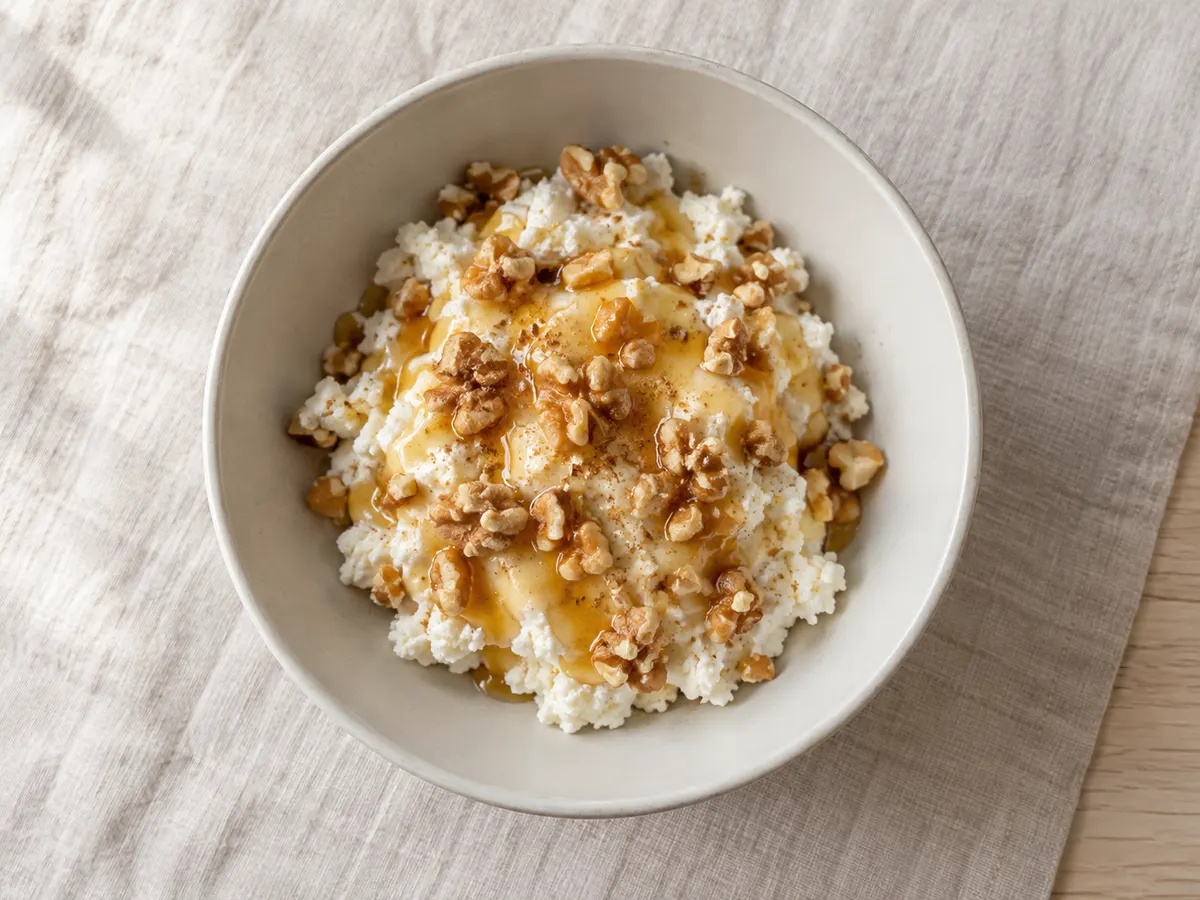 Ricotta with honey and walnuts16.4 g protein per serving
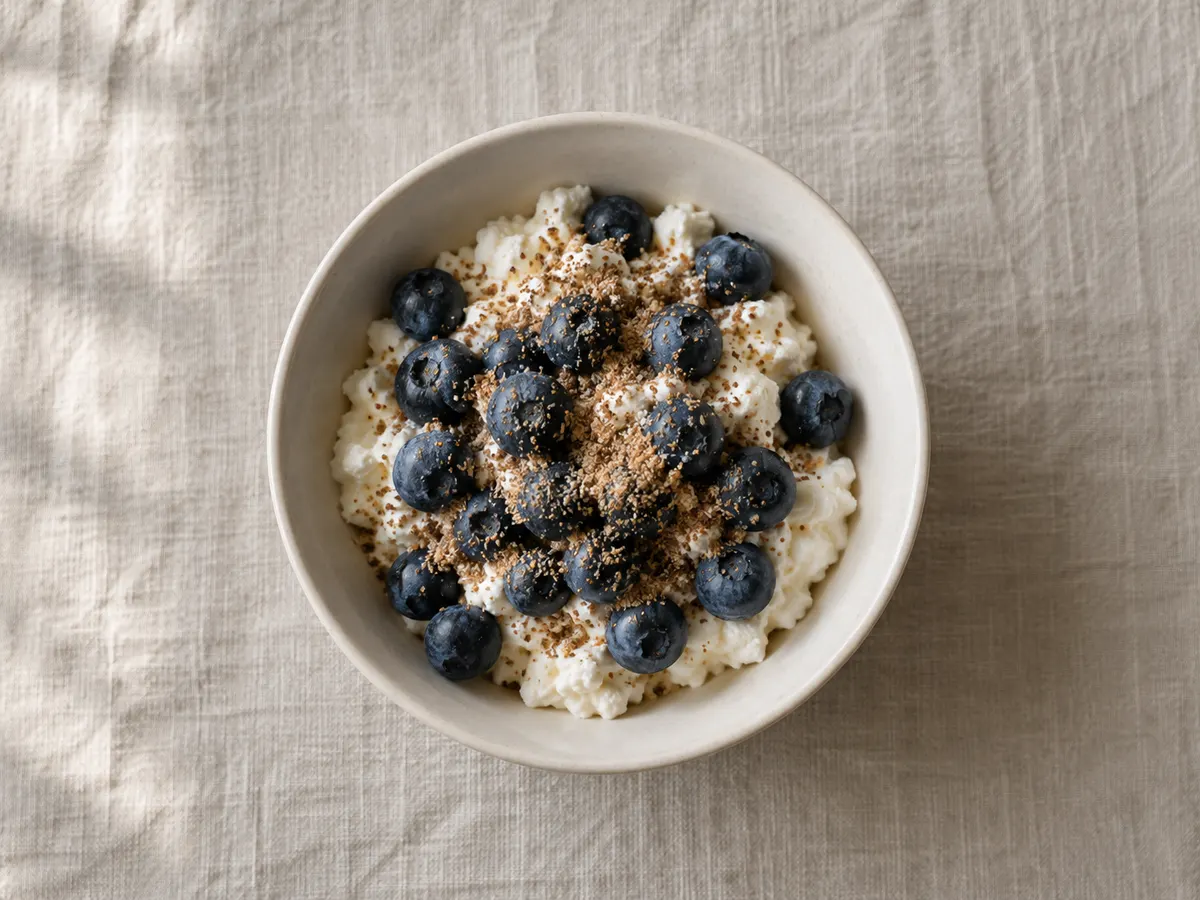 Ricotta with blueberries and flaxseed15.4 g protein per serving
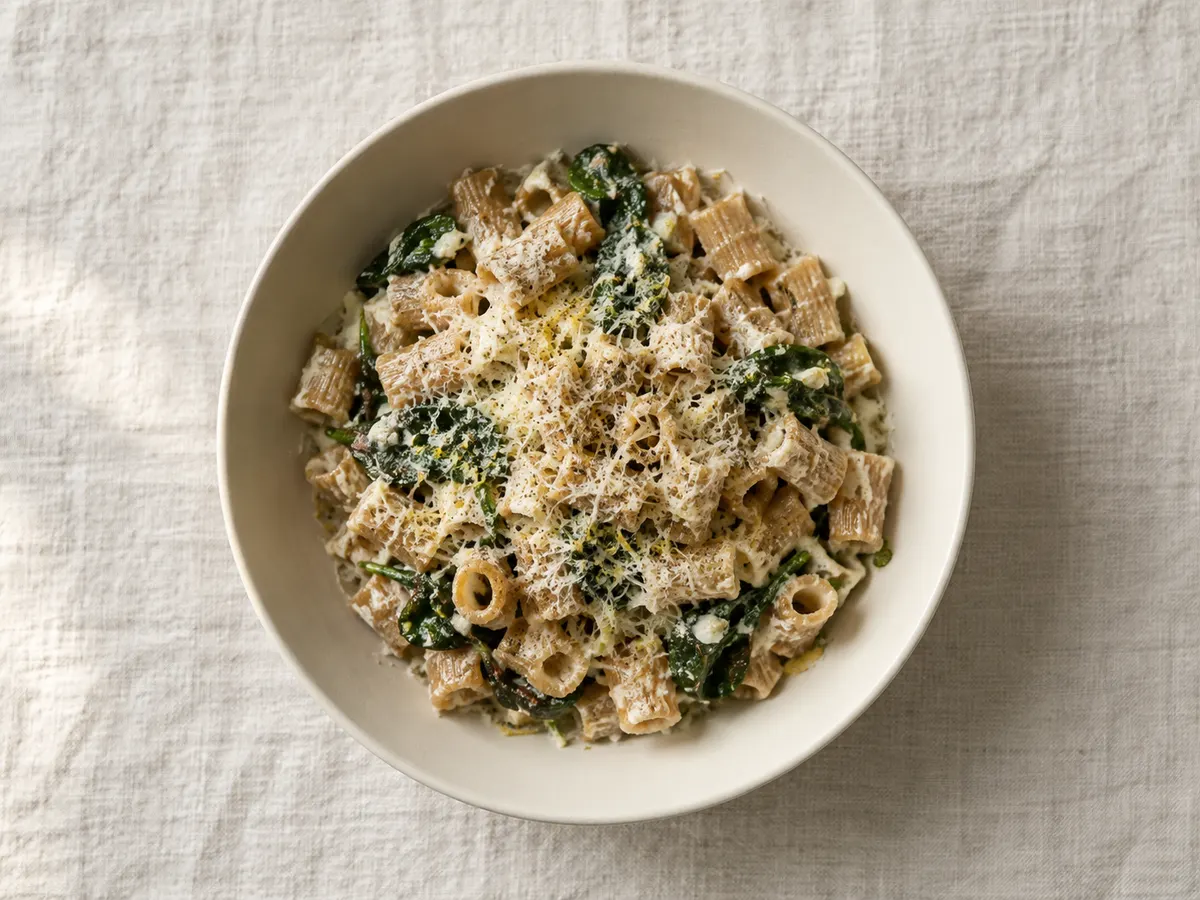 Whole-wheat pasta with ricotta, spinach, and lemon23.2 g protein per serving
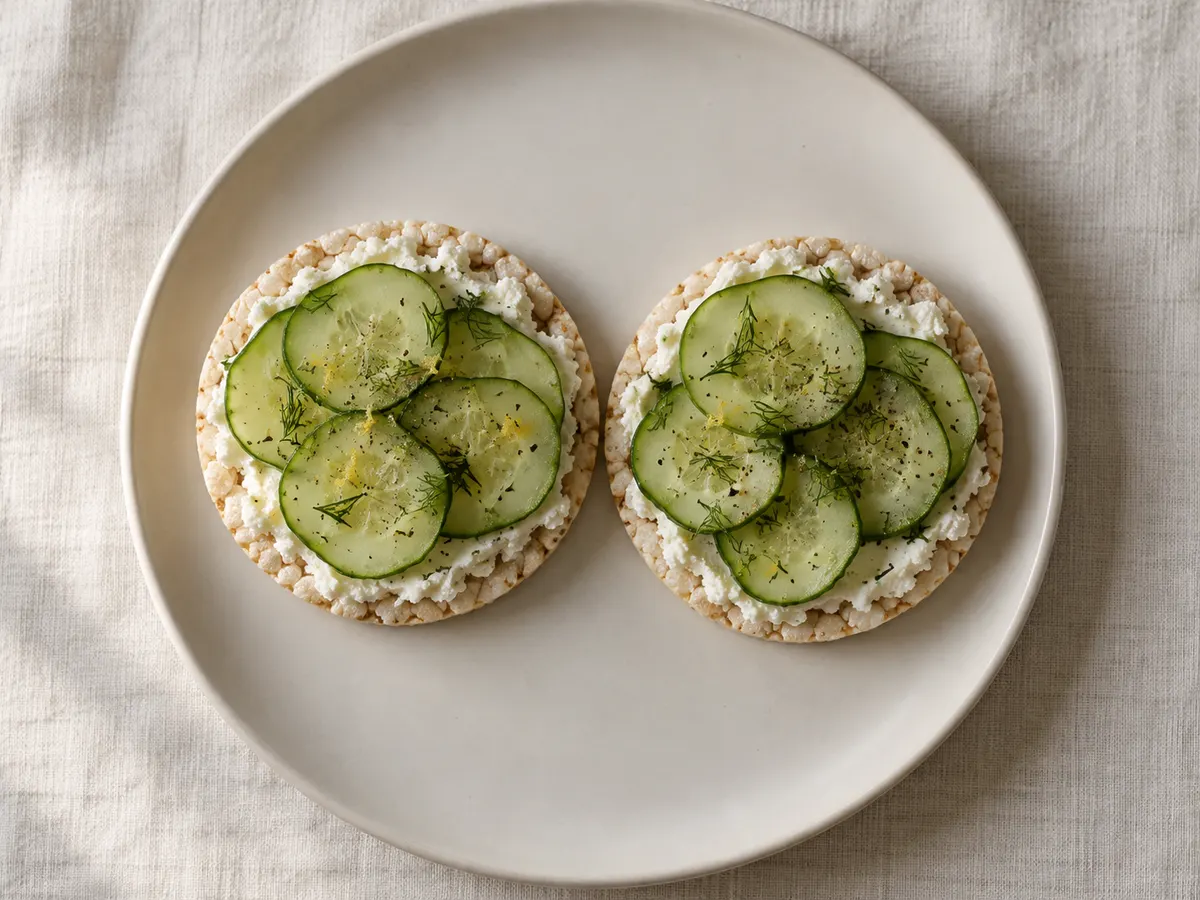 Rice cakes with ricotta, cucumber, and dill13.2 g protein per serving
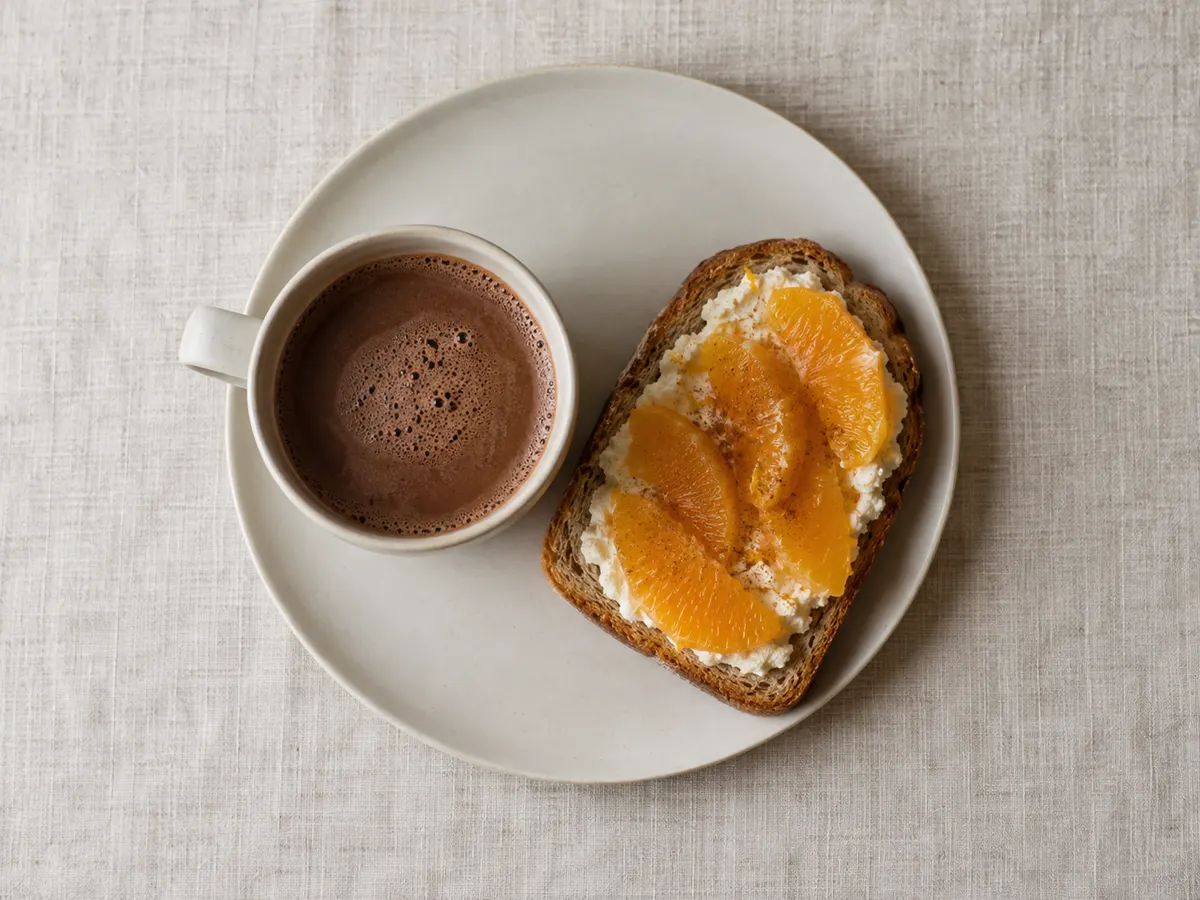 Hot chocolate with ricotta and orange toast22.6 g protein per serving
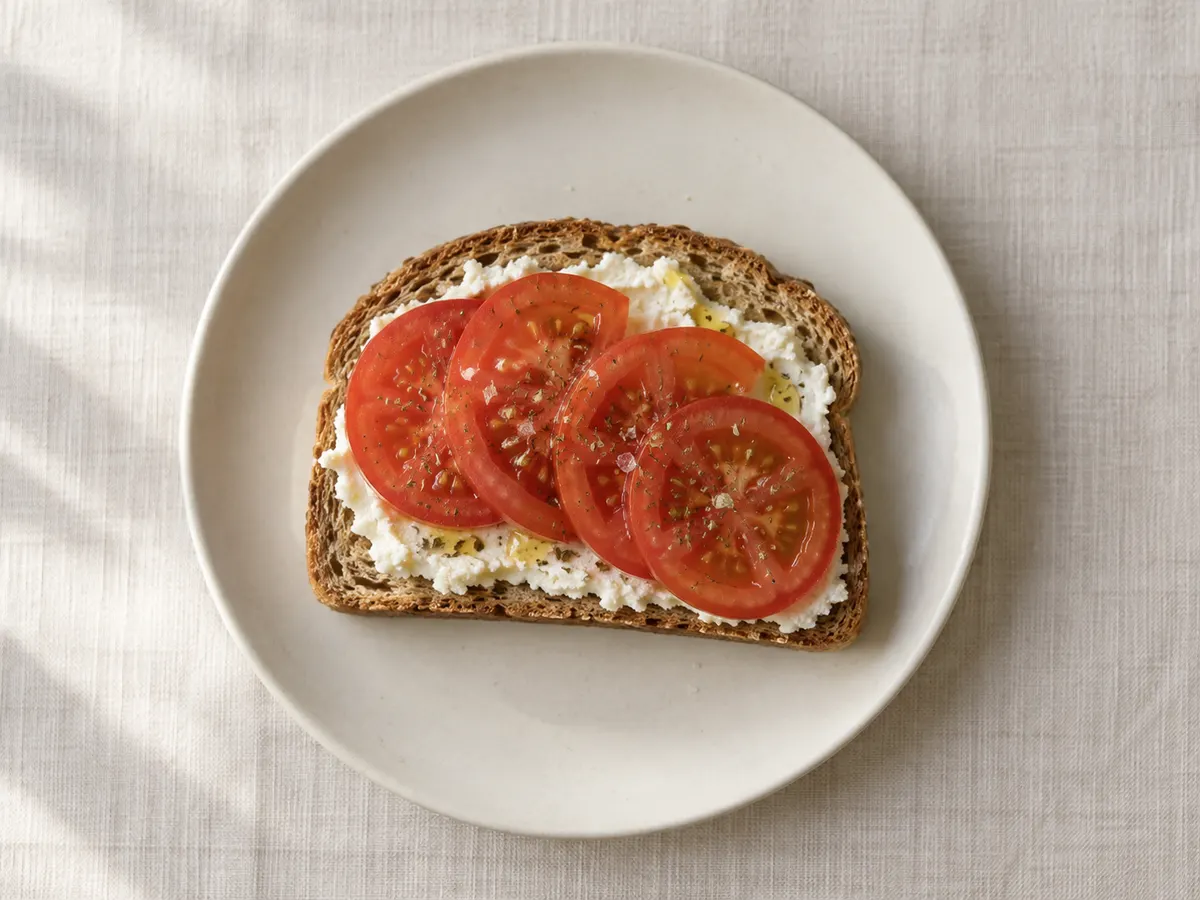 Whole-wheat toast with ricotta and tomato12.5 g protein per serving
Satiety
The 1 to 5 score is our own estimate: it starts at 1 point, adds points for low energy density, for protein and fiber per 100 kcal, and for the water in solid foods, and subtracts points for drinks with calories. It is useful for comparing foods with each other; it is not a measurement in people.
What to keep in mind on a GLP-1 medication
Frequently asked questions about part-skim ricotta
How many grams of protein are in a 100 g (3.5 oz) serving of part-skim ricotta?
100 g (3.5 oz) of part-skim ricotta has 11.4 g of protein. A typical 100 g (3.5 oz) serving has about 11.4 g of protein. That is 8.3 g of protein per 100 kcal, which is why it carries our “High in protein” tag.
How many kcal are in a 100 g (3.5 oz) serving of part-skim ricotta?
100 g (3.5 oz) of part-skim ricotta has 138 kcal. A typical 100 g (3.5 oz) serving has about 138 kcal. That is a low energy density.
Does part-skim ricotta keep you full?
Yes, very filling for the calories it provides: our estimated satiety score is 5 out of 5. It is based on: low energy density; a lot of protein per calorie; high water content. It is an estimate based on its composition, not a measurement in people.
What should I know about part-skim ricotta if I take Ozempic, Wegovy, Mounjaro, or Zepbound and feel nauseous?
Based on our tags, this is what matters about part-skim ricotta on a GLP-1 medication. “High in protein”: plenty of protein per calorie; protein helps preserve muscle mass when you eat less. “Easy to digest”: a soft or low-fat food that many people tolerate well when they feel nauseous or get full quickly. “Nutritious in small servings”: a lot of nutrition in a small volume, which is practical when you eat little. These are general guidelines, not medical advice: everyone tolerates foods differently.
What is a typical serving of part-skim ricotta?
We use 100 g (3.5 oz) as a typical serving, about 1/2 cup. That amount provides about 138 kcal, 11.4 g of protein, and 0 g of fiber. It is a reference for calculations, not a recommendation of how much to eat.
Compare with…
Similar foods
Sources
Sources for the data on this page, with the access date.
- Official databaseU.S. Department of Agriculture, Agricultural Research Service.USDA FoodData Central: Cheese, ricotta, part skim milk (FDC ID 171248).accessed .
- InstitutionCodex Alimentarius (FAO/WHO).Standard for Whey Cheeses (CXS 284-1971).accessed .
- InstitutionCodex Alimentarius (FAO/WHO).Standard for Cottage Cheese (CXS 273-1968).accessed .
- Official databaseU.S. Department of Agriculture, Agricultural Research Service.USDA FoodData Central: Cheese, cottage, lowfat, 2% milkfat (FDC ID 172182).accessed .
- Clinical guidelineObesity (Wiley).Mozaffarian D, et al. Nutritional priorities to support GLP-1 therapy for obesity: A joint Advisory from the American College of Lifestyle Medicine, the American Society for Nutrition, the Obesity Medicine Association, and The Obesity Society. Obesity. 2025;33(8):1475-1503. doi:10.1002/oby.24336.accessed .
- RegulatorOfficial Journal of the European Union (EUR-Lex).Regulation (EC) No 1924/2006 on nutrition and health claims made on foods (Annex).accessed .
- RegulatorOfficial Journal of the European Union (EUR-Lex).Commission Regulation (EU) No 432/2012 establishing a list of permitted health claims made on foods.accessed .
- RegulatorOfficial Journal of the European Union (EUR-Lex).Regulation (EU) No 1169/2011 on the provision of food information to consumers (Annex XIII, reference intakes).accessed .