Dinner
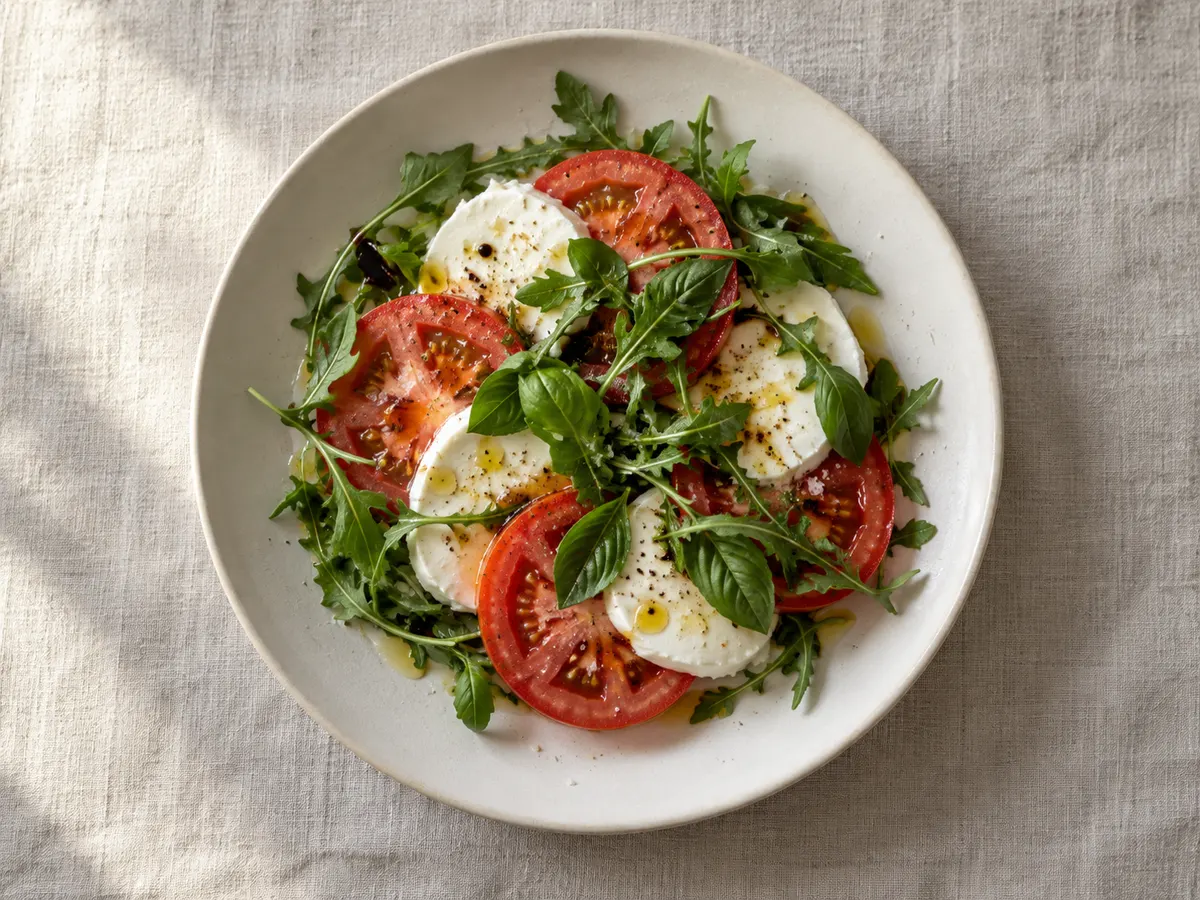
Caprese salad with mozzarella and arugula
Each serving has 349 kcal, 27.1 g of protein, and 3.4 g of fiber, or 7.8 g of protein per 100 kcal. Ready in 10 minutes; makes 2 servings.
Per serving
- 349 kcalCalories
- 27.1 gProtein
- 3.4 gFiber
Calculated ingredient by ingredient from USDA FoodData Central. 7.8 g of protein per 100 kcal.
- Prepared by
- Alex Gonzalez
- Published
- Sources
- 5 primary
No clinical review. No advertising from drug companies and no affiliate links.How we work
Ingredients
- 200 g7 ozpart-skim mozzarella, drained (about 2 small balls)
- 500 g18 ozripe tomatoes, sliced (4 medium)
- 50 g2 ozarugula (2 handfuls, about 2 cups)
- 10 gextra virgin olive oil (2 teaspoons)
- Fresh basil leaves
- Flaky salt and black pepper to taste
- A few drops of balsamic vinegar or lemon juice (optional)
Directions
- Drain the mozzarella well and cut it into thin slices or small pieces.
- Slice the tomatoes and arrange them on a platter, alternating with the mozzarella.
- Scatter the arugula around the edge and the basil leaves on top.
- Dress with the oil, flaky salt, pepper, and, if you like, a few drops of balsamic vinegar or lemon juice, and serve right away.
Why it is filling
The mozzarella brings the protein in soft bites that need almost no chewing, and the tomatoes and arugula add volume and water for very few calories. It is ready in ten minutes without turning on the stove, which makes it a good fit for nights when you have no energy to cook. Part-skim mozzarella has less fat than fresh whole-milk mozzarella; if you use fresh, the plate is a little richer and a little lower in protein.
In numbers, each serving has 27.1 g of protein and 3.4 g of fiber, with an energy density of 92 kcal per 100 g of the dish. In the satiety index by Holt and colleagues (1995), the foods that were most filling per calorie were those with more protein, fiber, and water and less fat.
If your appetite is small
- If you fill up quickly, eat the mozzarella first and leave the tomatoes for last.
- Assemble only your serving and keep the rest of the mozzarella in its brine and the tomatoes undressed in the fridge: they keep for 2 days.
Nutrition facts
| Nutrient | Per serving | Whole recipe |
|---|---|---|
| Calories | 349 kcal | 699 kcal |
| Protein | 27.1 g | 54.3 g |
| Carbohydrates | 13.4 g | 26.8 g |
| Fiber | 3.4 g | 6.8 g |
| Fat | 21.6 g | 43.1 g |
| Approximate weight | 380 g (13 oz) | 760 g (27 oz) |
How it is calculated
Each ingredient contributes its per-100 g values from the site’s food database, multiplied by the amount in the recipe. Seasonings, water, and lemon or lime juice are not counted. It is an approximation: the actual size of the foods and how you cook them shift the result a little.
| Ingredient | Amount | Calories | Protein | Fiber |
|---|---|---|---|---|
| Part-skim mozzarella | 200 g | 508 kcal | 48.6 g | 0 g |
| Tomato | 500 g | 90 kcal | 4.4 g | 6 g |
| Arugula | 50 g | 13 kcal | 1.3 g | 0.8 g |
| Olive oil | 10 g | 88 kcal | 0 g | 0 g |
To plan your meals
- Daily protein calculator: an indicative protein range per day and per meal, to see how much of it this recipe covers.
- Weekly menu for small appetites: seven days of small portions with the protein spread across meals, ready to print.
More recipes
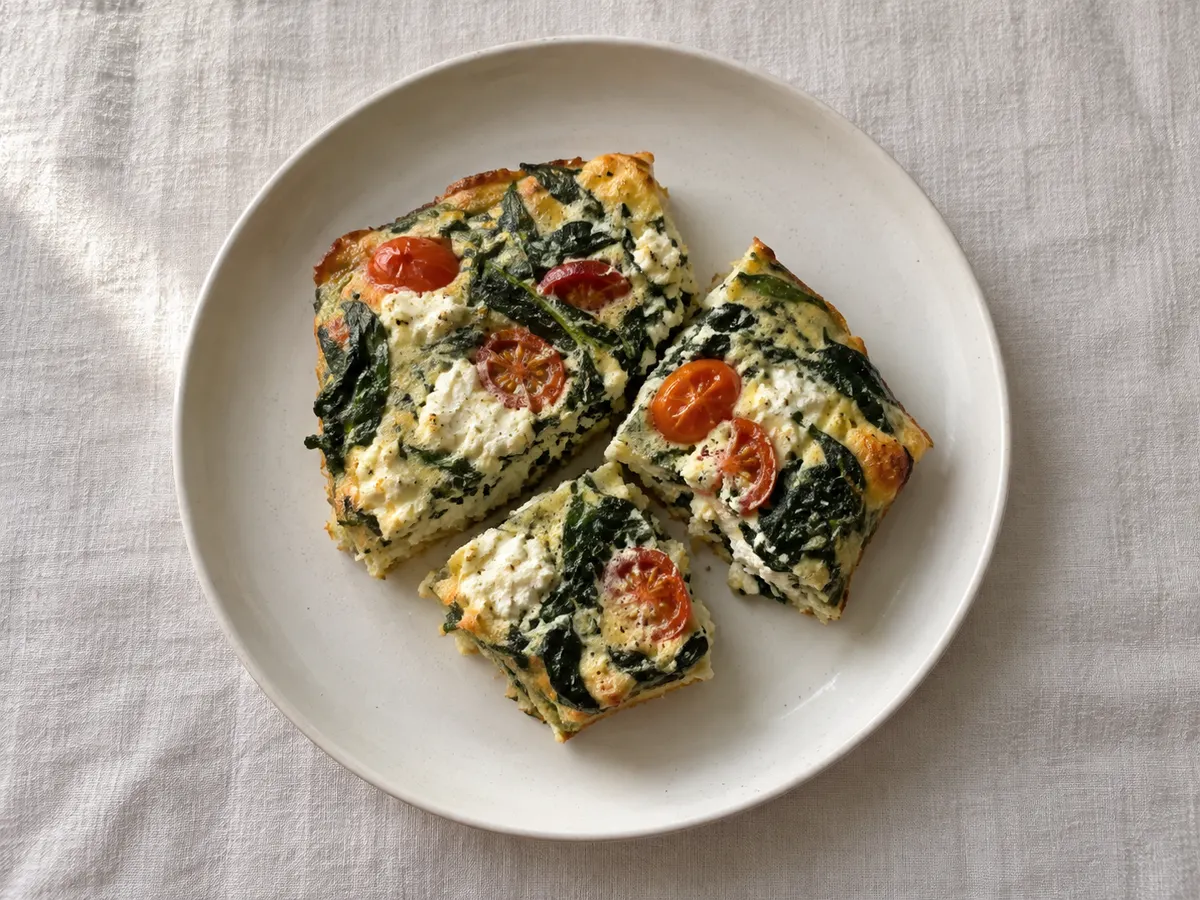
240 kcal28.8 grams of protein35 min
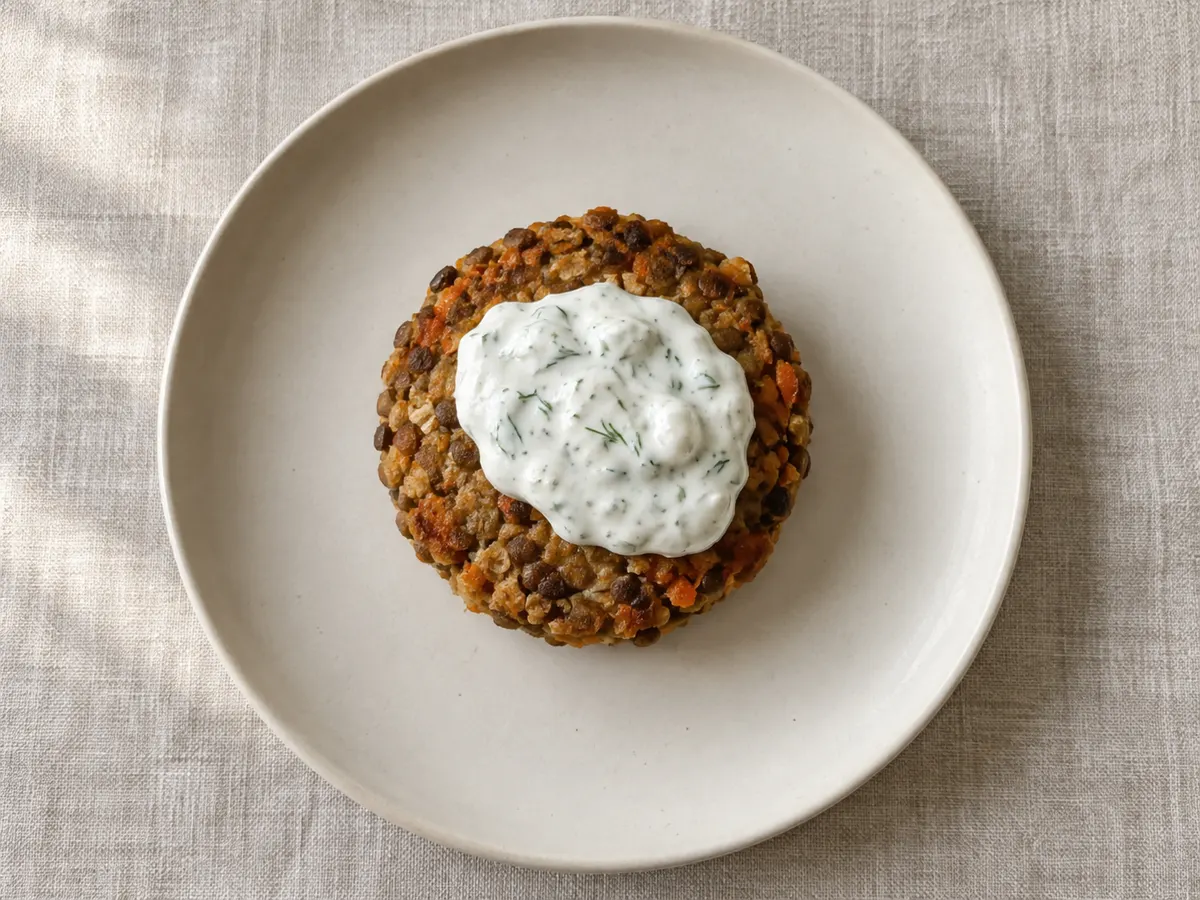
215 kcal15.4 grams of protein45 min
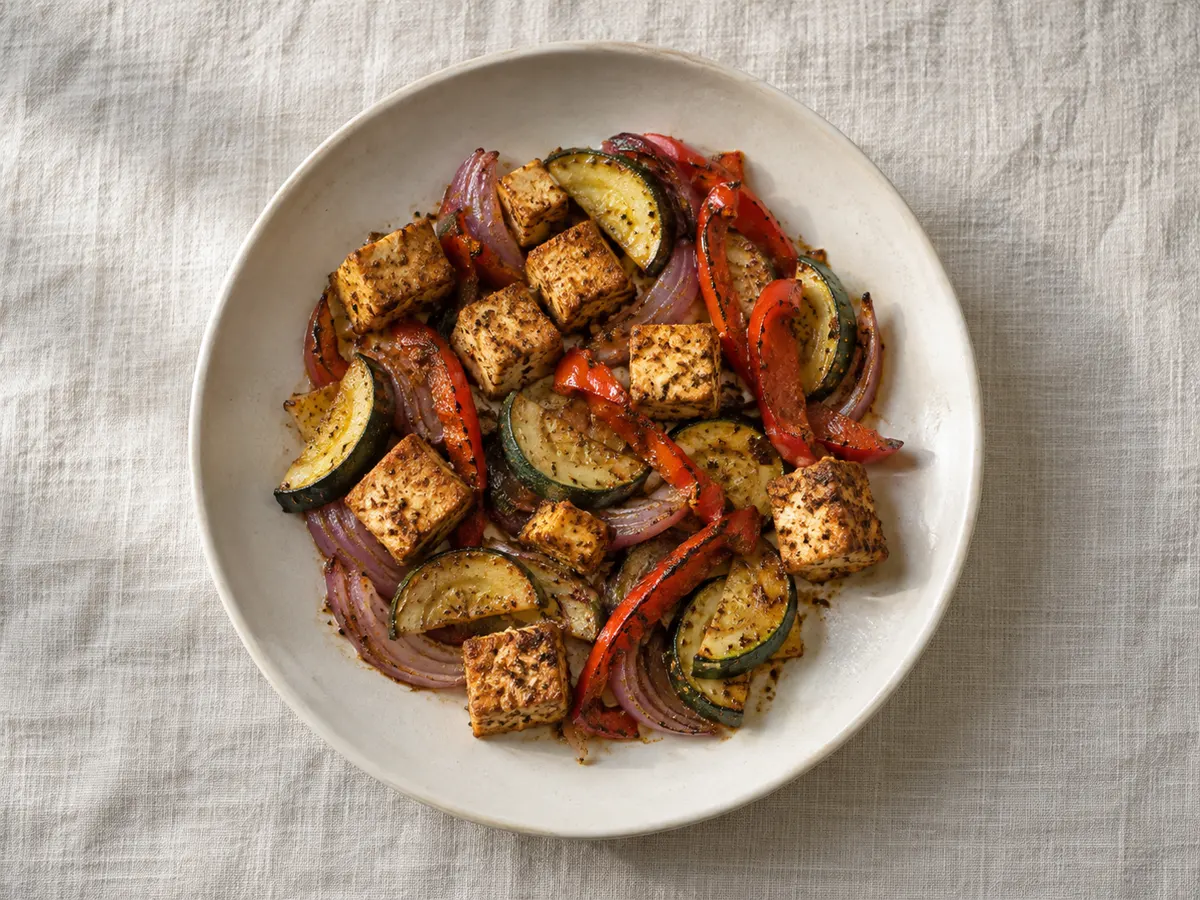
206 kcal15.7 grams of protein40 min
Sources
Nutrition values for each ingredient (USDA FoodData Central) and the satiety reference, with the access date.
- U.S. Department of Agriculture, Agricultural Research Service.USDA FoodData Central: Cheese, mozzarella, part skim milk (FDC ID 170847).accessed .
- U.S. Department of Agriculture, Agricultural Research Service.USDA FoodData Central: Tomatoes, red, ripe, raw, year round average (FDC ID 170457).accessed .
- U.S. Department of Agriculture, Agricultural Research Service.USDA FoodData Central: Arugula, raw (FDC ID 169387).accessed .
- U.S. Department of Agriculture, Agricultural Research Service.USDA FoodData Central: Oil, olive, salad or cooking (FDC ID 171413).accessed .
- European Journal of Clinical Nutrition (PubMed).Holt SH, Miller JC, Petocz P, Farmakalidis E. A satiety index of common foods. Eur J Clin Nutr. 1995;49(9):675-90.accessed .