Vegetables and starchy roots
Arugula
Arugula is 92% water, so 100 g (3.5 oz) brings only 25 kcal and 1.6 g of fiber.
Estimated satietyHow it is calculated
Estimated satiety: 5 out of 5
| Starting point | +1 |
|---|---|
| Very low energy density: 25 kcal/100 g | +2 |
| Protein: 10.3 g/100 kcal | +2 |
| Fiber: 6.4 g/100 kcal | +2 |
| Solid food with 91.7 g of water | +1 |
| Sum | 8 |
| Capped at 5 | 5 |
Our own estimate from the values per 100 g: useful for comparing foods with each other, not a measurement in people. Holt index (1995): this food was not measured.
- Prepared by
- Alex Gonzalez
- Last updated
- Next review
- Sources
- 5 primary
- Data
- USDA FDC 169387
No clinical review. No advertising from drug companies and no affiliate links.How we work
Nutrition facts
- Calories
- 8 kcal per serving
- 25 kcal per 100 g (3.5 oz)
- Protein
- 0.8 g per serving
- 2.6 g per 100 g (3.5 oz)
- Carbohydrates
- 1.1 g per serving
- 3.7 g per 100 g (3.5 oz)
- of which sugars
- 0.6 g per serving
- 2.1 g per 100 g (3.5 oz)
- Fiber
- 0.5 g per serving
- 1.6 g per 100 g (3.5 oz)
- Fat
- 0.2 g per serving
- 0.7 g per 100 g (3.5 oz)
- of which saturated
- 0 g per serving
- 0.1 g per 100 g (3.5 oz)
- Water
- 27.5 g per serving
- 91.7 g per 100 g (3.5 oz)
Source: USDA FoodData Central: Arugula, raw (FDC ID 169387), accessed September 23, 2026.
A typical 30 g (1 oz) serving provides about 8 kcal, 0.8 g of protein, and 0.5 g of fiber.
What it is and how to eat it
Arugula (Eruca sativa and related species of the genus Diplotaxis) is a peppery, slightly bitter leaf in the same family as cabbages. In Spain it is called rúcula and, in some areas, oruga or roqueta; in Mexico and other Latin American countries it is also known as arúgula, and in Argentina and Uruguay, rúcula. It is sold in bags of prewashed leaves or in bunches, and this page covers raw arugula, with 25 kcal and 91.7 g of water per 100 g according to USDA.
A 30 g (1.1 oz) serving, a good handful, provides about 8 kcal and 0.8 g of protein, so it adds flavor with very few calories but does not replace the protein part of the plate: it works as a base or a side, as in the pan-seared trout with quinoa and arugula, the caprese salad with mozzarella and arugula or the cottage cheese toast with smoked salmon. The 2025 nutrition advisory on GLP-1 therapy suggests starting with protein, and if you eat very little, a large plate of greens can fill you up before you get to it. With 1.6 g of fiber per 100 g it is not one of the high-fiber foods the same advisory suggests avoiding in the first few days of treatment, so in those days a handful as a side is an easy way to have it.
What the evidence says
At 25 kcal per 100 g, far below the 100 kcal limit this site uses to label a food as low in energy density, a 30 g serving provides about 8 kcal according to USDA. The EU sets for arugula the highest maximum nitrate level of all the vegetables it regulates, 6000 to 7000 mg per kg depending on the harvest season, compared with 3500 mg for fresh spinach (Regulation (EU) 2023/915). Dietary nitrate is promoted for blood pressure or athletic performance, but the EU register lists no health claim about nitrate, authorized or rejected, and in the EU only authorized claims may be used (Regulation (EC) No 1924/2006). I have not found trials showing that arugula itself helps with weight loss.
Recipes with this food
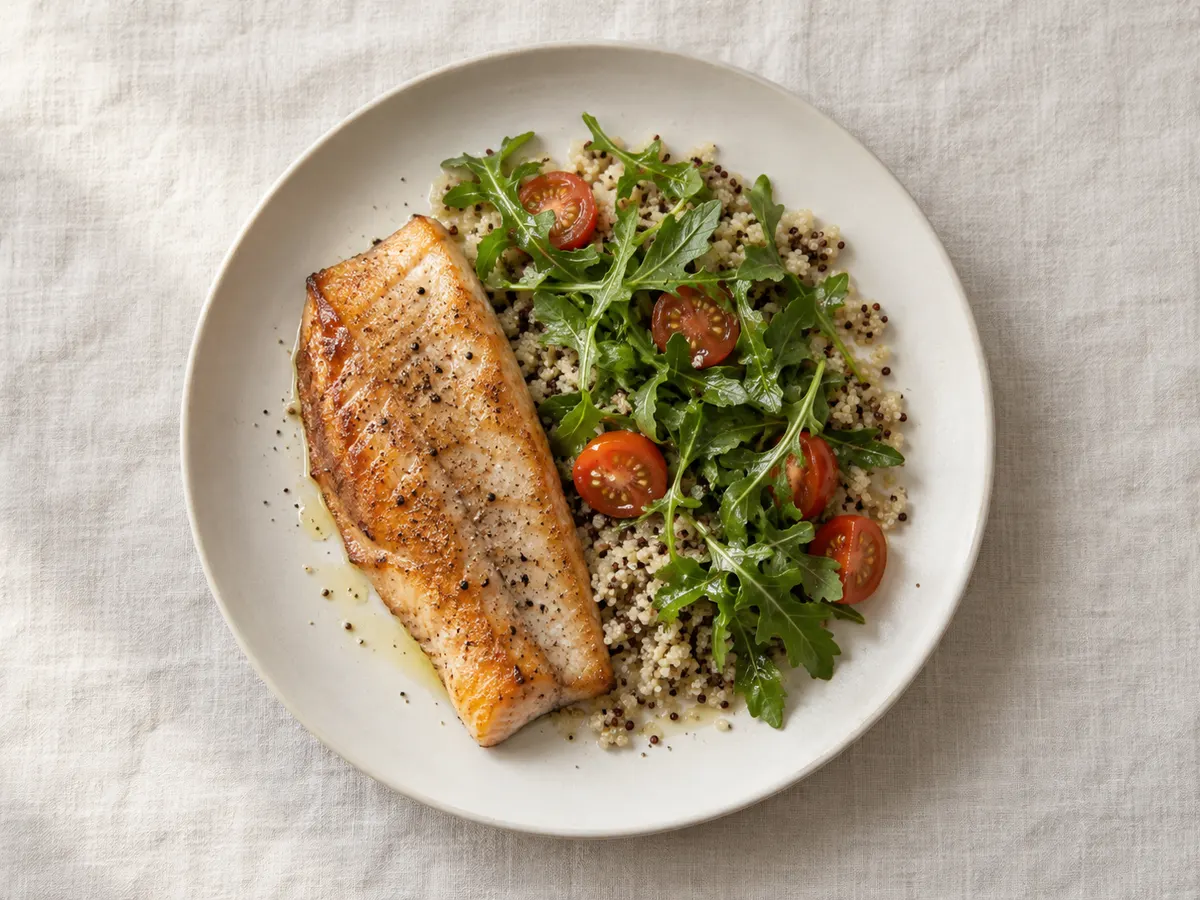 Pan-seared trout with quinoa and arugula33.7 g protein per serving
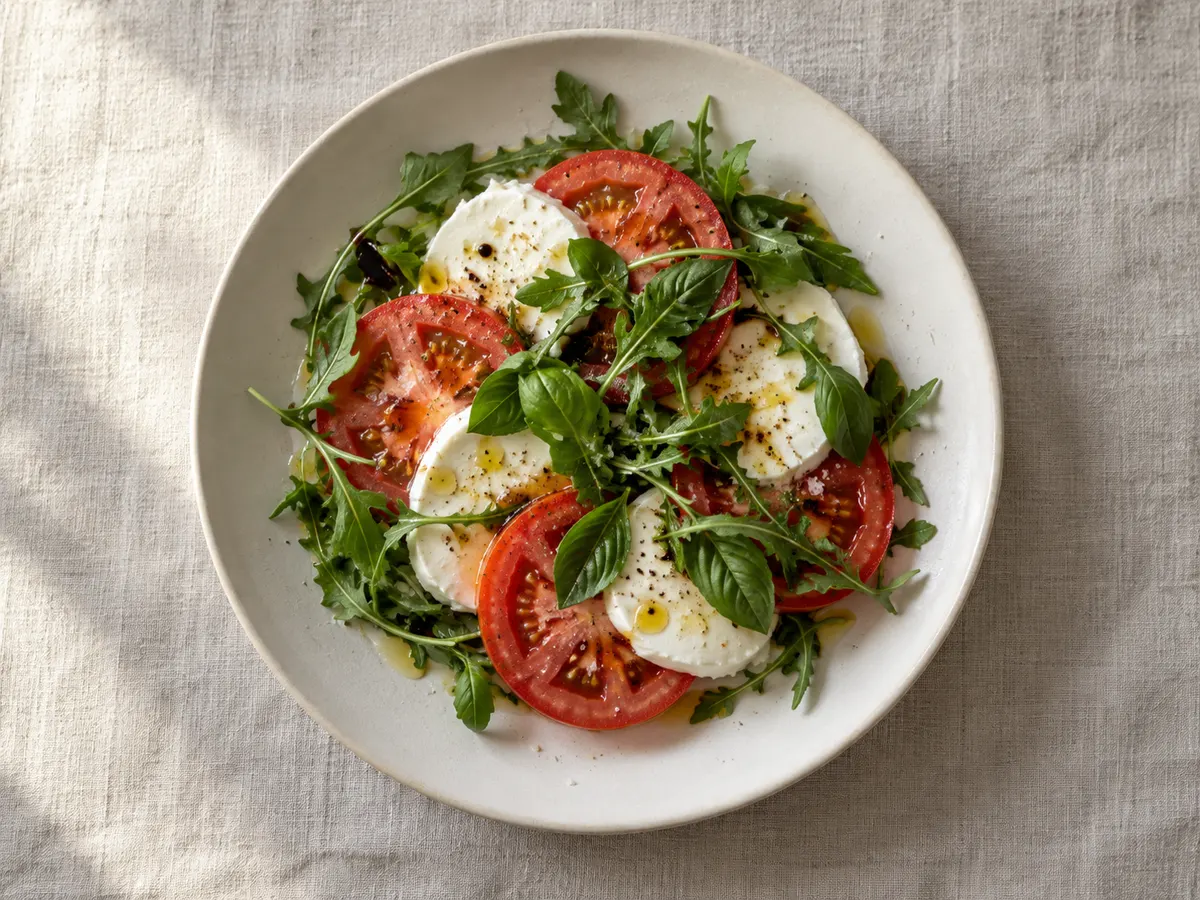 Caprese salad with mozzarella and arugula27.1 g protein per serving
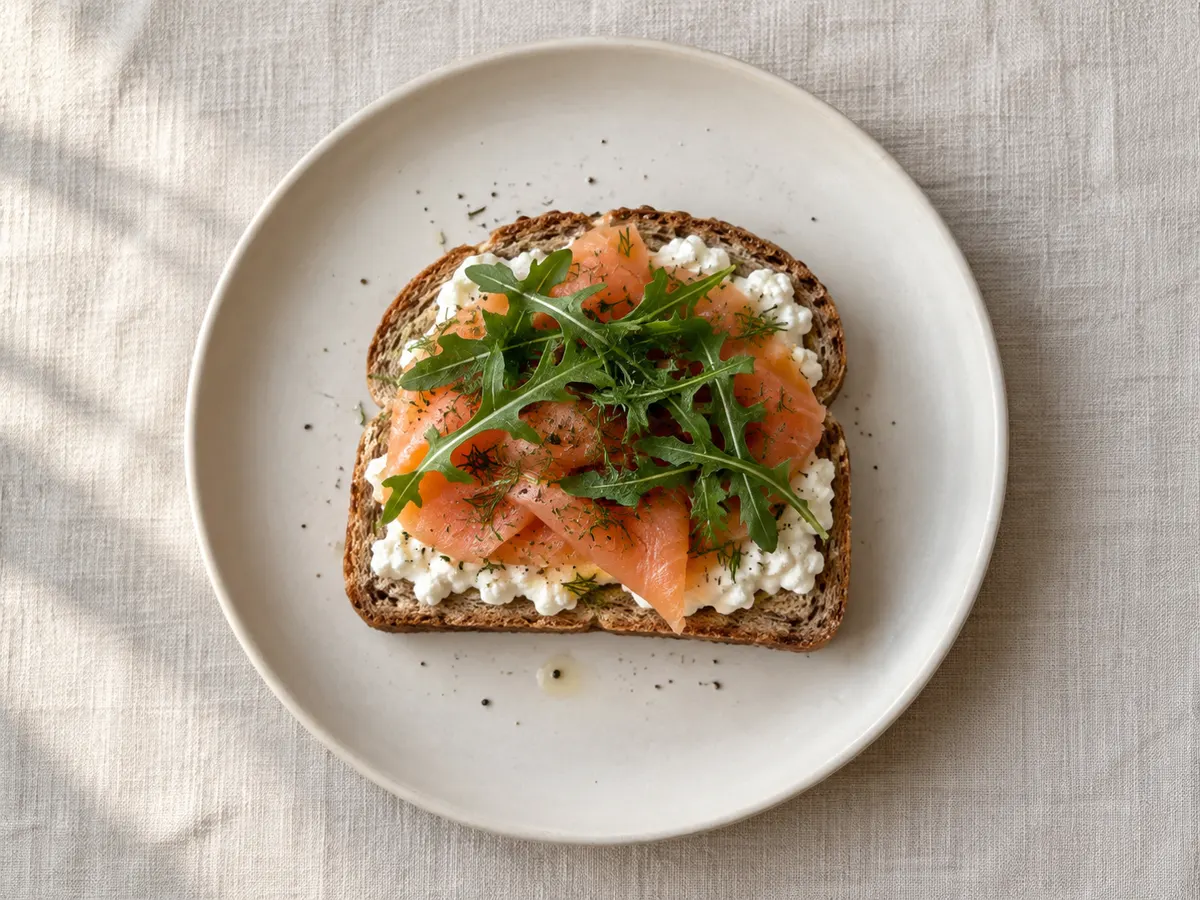 Cottage cheese toast with smoked salmon20.9 g protein per serving
Satiety
The 1 to 5 score is our own estimate: it starts at 1 point, adds points for low energy density, for protein and fiber per 100 kcal, and for the water in solid foods, and subtracts points for drinks with calories. It is useful for comparing foods with each other; it is not a measurement in people.
What to keep in mind on a GLP-1 medication
Frequently asked questions about arugula
How many grams of protein are in a 30 g (1 oz) serving of arugula?
100 g (3.5 oz) of arugula has 2.6 g of protein. A typical 30 g (1 oz) serving has about 0.8 g of protein. That is 10.3 g of protein per 100 kcal.
How many kcal are in a 30 g (1 oz) serving of arugula?
100 g (3.5 oz) of arugula has 25 kcal. A typical 30 g (1 oz) serving has about 8 kcal. That is a very low energy density.
How much fiber is in a 30 g (1 oz) serving of arugula?
100 g (3.5 oz) of arugula has 1.6 g of fiber. A typical 30 g (1 oz) serving has about 0.5 g of fiber.
Does arugula keep you full?
Yes, very filling for the calories it provides: our estimated satiety score is 5 out of 5. Calculation: 1 (base) + 2 (very low energy density: 25 kcal/100 g) + 2 (protein: 10.3 g/100 kcal) + 2 (fiber: 6.4 g/100 kcal) + 1 (solid food with 91.7 g of water) = 8; capped at 5. It is an estimate based on its composition, not a measurement in people.
How does arugula fit into eating on Ozempic, Wegovy, Mounjaro, or Zepbound?
Based on our tags, this is what matters about arugula on a GLP-1 medication. “Low energy density”: plenty of volume for few calories; make sure it does not push protein foods off your plate. “Hydrating”: a lot of water, which contributes to hydration when you eat and drink less. These are general guidelines, not medical advice: everyone tolerates foods differently.
What is a typical serving of arugula?
We use 30 g (1 oz) as a typical serving. That amount provides about 8 kcal, 0.8 g of protein, and 0.5 g of fiber. It is a reference for calculations, not a recommendation of how much to eat.
Compare with…
Similar foods
Sources
Sources for the data on this page, with the access date.
- Official databaseU.S. Department of Agriculture, Agricultural Research Service.USDA FoodData Central: Arugula, raw (FDC ID 169387).accessed .
- Clinical guidelineObesity (Wiley).Mozaffarian D, et al. Nutritional priorities to support GLP-1 therapy for obesity: A joint Advisory from the American College of Lifestyle Medicine, the American Society for Nutrition, the Obesity Medicine Association, and The Obesity Society. Obesity. 2025;33(8):1475-1503. doi:10.1002/oby.24336.accessed .
- RegulatorOfficial Journal of the European Union (EUR-Lex).Commission Regulation (EU) 2023/915 on maximum levels for certain contaminants in food (Annex I, nitrates).accessed .
- RegulatorEuropean Commission.EU Register of nutrition and health claims made on foods.accessed .
- RegulatorOfficial Journal of the European Union (EUR-Lex).Regulation (EC) No 1924/2006 on nutrition and health claims made on foods.accessed .