Snack
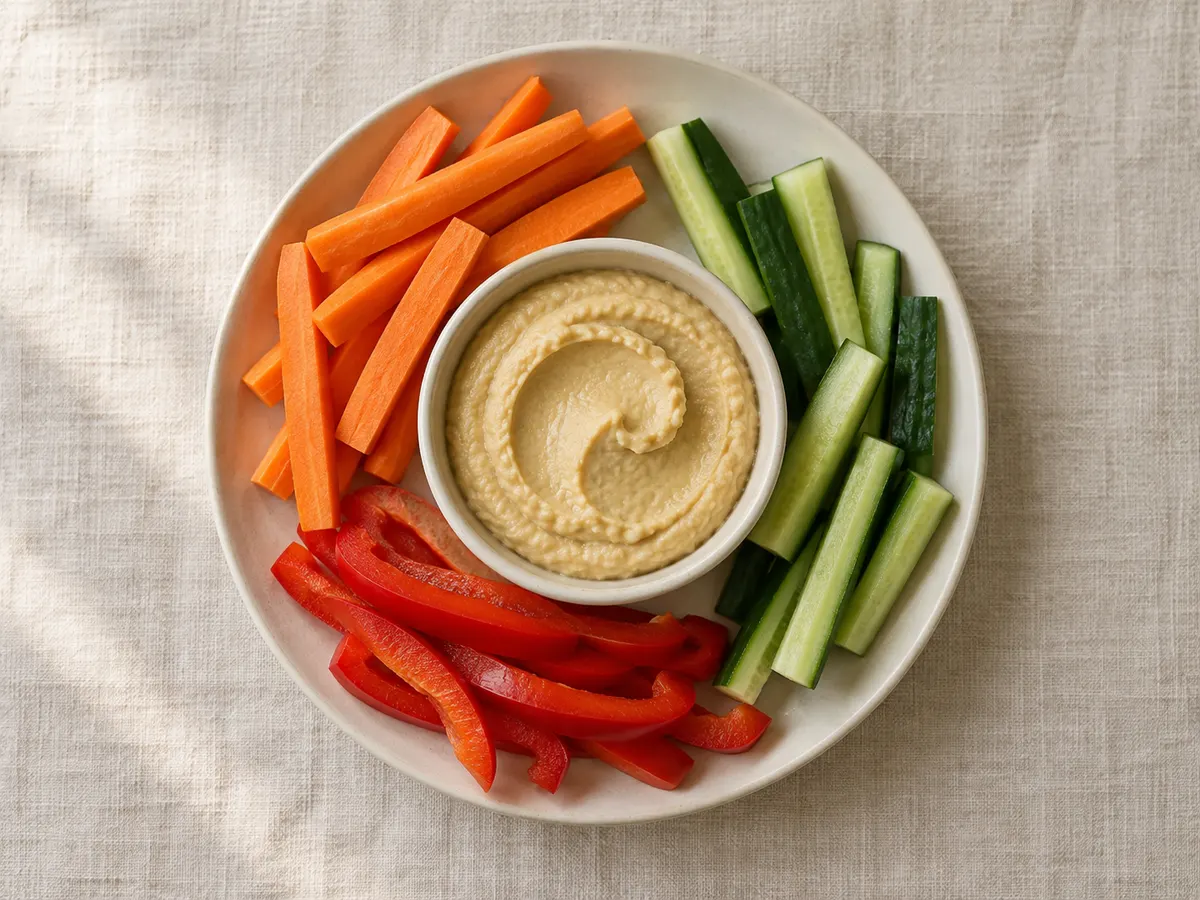
Hummus with vegetable sticks
Each serving has 168 kcal, 5.5 g of protein, and 5.9 g of fiber, or 3.2 g of protein per 100 kcal. Ready in 5 minutes; makes 1 serving.
Per serving
- 168 kcalCalories
- 5.5 gProtein
- 5.9 gFiber
Calculated ingredient by ingredient from USDA FoodData Central. 3.2 g of protein per 100 kcal.
- Prepared by
- Alex Gonzalez
- Published
- Sources
- 5 primary
No clinical review. No advertising from drug companies and no affiliate links.How we work
Ingredients
Directions
- Rinse the carrot and cucumber, and peel them if you like.
- Cut the carrot, cucumber, and bell pepper into finger-length sticks.
- Spoon the hummus into a small bowl.
- Arrange the sticks around it for dipping.
Why it is filling
Raw vegetables bring volume, water, and some fiber, and they make you eat slowly, one stick at a time. The hummus adds flavor, fiber, and some plant protein, although it is also the part of the plate with the most calories. Since it is made from chickpeas, it can give some people gas.
In numbers, each serving has 5.5 g of protein and 5.9 g of fiber, with an energy density of 70 kcal per 100 g of the dish. In the satiety index by Holt and colleagues (1995), the foods that were most filling per calorie were those with more protein, fiber, and water and less fat.
If your appetite is small
- Cut sticks for several days and keep them in the fridge in a container with a little water.
- For more protein, add a Greek yogurt or a hard-boiled egg on the side.
Nutrition facts
| Nutrient | Per serving |
|---|---|
| Calories | 168 kcal |
| Protein | 5.5 g |
| Carbohydrates | 19.2 g |
| Fiber | 5.9 g |
| Fat | 9.3 g |
| Approximate weight | 240 g (8.5 oz) |
How it is calculated
Each ingredient contributes its per-100 g values from the site’s food database, multiplied by the amount in the recipe. Seasonings, water, and lemon or lime juice are not counted. It is an approximation: the actual size of the foods and how you cook them shift the result a little.
| Ingredient | Amount | Calories | Protein | Fiber |
|---|---|---|---|---|
| Hummus | 50 g | 119 kcal | 3.9 g | 2.8 g |
| Carrot | 60 g | 25 kcal | 0.6 g | 1.7 g |
| Cucumber | 80 g | 12 kcal | 0.5 g | 0.4 g |
| Red bell pepper | 50 g | 13 kcal | 0.5 g | 1.1 g |
To plan your meals
- Daily protein calculator: an indicative protein range per day and per meal, to see how much of it this recipe covers.
- Weekly menu for small appetites: seven days of small portions with the protein spread across meals, ready to print.
More recipes
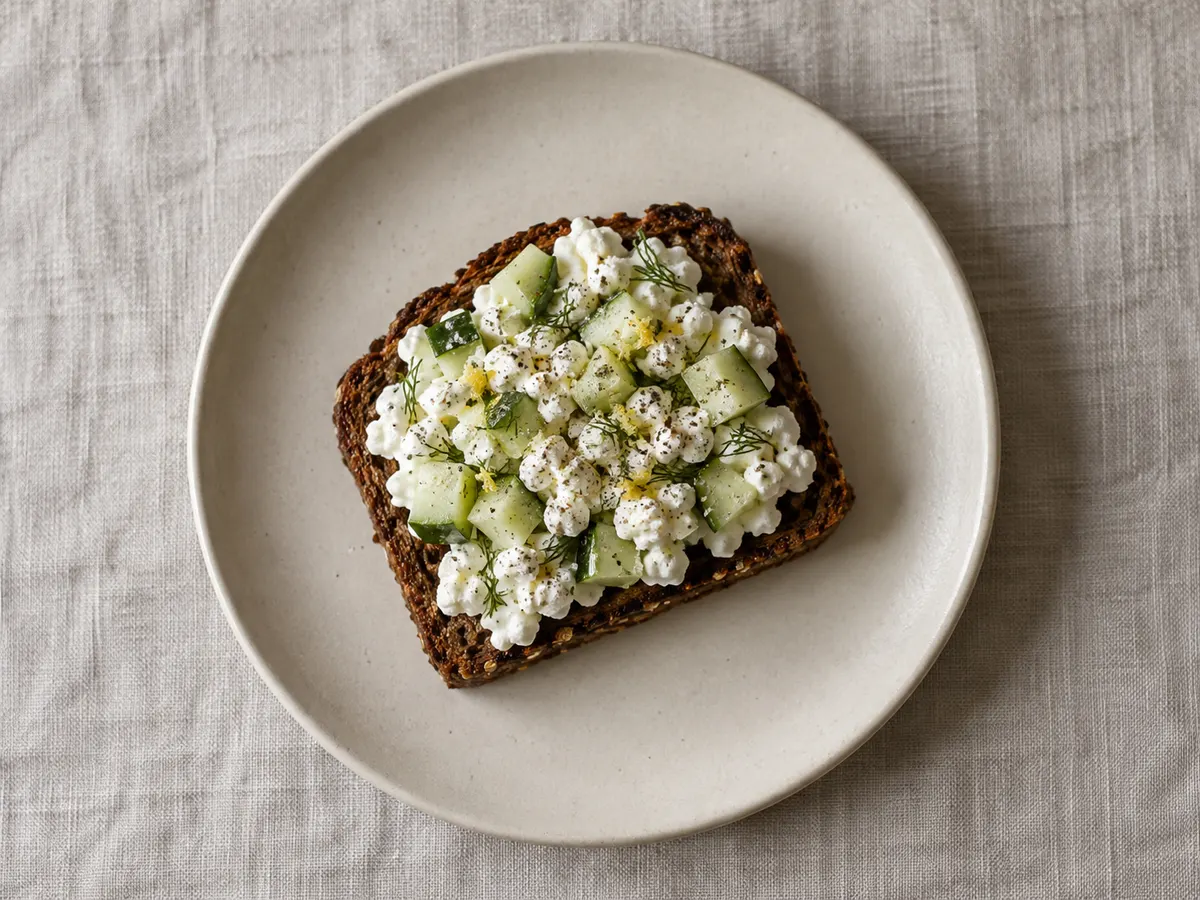
217 kcal18.9 grams of protein5 min
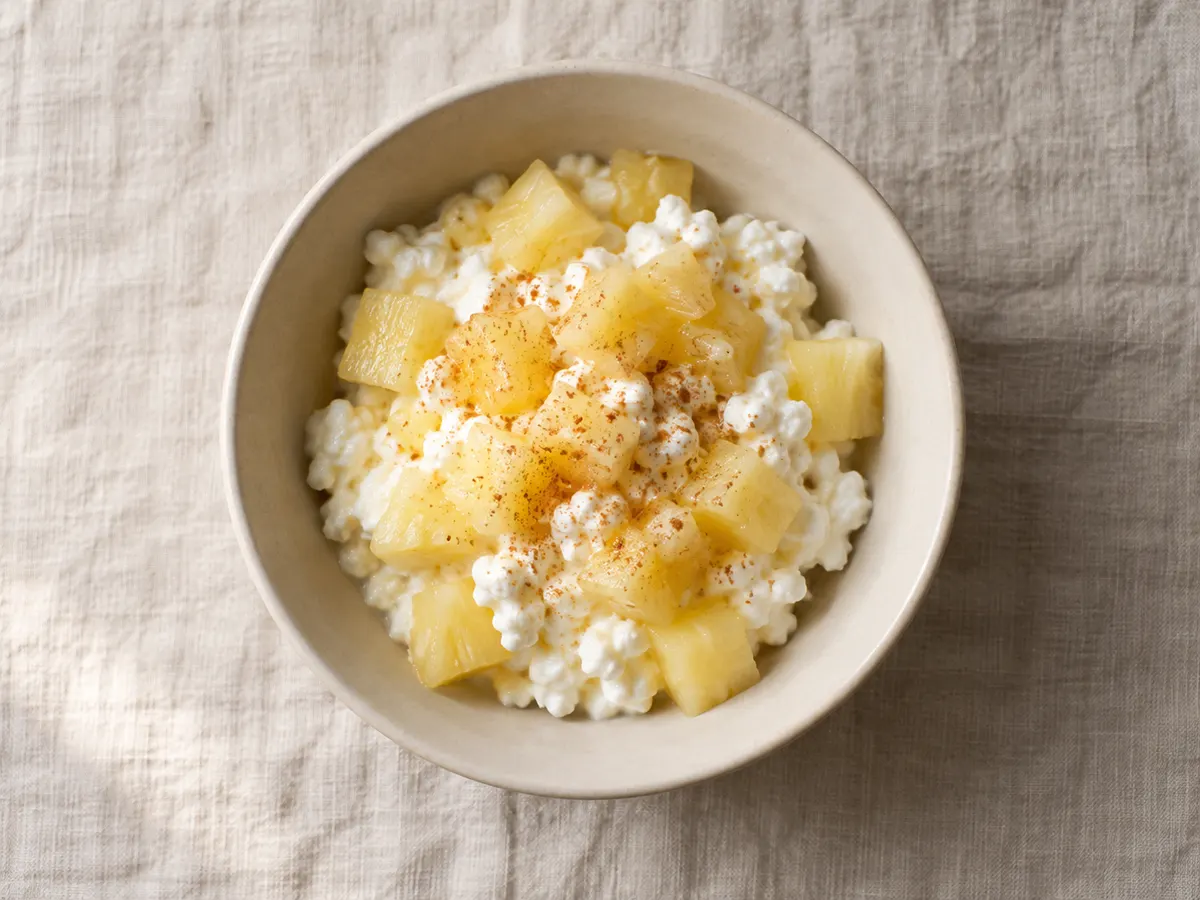
162 kcal16 grams of protein3 min
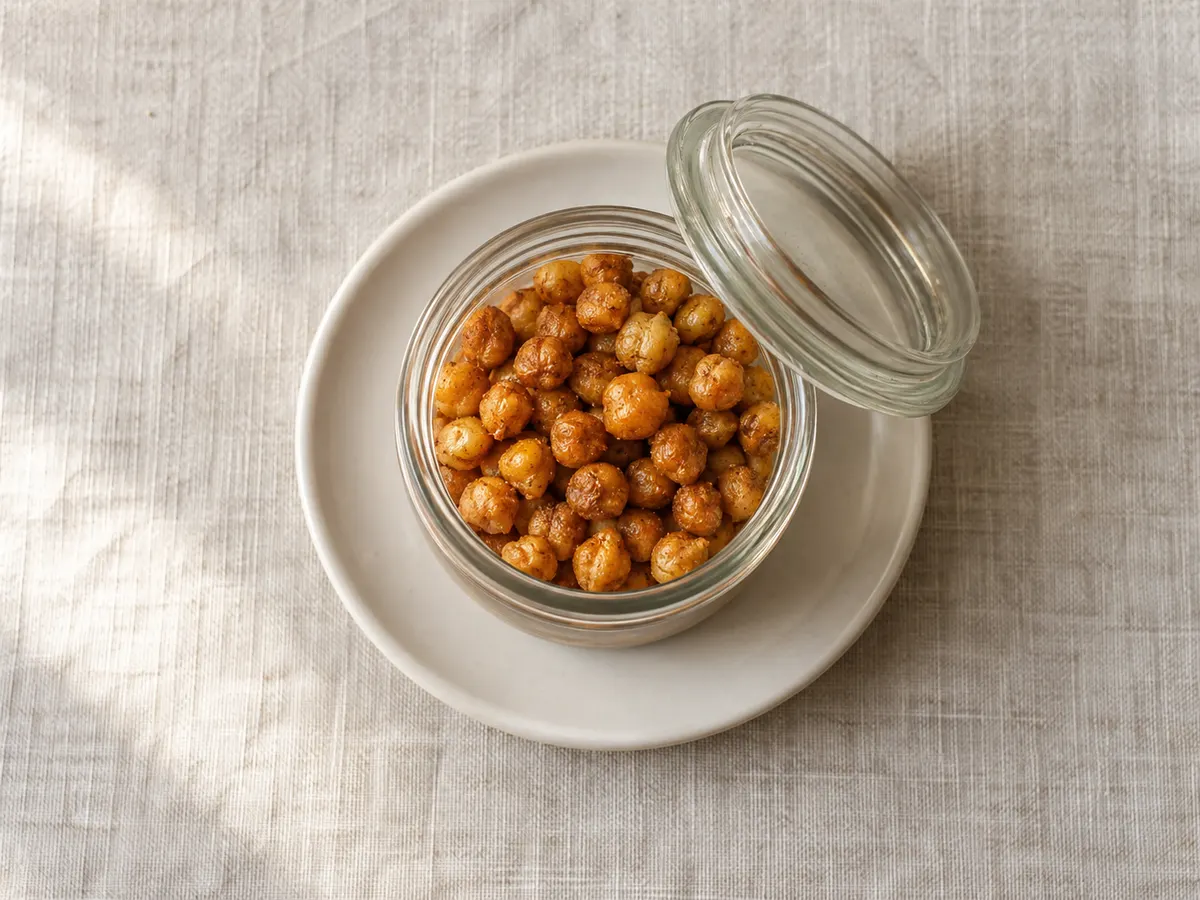
146 kcal7.1 grams of protein40 min
Sources
Nutrition values for each ingredient (USDA FoodData Central) and the satiety reference, with the access date.
- U.S. Department of Agriculture, Agricultural Research Service.USDA FoodData Central: Hummus, commercial (FDC ID 174289).accessed .
- U.S. Department of Agriculture, Agricultural Research Service.USDA FoodData Central: Carrots, raw (FDC ID 170393).accessed .
- U.S. Department of Agriculture, Agricultural Research Service.USDA FoodData Central: Cucumber, with peel, raw (FDC ID 168409).accessed .
- U.S. Department of Agriculture, Agricultural Research Service.USDA FoodData Central: Peppers, sweet, red, raw (FDC ID 170108).accessed .
- European Journal of Clinical Nutrition (PubMed).Holt SH, Miller JC, Petocz P, Farmakalidis E. A satiety index of common foods. Eur J Clin Nutr. 1995;49(9):675-90.accessed .