Dinner
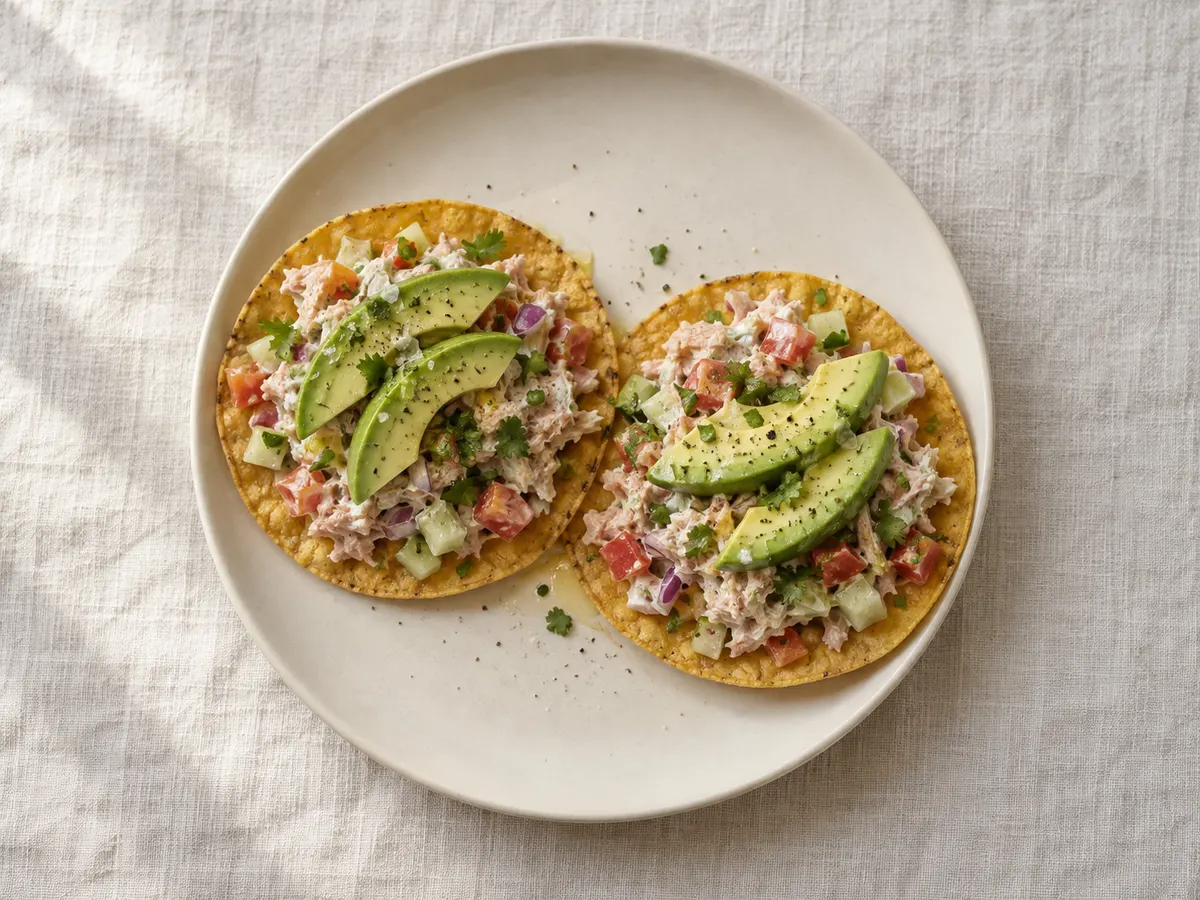
Mexican-style tuna tostadas
Each serving has 329 kcal, 32.1 g of protein, and 5.4 g of fiber, or 9.8 g of protein per 100 kcal. Ready in 10 minutes; makes 2 servings.
Per serving
- 329 kcalCalories
- 32.1 gProtein
- 5.4 gFiber
Calculated ingredient by ingredient from USDA FoodData Central. 9.8 g of protein per 100 kcal.
- Prepared by
- Alex Gonzalez
- Published
- Sources
- 8 primary
No clinical review. No advertising from drug companies and no affiliate links.How we work
Ingredients
- 48 g1.5 ozstore-bought corn tostada shells, baked if you can find them (4)
- 200 g7 ozcanned light tuna in water, drained (two 5-ounce cans)
- 60 g2 ozplain nonfat Greek yogurt, instead of mayonnaise (about 1/4 cup)
- 200 g7 oztomatoes, finely chopped (2 medium)
- 30 g1 ozred or white onion, finely chopped (about 3 tablespoons)
- 120 g4 ozcucumber, finely chopped (about 1 cup)
- 60 g2 ozavocado, sliced (1/2 small)
- Juice of 1 lime
- Chopped cilantro, salt, and pepper to taste
- Chopped serrano or jalapeño chile, or hot sauce (optional)
Directions
- Drain the tuna very well and flake it with a fork in a bowl.
- Add the tomatoes, onion, cucumber, cilantro, and the chile if using, all finely chopped.
- Stir in the yogurt, most of the lime juice, salt, and pepper; taste and adjust.
- Right before eating, spoon the mixture onto the tostadas so they stay crisp.
- Finish with the avocado slices and a few more drops of lime.
Why it is filling
This is an everyday Mexican dinner made without any cooking: tuna in water brings a lot of protein with very little fat, and Greek yogurt takes the place of mayonnaise. Tomato and cucumber add volume and freshness, and the crunch of the tostada makes it appealing even when you are not very hungry. Store-bought tostadas are often fried and fairly high in fat; baked ones are lighter.
In numbers, each serving has 32.1 g of protein and 5.4 g of fiber, with an energy density of 92 kcal per 100 g of the dish. In the satiety index by Holt and colleagues (1995), the foods that were most filling per calorie were those with more protein, fiber, and water and less fat.
If your appetite is small
- The tuna mixture keeps for 1 day in a sealed container in the fridge; build each tostada as you eat it.
- If two tostadas are too much, eat one and have the rest of the mixture with a spoon, without the shell: that is where the protein is.
Nutrition facts
| Nutrient | Per serving | Whole recipe |
|---|---|---|
| Calories | 329 kcal | 658 kcal |
| Protein | 32.1 g | 64.3 g |
| Carbohydrates | 26.3 g | 52.7 g |
| Fiber | 5.4 g | 10.7 g |
| Fat | 10.9 g | 21.7 g |
| Approximate weight | 359 g (13 oz) | 718 g (25 oz) |
How it is calculated
Each ingredient contributes its per-100 g values from the site’s food database, multiplied by the amount in the recipe. Seasonings, water, and lemon or lime juice are not counted. It is an approximation: the actual size of the foods and how you cook them shift the result a little.
| Ingredient | Amount | Calories | Protein | Fiber |
|---|---|---|---|---|
| Corn taco shell (tostada) | 48 g | 228 kcal | 3.1 g | 3.2 g |
| Canned tuna in water | 200 g | 232 kcal | 51 g | 0 g |
| Nonfat Greek yogurt | 60 g | 35 kcal | 6.1 g | 0 g |
| Tomato | 200 g | 36 kcal | 1.8 g | 2.4 g |
| Onion | 30 g | 12 kcal | 0.3 g | 0.5 g |
| Cucumber | 120 g | 18 kcal | 0.8 g | 0.6 g |
| Avocado | 60 g | 96 kcal | 1.2 g | 4 g |
To plan your meals
- Daily protein calculator: an indicative protein range per day and per meal, to see how much of it this recipe covers.
- Weekly menu for small appetites: seven days of small portions with the protein spread across meals, ready to print.
More recipes
240 kcal28.8 grams of protein35 min
215 kcal15.4 grams of protein45 min
206 kcal15.7 grams of protein40 min
Sources
Nutrition values for each ingredient (USDA FoodData Central) and the satiety reference, with the access date.
- U.S. Department of Agriculture, Agricultural Research Service.USDA FoodData Central (FNDDS 2021-2023): Taco shell, corn (FDC ID 2707826).accessed .
- U.S. Department of Agriculture, Agricultural Research Service.USDA FoodData Central: Fish, tuna, light, canned in water, without salt, drained solids (FDC ID 171986).accessed .
- U.S. Department of Agriculture, Agricultural Research Service.USDA FoodData Central: Yogurt, Greek, plain, nonfat (Includes foods for USDA's Food Distribution Program) (FDC ID 170894).accessed .
- U.S. Department of Agriculture, Agricultural Research Service.USDA FoodData Central: Tomatoes, red, ripe, raw, year round average (FDC ID 170457).accessed .
- U.S. Department of Agriculture, Agricultural Research Service.USDA FoodData Central: Onions, raw (FDC ID 170000).accessed .
- U.S. Department of Agriculture, Agricultural Research Service.USDA FoodData Central: Cucumber, with peel, raw (FDC ID 168409).accessed .
- U.S. Department of Agriculture, Agricultural Research Service.USDA FoodData Central: Avocados, raw, all commercial varieties (FDC ID 171705).accessed .
- European Journal of Clinical Nutrition (PubMed).Holt SH, Miller JC, Petocz P, Farmakalidis E. A satiety index of common foods. Eur J Clin Nutr. 1995;49(9):675-90.accessed .