Dinner
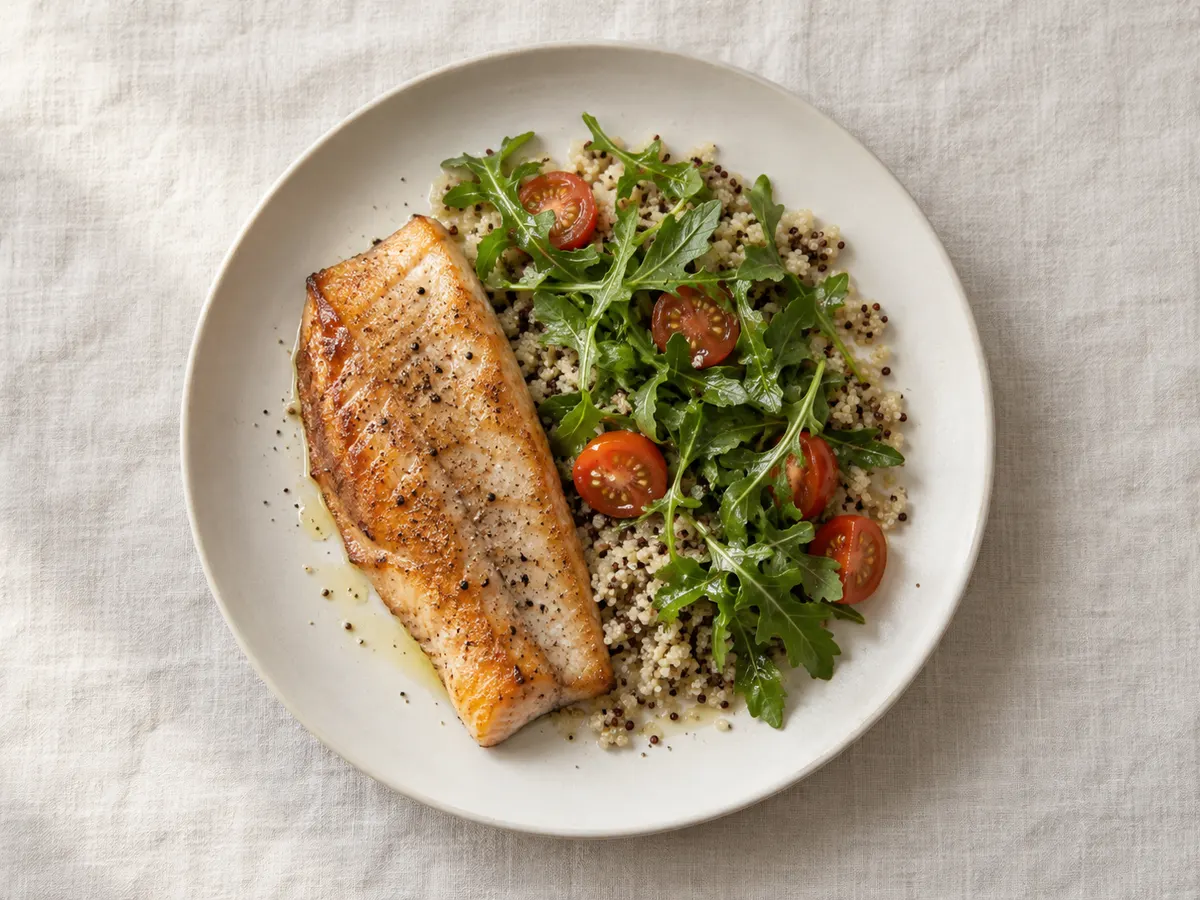
Pan-seared trout with quinoa and arugula
Each serving has 374 kcal, 33.7 g of protein, and 4.2 g of fiber, or 9 g of protein per 100 kcal. Ready in 25 minutes; makes 2 servings.
Per serving
- 374 kcalCalories
- 33.7 gProtein
- 4.2 gFiber
Calculated ingredient by ingredient from USDA FoodData Central. 9 g of protein per 100 kcal.
- Prepared by
- Alex Gonzalez
- Published
- Sources
- 6 primary
No clinical review. No advertising from drug companies and no affiliate links.How we work
Ingredients
- 280 g10 oztrout fillets (2 fillets)
- 200 g7 ozcooked quinoa (about 1 1/4 cups, from a heaping 1/3 cup dry)
- 150 g5.5 ozcherry tomatoes, halved (about 1 cup)
- 60 g2 ozarugula (about 3 cups)
- 8 golive oil (2 teaspoons)
- Water for the quinoa (about 150 ml, or 2/3 cup)
- Lemon juice, salt, and pepper to taste
Directions
- Rinse the quinoa in a strainer, simmer it in the salted water for about 15 minutes, until the liquid is absorbed, and let it cool slightly.
- Toss the quinoa with the cherry tomatoes, half the oil, and a few drops of lemon juice.
- Pat the trout fillets dry with paper towels and season with salt.
- Heat the rest of the oil in a nonstick skillet and cook the trout over medium heat, skin side first, 3 to 4 minutes per side.
- Divide the arugula between two plates, add the quinoa, and set the trout on top.
- Finish with pepper and a little more lemon juice.
Why it is filling
Trout provides high-quality protein and the healthy fats typical of fish in a thin fillet that cooks in minutes. Quinoa adds a bit more protein and fiber, and the arugula and tomatoes bring volume and freshness for almost no calories. It is a warm plate with no heavy sauce; if you have nausea, the trout may sit better skinless and cooked with very little oil.
In numbers, each serving has 33.7 g of protein and 4.2 g of fiber, with an energy density of 107 kcal per 100 g of the dish. In the satiety index by Holt and colleagues (1995), the foods that were most filling per calorie were those with more protein, fiber, and water and less fat.
If your appetite is small
- Cook twice as much quinoa: it keeps for 4 days in the fridge and works as a base for other meals.
- If a whole fillet is a lot, start with the fish and save some of the quinoa for later.
Nutrition facts
| Nutrient | Per serving | Whole recipe |
|---|---|---|
| Calories | 374 kcal | 748 kcal |
| Protein | 33.7 g | 67.4 g |
| Carbohydrates | 25.3 g | 50.6 g |
| Fiber | 4.2 g | 8.4 g |
| Fat | 14.9 g | 29.8 g |
| Approximate weight | 349 g (12 oz) | 698 g (25 oz) |
How it is calculated
Each ingredient contributes its per-100 g values from the site’s food database, multiplied by the amount in the recipe. Seasonings, water, and lemon or lime juice are not counted. It is an approximation: the actual size of the foods and how you cook them shift the result a little.
| Ingredient | Amount | Calories | Protein | Fiber |
|---|---|---|---|---|
| Rainbow trout | 280 g | 395 kcal | 55.7 g | 0 g |
| Cooked quinoa | 200 g | 240 kcal | 8.8 g | 5.6 g |
| Tomato | 150 g | 27 kcal | 1.3 g | 1.8 g |
| Arugula | 60 g | 15 kcal | 1.5 g | 1 g |
| Olive oil | 8 g | 71 kcal | 0 g | 0 g |
To plan your meals
- Daily protein calculator: an indicative protein range per day and per meal, to see how much of it this recipe covers.
- Weekly menu for small appetites: seven days of small portions with the protein spread across meals, ready to print.
More recipes
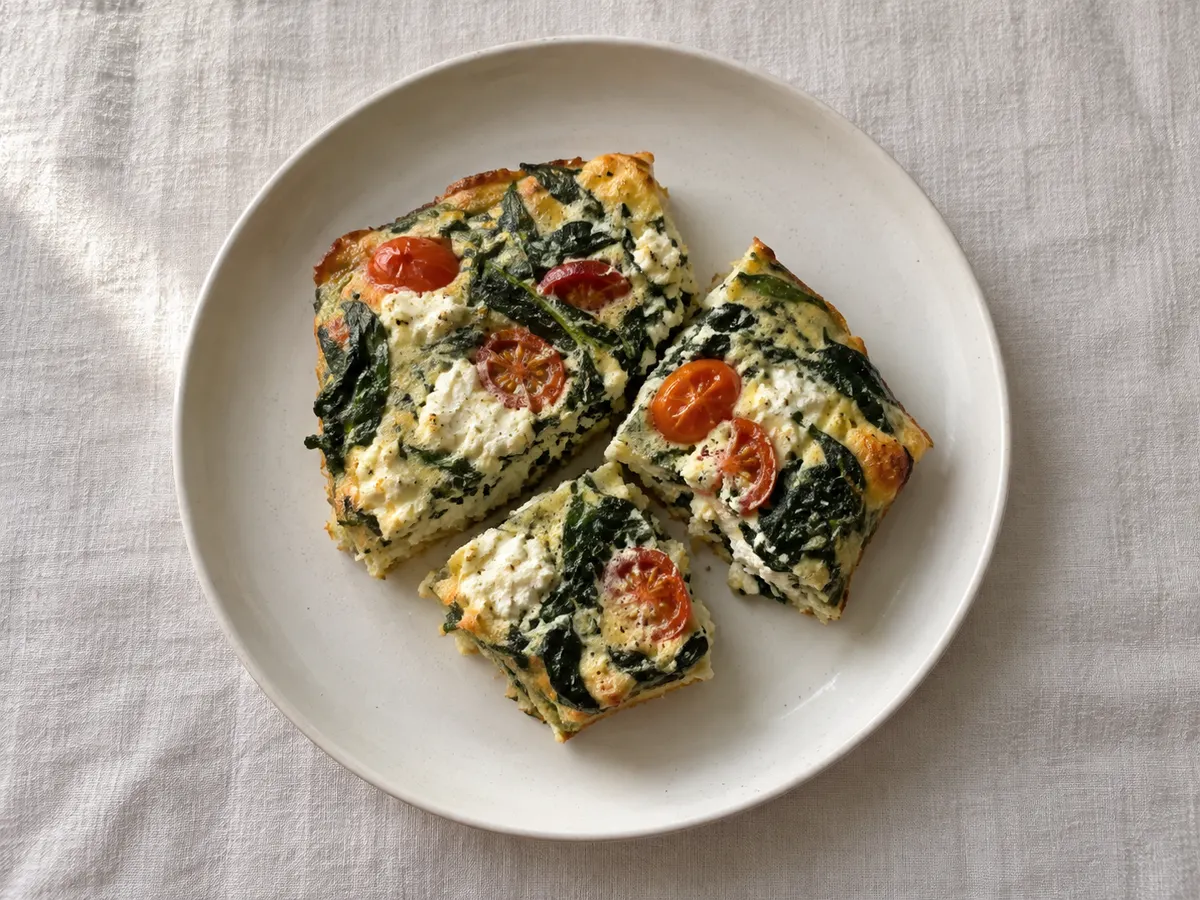
240 kcal28.8 grams of protein35 min
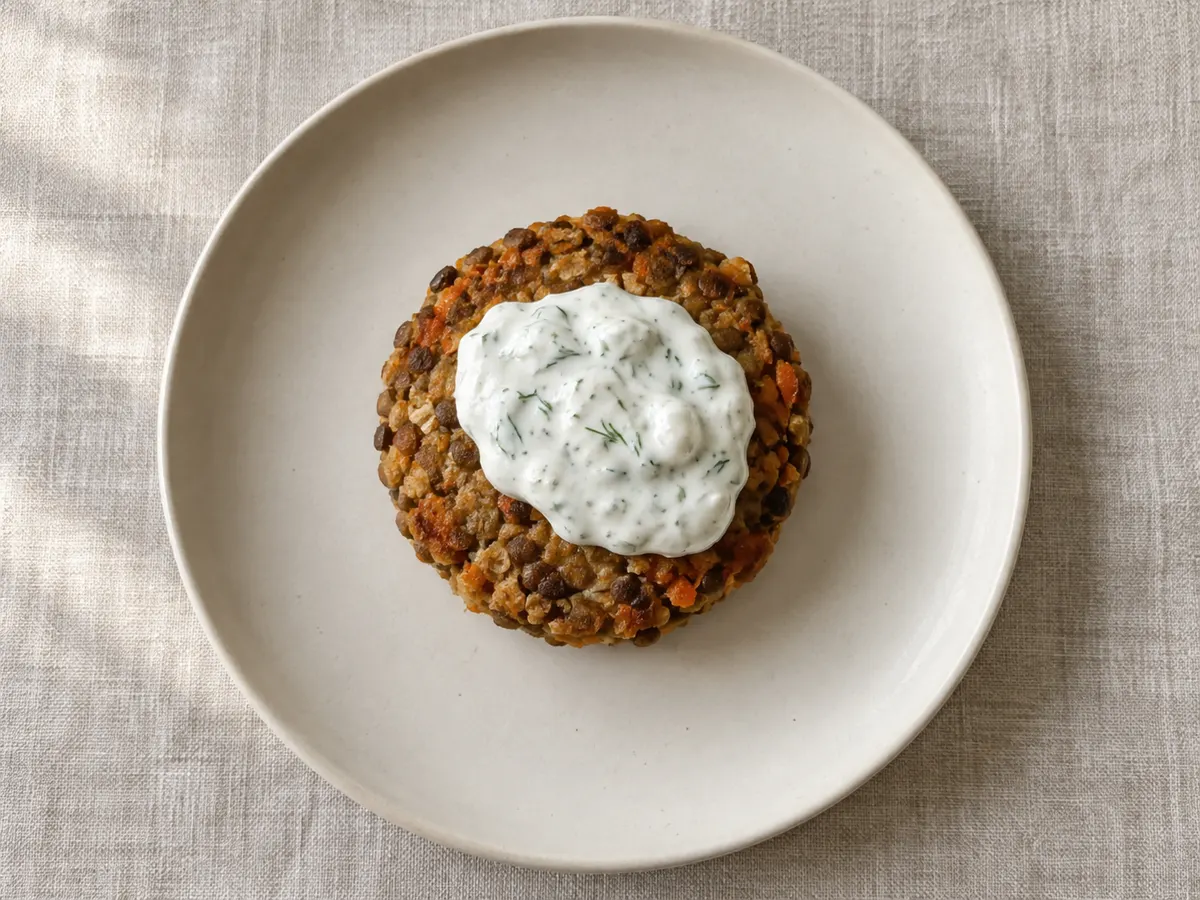
215 kcal15.4 grams of protein45 min
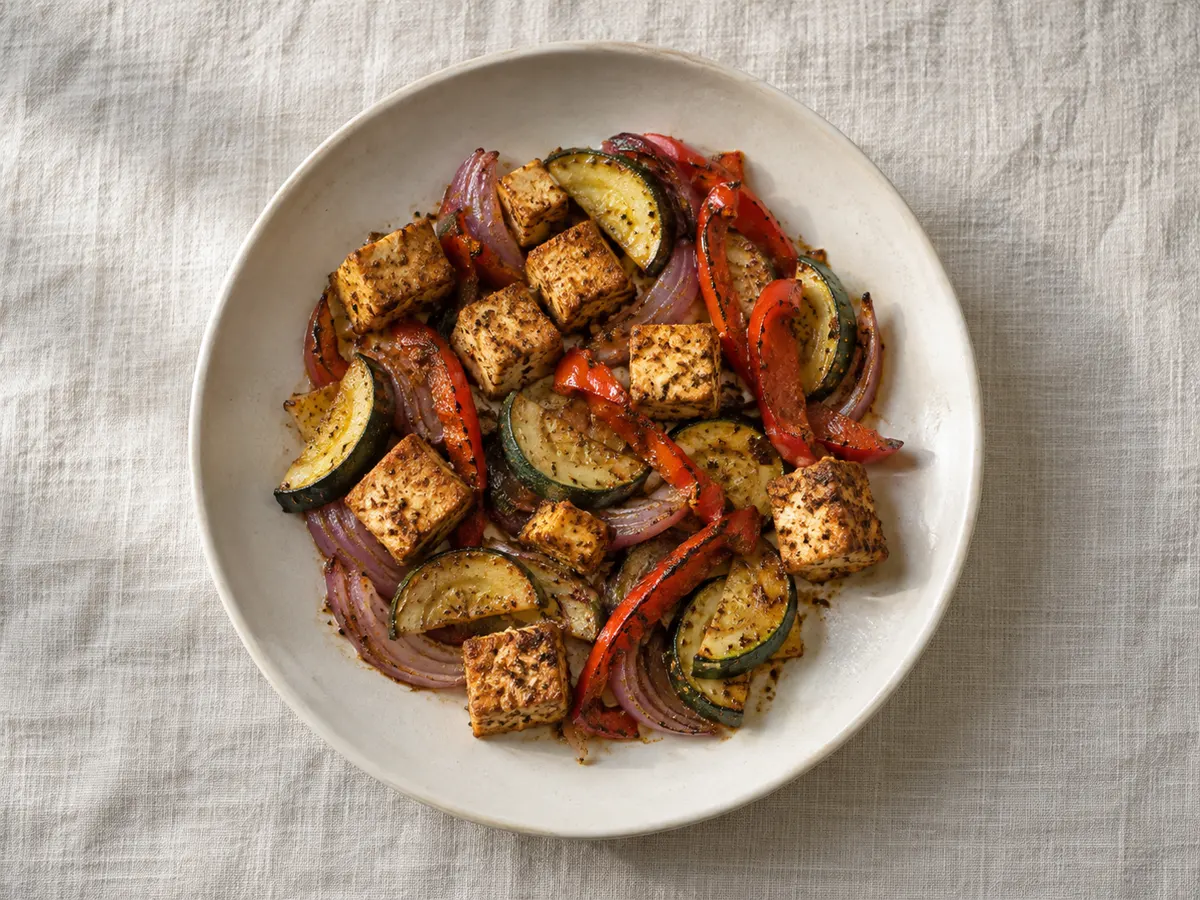
206 kcal15.7 grams of protein40 min
Sources
Nutrition values for each ingredient (USDA FoodData Central) and the satiety reference, with the access date.
- U.S. Department of Agriculture, Agricultural Research Service.USDA FoodData Central: Fish, trout, rainbow, farmed, raw (FDC ID 173717).accessed .
- U.S. Department of Agriculture, Agricultural Research Service.USDA FoodData Central: Quinoa, cooked (FDC ID 168917).accessed .
- U.S. Department of Agriculture, Agricultural Research Service.USDA FoodData Central: Tomatoes, red, ripe, raw, year round average (FDC ID 170457).accessed .
- U.S. Department of Agriculture, Agricultural Research Service.USDA FoodData Central: Arugula, raw (FDC ID 169387).accessed .
- U.S. Department of Agriculture, Agricultural Research Service.USDA FoodData Central: Oil, olive, salad or cooking (FDC ID 171413).accessed .
- European Journal of Clinical Nutrition (PubMed).Holt SH, Miller JC, Petocz P, Farmakalidis E. A satiety index of common foods. Eur J Clin Nutr. 1995;49(9):675-90.accessed .