Drinks
Vegetable broth
Each 100 ml (3.4 fl oz) of vegetable broth has 5 kcal and 0.6 g of sugars, and as a drink those calories tend to fill you up less than the same calories from solid food.
Estimated satietyHow it is calculated
Estimated satiety: 3 out of 5
| Starting point | +1 |
|---|---|
| Very low energy density: 5 kcal/100 g | +2 |
| Protein: 4.8 g/100 kcal | +1 |
| Fiber: 0.0 g/100 kcal | 0 |
| Liquid, less filling than a solid; 0.6 g of sugars, under 8 | −1 |
Our own estimate from the values per 100 g: useful for comparing foods with each other, not a measurement in people. Holt index (1995): this food was not measured.
- Prepared by
- Alex Gonzalez
- Last updated
- Next review
- Sources
- 7 primary
- Data
- USDA FDC 171583
No clinical review. No advertising from drug companies and no affiliate links.How we work
Nutrition facts
- Calories
- 13 kcal per serving
- 5 kcal per 100 ml (3.4 fl oz)
- Protein
- 0.6 g per serving
- 0.2 g per 100 ml (3.4 fl oz)
- Carbohydrates
- 2.3 g per serving
- 0.9 g per 100 ml (3.4 fl oz)
- of which sugars
- 1.4 g per serving
- 0.6 g per 100 ml (3.4 fl oz)
- Fiber
- 0 g per serving
- 0 g per 100 ml (3.4 fl oz)
- Fat
- 0.2 g per serving
- 0.1 g per 100 ml (3.4 fl oz)
- of which saturated
- 0.1 g per serving
- 0 g per 100 ml (3.4 fl oz)
- Water
- 245 g per serving
- 98 g per 100 ml (3.4 fl oz)
Source: USDA FoodData Central: Soup, vegetable broth, ready to serve (FDC ID 171583), accessed September 23, 2026.
A typical 250 ml (8.5 fl oz, about 1 cup) serving provides about 13 kcal, 0.6 g of protein, and 0 g of fiber.
What it is and how to eat it
The DLE, the Spanish-language dictionary, defines caldo as the liquid that results from cooking or seasoning certain foods. This page covers ready-to-serve vegetable broth according to USDA, with 5 kcal, 0.24 g of protein, 98 g of water and 296 mg of sodium per 100 g, and no fiber, as you would expect from a strained broth. It is almost all water: it provides barely any energy or nutrients, but it does provide fluid and salt.
A 250 ml (8.5 fl oz) bowl, counting 1 ml as 1 g, provides about 13 kcal, 0.6 g of protein and about 245 g of water: it hydrates and warms, but it barely nourishes. For nausea, the 2025 nutrition advisory on GLP-1 therapy suggests small, frequent meals while drinking adequate fluids, and elsewhere it explains that foods that flow easily, with fewer calories and more water, can facilitate faster gastric emptying; from this I infer, although the advisory does not say so, that on days with nausea a few sips of broth can be a first step. Since it has almost no protein, which the same advisory suggests eating first, it works better as a base with chicken, egg or legumes, as in the light Spanish picadillo soup with chicken, egg, and ham or the Yucatán-style lime soup with chicken and jicama.
What the evidence says
The Wegovy (semaglutide) label warns that nausea, vomiting and diarrhea can cause dehydration and asks patients to take precautions to avoid fluid depletion; in its 68-week trials, nausea affected 43.9% of patients, compared with 16.1% on placebo, and vomiting 24.5%, compared with 6.3%. A bowl provides about 245 g of water, a little over a tenth of the 2.0 liters of total water a day EFSA sets as the adequate intake for adult women (2.5 liters for men), a reference that counts drinks and food. With 296 mg of sodium per 100 g according to USDA, a bowl provides about 740 mg, more than a third of the 2,000 mg a day WHO recommends not exceeding, and WHO lists broths and stock cubes among the ways salt is added during cooking. With 5 kcal per 100 g, it is well below the 20 kcal per 100 ml limit the EU sets for a "low energy" claim (Regulation (EC) No 1924/2006).
Recipes with this food
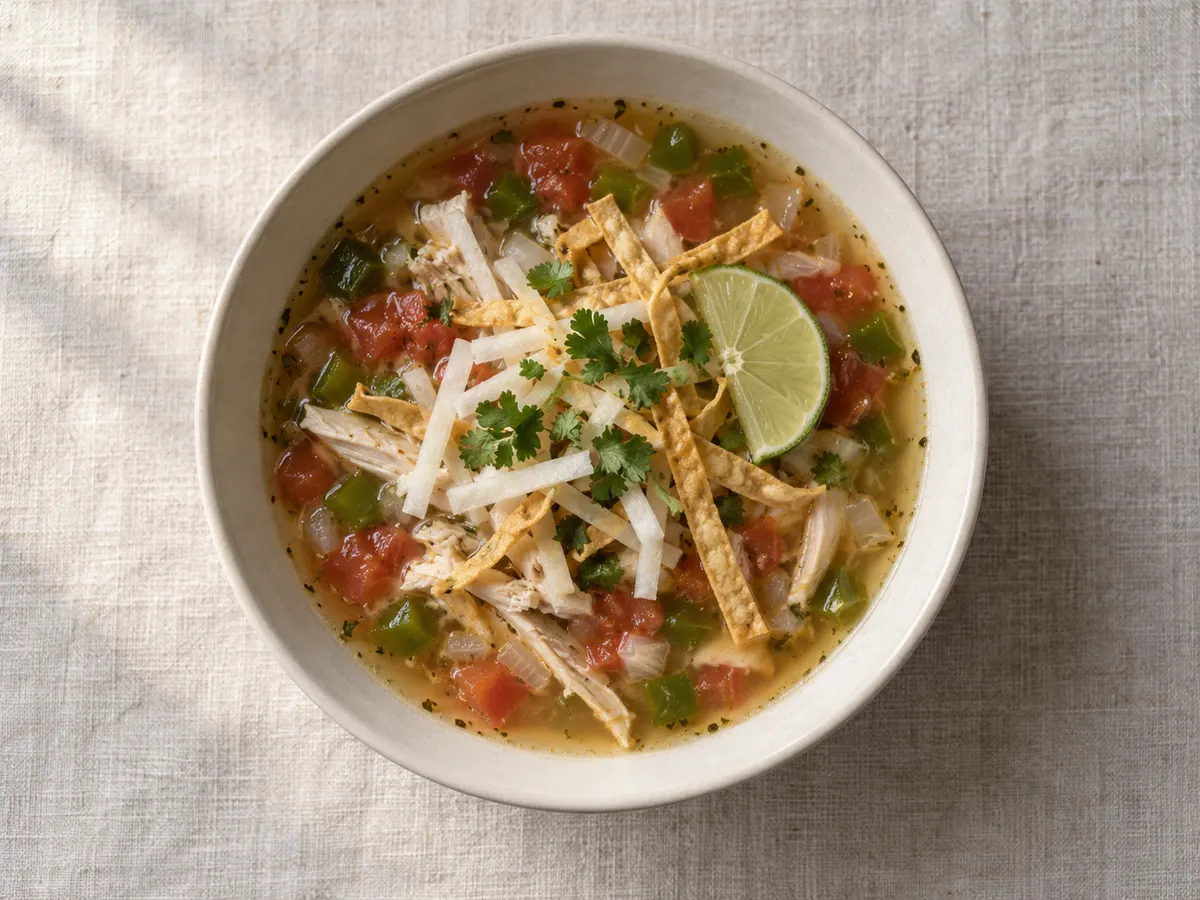 Yucatán-style lime soup with chicken and jicama25.1 g protein per serving
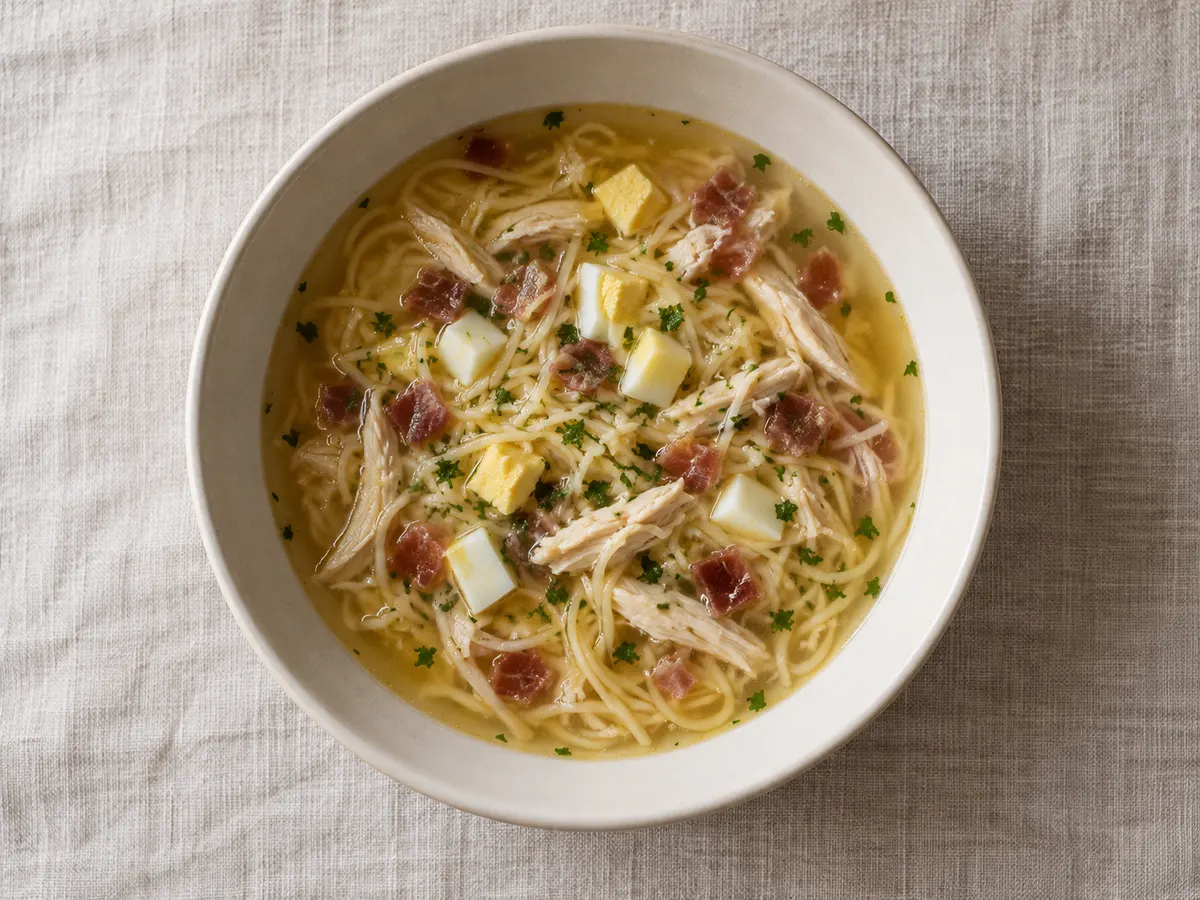 Light Spanish picadillo soup with chicken, egg, and ham18.4 g protein per serving
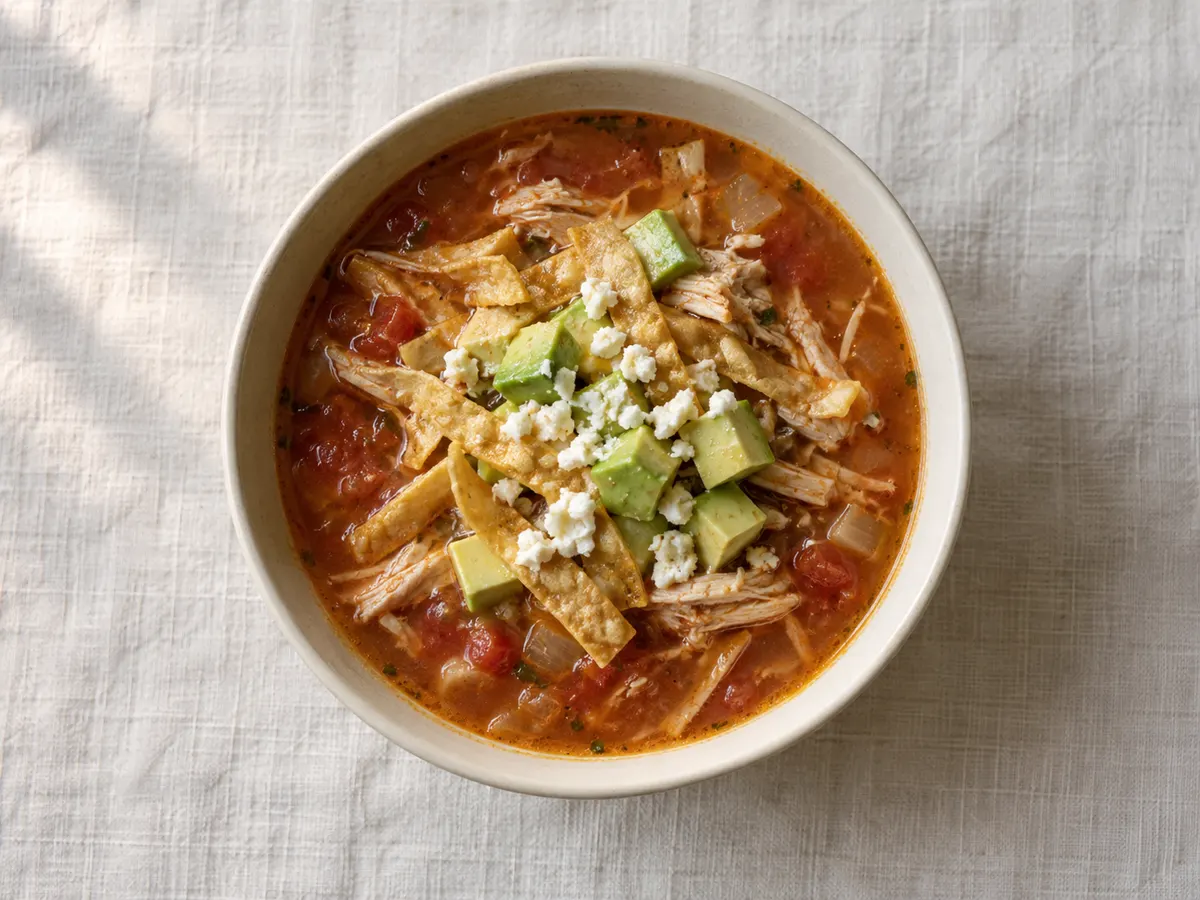 Light tortilla soup with chicken31.8 g protein per serving
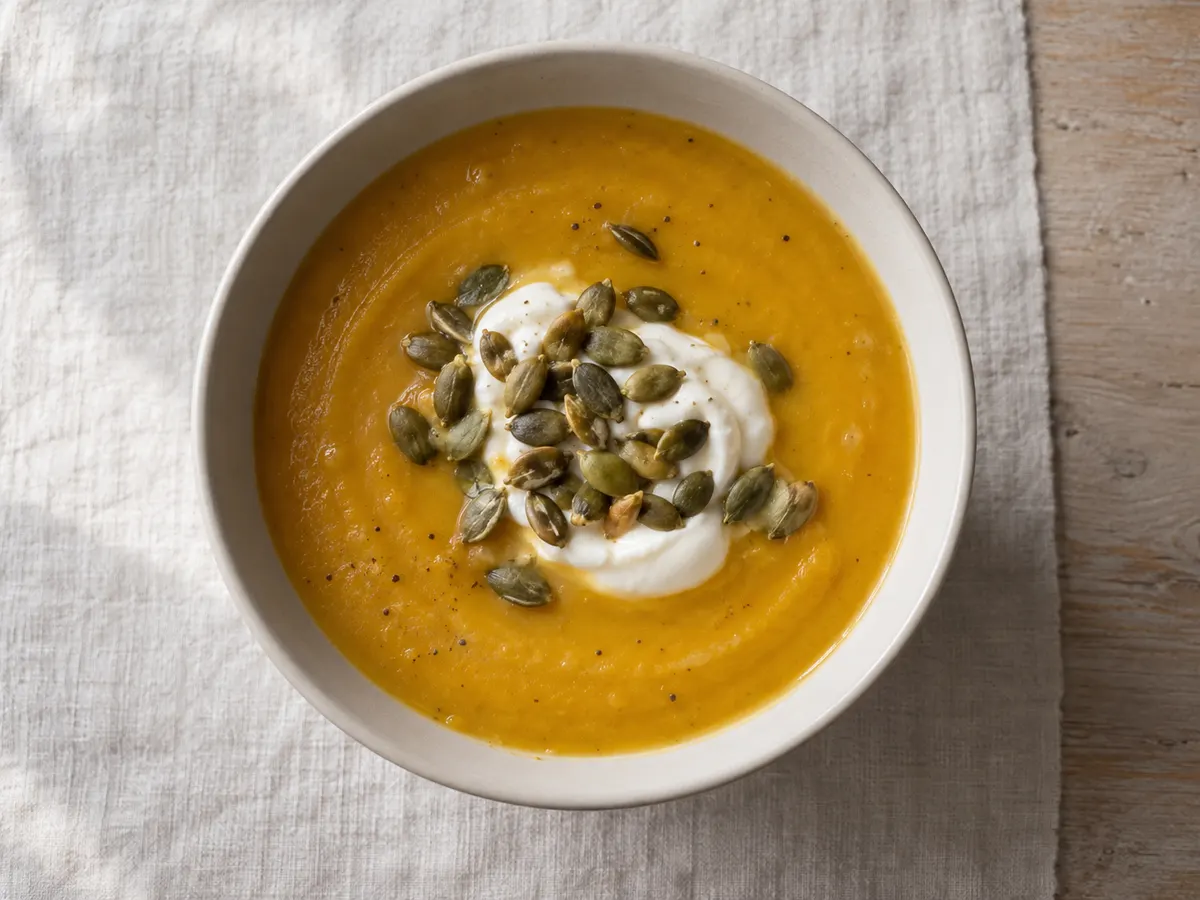 Pumpkin and chayote soup with yogurt and pepitas8.5 g protein per serving
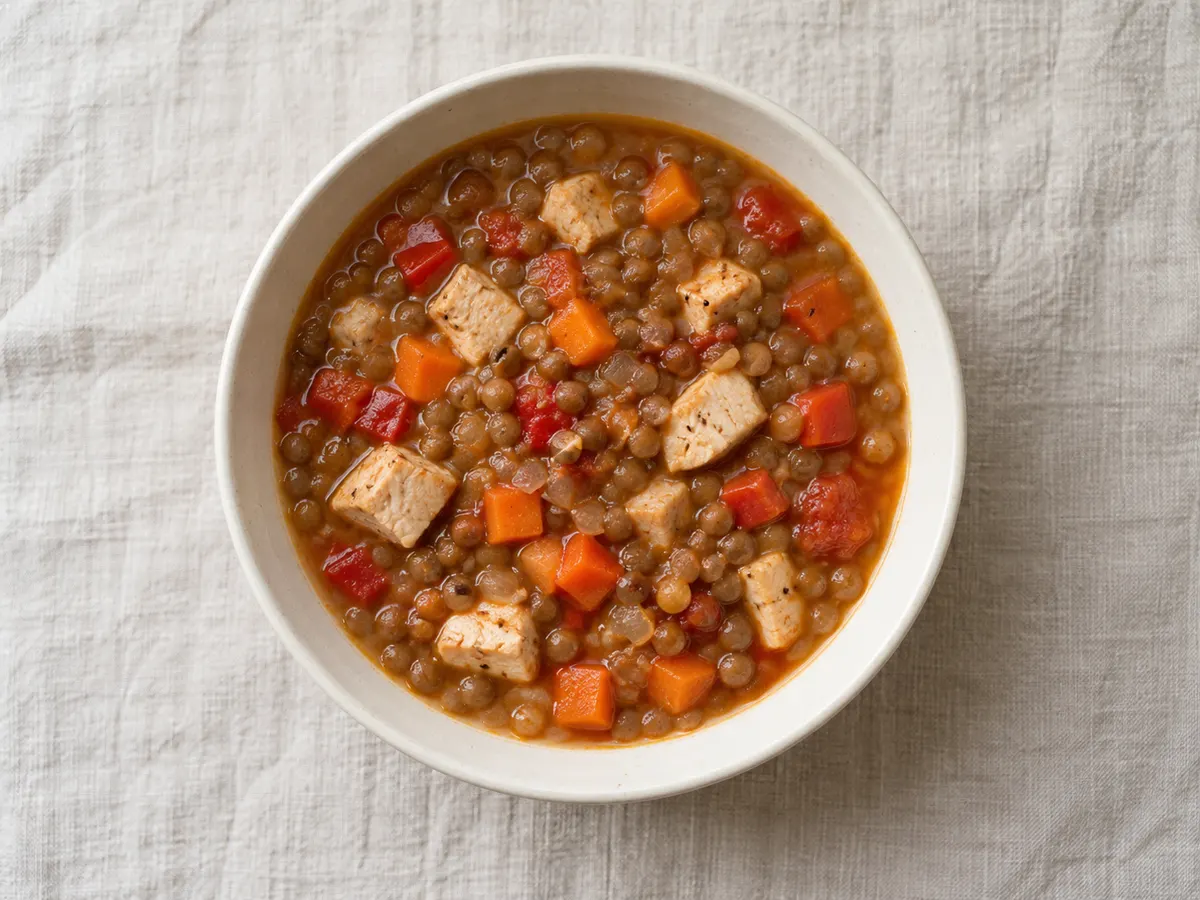 New Year's lentils with turkey and vegetables31.6 g protein per serving
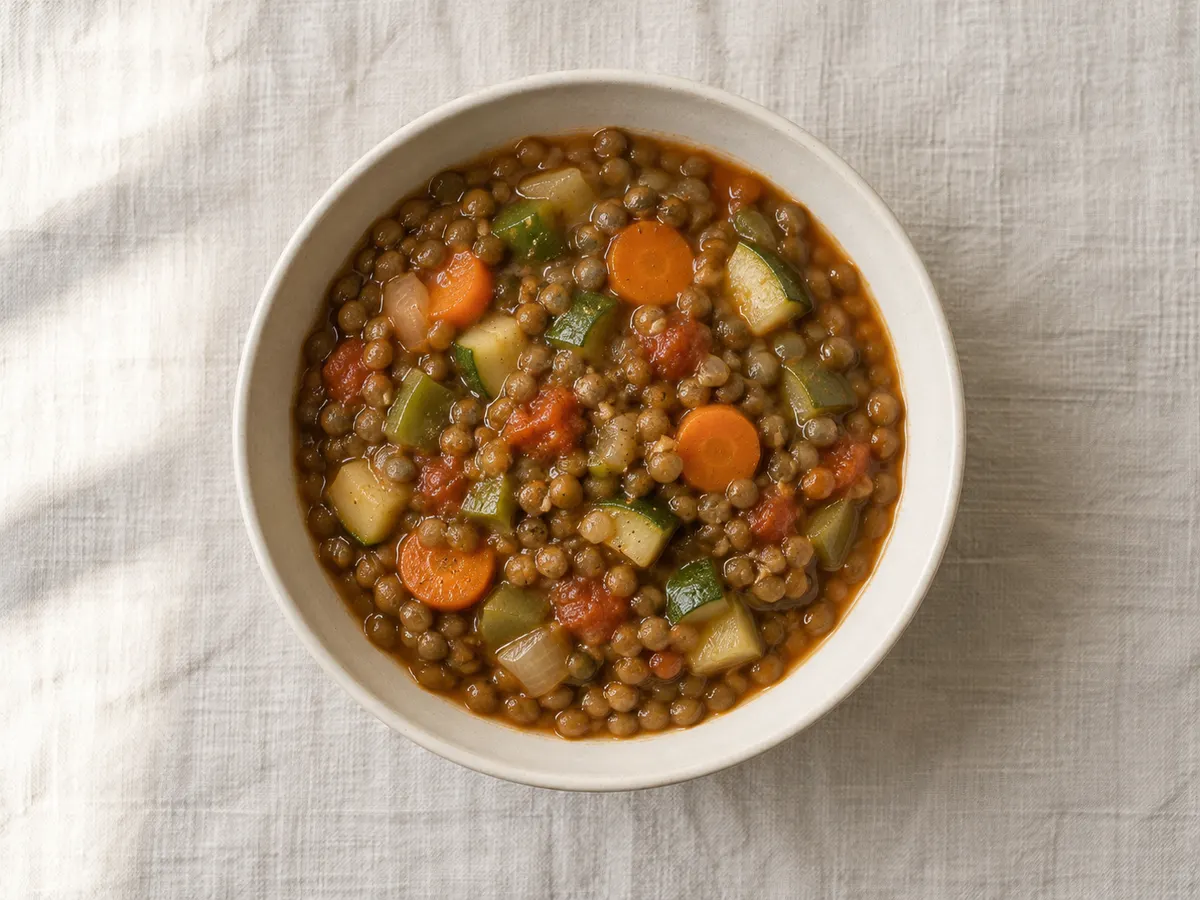 Stewed lentils with vegetables15.7 g protein per serving
Satiety
The 1 to 5 score is our own estimate: it starts at 1 point, adds points for low energy density, for protein and fiber per 100 kcal, and for the water in solid foods, and subtracts points for drinks with calories. It is useful for comparing foods with each other; it is not a measurement in people.
What to keep in mind on a GLP-1 medication
Frequently asked questions about vegetable broth
How much protein does a 250 ml (8.5 fl oz) serving of vegetable broth have?
100 ml (3.4 fl oz) of vegetable broth has 0.2 g of protein. A typical 250 ml (8.5 fl oz) serving has about 0.6 g of protein. That is 4.8 g of protein per 100 kcal.
How many calories are in a 250 ml (8.5 fl oz) serving of vegetable broth?
100 ml (3.4 fl oz) of vegetable broth has 5 kcal. A typical 250 ml (8.5 fl oz) serving has about 13 kcal. That is a very low energy density.
How filling is vegetable broth?
Moderately: our estimated satiety score is 3 out of 5. Calculation: 1 (base) + 2 (very low energy density: 5 kcal/100 g) + 1 (protein: 4.8 g/100 kcal) + 0 (fiber: 0.0 g/100 kcal) − 1 (liquid, less filling than a solid; 0.6 g of sugars, under 8) = 3. It is an estimate based on its composition, not a measurement in people.
Is vegetable broth a good choice on a GLP-1 if I have nausea?
Based on our tags, this is what matters about vegetable broth on a GLP-1 medication. “Easy to digest”: a soft or low-fat food that many people tolerate well when they feel nauseous or get full quickly. “Low energy density”: plenty of volume for few calories; make sure it does not push protein foods off your plate. “Hydrating”: a lot of water, which contributes to hydration when you eat and drink less. These are general guidelines, not medical advice: everyone tolerates foods differently.
How many milliliters or fluid ounces are in a serving of vegetable broth?
We use 250 ml (8.5 fl oz) as a typical serving, about 1 cup (1 ml is treated as about 1 g). That amount provides about 13 kcal, 0.6 g of protein, and 0 g of fiber. It is a reference for calculations, not a recommendation of how much to eat.
Compare with…
Similar foods
Sources
Sources for the data on this page, with the access date.
- Official databaseU.S. Department of Agriculture, Agricultural Research Service.USDA FoodData Central: Soup, vegetable broth, ready to serve (FDC ID 171583).accessed .
- InstitutionRoyal Spanish Academy and Association of Academies of the Spanish Language (RAE-ASALE).Diccionario de la lengua española (Dictionary of the Spanish Language, 23rd ed., online version): "caldo" (in Spanish).accessed .
- Clinical guidelineObesity (Wiley).Mozaffarian D, et al. Nutritional priorities to support GLP-1 therapy for obesity: A joint Advisory from the American College of Lifestyle Medicine, the American Society for Nutrition, the Obesity Medicine Association, and The Obesity Society. Obesity. 2025;33(8):1475-1503. doi:10.1002/oby.24336.accessed .
- Drug labelEuropean Medicines Agency.Wegovy (semaglutide): EU Summary of Product Characteristics, sections 4.4 (special warnings and precautions) and 4.8 (undesirable effects), current version.accessed .
- RegulatorEFSA Journal.EFSA Panel on Dietetic Products, Nutrition and Allergies (NDA). Scientific Opinion on Dietary Reference Values for water. EFSA Journal. 2010;8(3):1459. doi:10.2903/j.efsa.2010.1459.accessed .
- InstitutionWorld Health Organization.Healthy diet (fact sheet, section on salt and sodium).accessed .
- RegulatorOfficial Journal of the European Union (EUR-Lex).Regulation (EC) No 1924/2006 on nutrition and health claims made on foods (Annex).accessed .