Vegetables and starchy roots
Cooked chayote
Cooked chayote is 93% water, so 100 g (3.5 oz) brings only 24 kcal and 2.8 g of fiber.
Estimated satietyHow it is calculated
Estimated satiety: 5 out of 5
| Starting point | +1 |
|---|---|
| Very low energy density: 24 kcal/100 g | +2 |
| Protein: 2.6 g/100 kcal | 0 |
| Fiber: 11.7 g/100 kcal | +2 |
| Solid food with 93.4 g of water | +1 |
| Sum | 6 |
| Capped at 5 | 5 |
Our own estimate from the values per 100 g: useful for comparing foods with each other, not a measurement in people. Holt index (1995): this food was not measured.
- Prepared by
- Alex Gonzalez
- Last updated
- Next review
- Sources
- 11 primary
- Data
- USDA FDC 170403
No clinical review. No advertising from drug companies and no affiliate links.How we work
Nutrition facts
- Calories
- 36 kcal per serving
- 24 kcal per 100 g (3.5 oz)
- Protein
- 0.9 g per serving
- 0.6 g per 100 g (3.5 oz)
- Carbohydrates
- 7.6 g per serving
- 5.1 g per 100 g (3.5 oz)
- of which sugars
- 2.8 g per serving
- 1.9 g per 100 g (3.5 oz)
- Fiber
- 4.2 g per serving
- 2.8 g per 100 g (3.5 oz)
- Fat
- 0.7 g per serving
- 0.5 g per 100 g (3.5 oz)
- of which saturated
- 0 g per serving
- 0 g per 100 g (3.5 oz)
- Water
- 140.1 g per serving
- 93.4 g per 100 g (3.5 oz)
Source: USDA FoodData Central: Chayote, fruit, cooked, boiled, drained, without salt (FDC ID 170403), accessed September 23, 2026.
A typical 150 g (5.5 oz, about 1 cup) serving provides about 36 kcal, 0.9 g of protein, and 4.2 g of fiber.
What it is and how to eat it
Chayote (Sechium edule) is the fruit of a climbing plant in the gourd family, the same as squash, and the Dictionary of the Spanish Language describes it as a fruit of about ten centimeters, light green, elongated, with a wrinkled surface and some prickly hairs. According to the Diccionario de americanismos it is called chayote in Mexico, Honduras, El Salvador, Nicaragua, Panama, Cuba and Puerto Rico, güisquil in Guatemala, El Salvador, Nicaragua and parts of Mexico and Honduras, guatila in Colombia, chayota in Venezuela and tayota in the Dominican Republic. This page covers boiled, drained chayote without salt, with 24 kcal, 2.8 g of fiber and 93.4 g of water per 100 g according to USDA.
A 150 g (5.3 oz) serving provides 36 kcal and 4.2 g of fiber but less than 1 g of protein, so it adds volume to the plate and goes alongside protein, as in the chicken and vegetable soup or the pumpkin and chayote soup with yogurt and pepitas. Cooked, it has a mild flavor and a soft texture, and in a broth or a creamy soup it is easy to eat when appetite is low. The 2025 nutrition advisory on GLP-1 therapy suggests starting meals with protein and, for constipation, increasing fiber gradually, so if you eat very little, try not to fill up on the broth and vegetables first.
What the evidence says
With 2.8 g of fiber per 100 g it falls short of the 3 g for a "source of fibre" claim, but because it has so few calories, its 11.7 g per 100 kcal exceed the EU's other criterion for a "high fibre" claim, 3 g per 100 kcal (Regulation (EC) No 1924/2006). A 150 g serving is more than a third of the 400 g of fruits and vegetables a day the WHO recommends for people older than 10. A 2025 review by UNAM researchers, several of whom also authored five of the six included trials, pooled six clinical studies with 282 older adults with metabolic syndrome who took capsules of powdered chayote, 500 mg three times a day, not the cooked vegetable. In the meta-analysis of three of those trials, blood glucose and glycated hemoglobin fell, but the authors themselves describe the effect as clinically modest and state that it is no substitute for drug treatment (Foods, 2025).
Recipes with this food
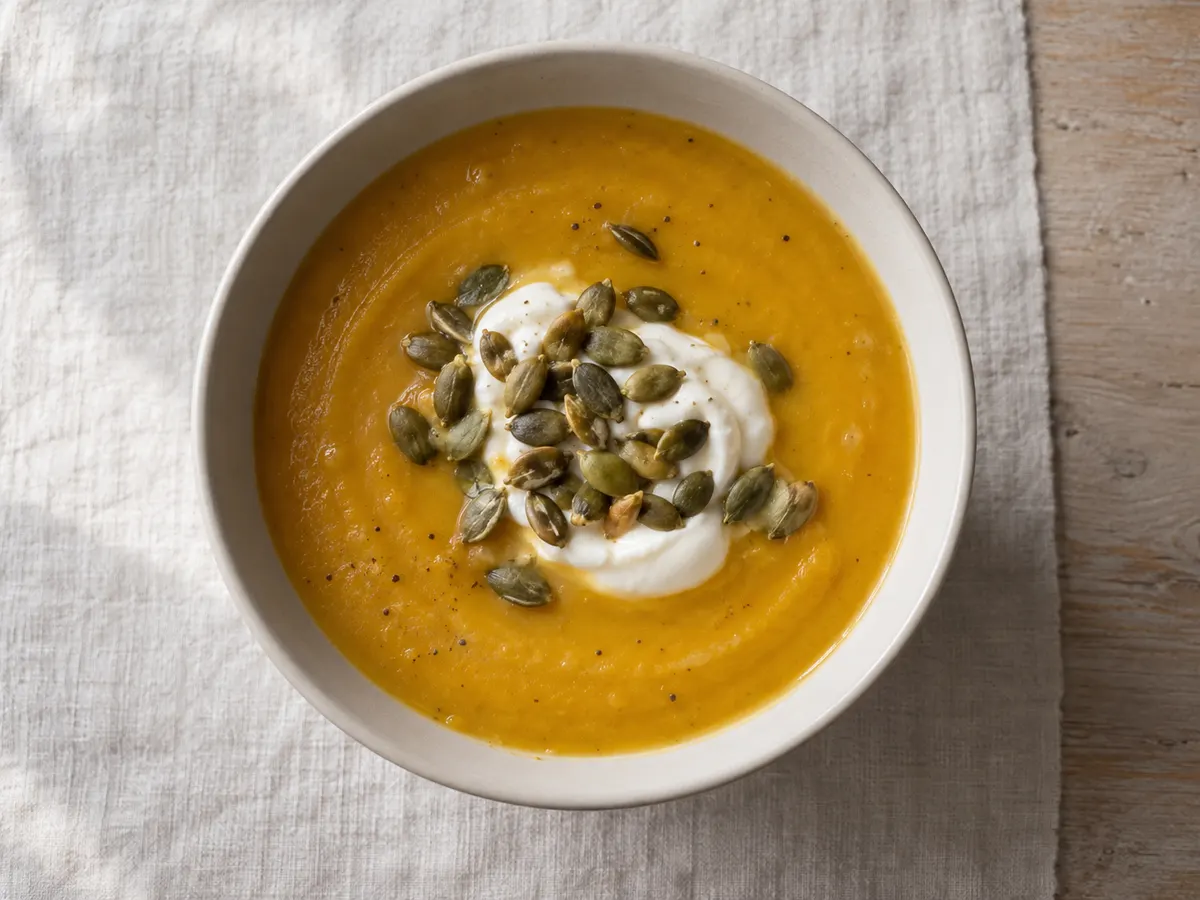 Pumpkin and chayote soup with yogurt and pepitas8.5 g protein per serving
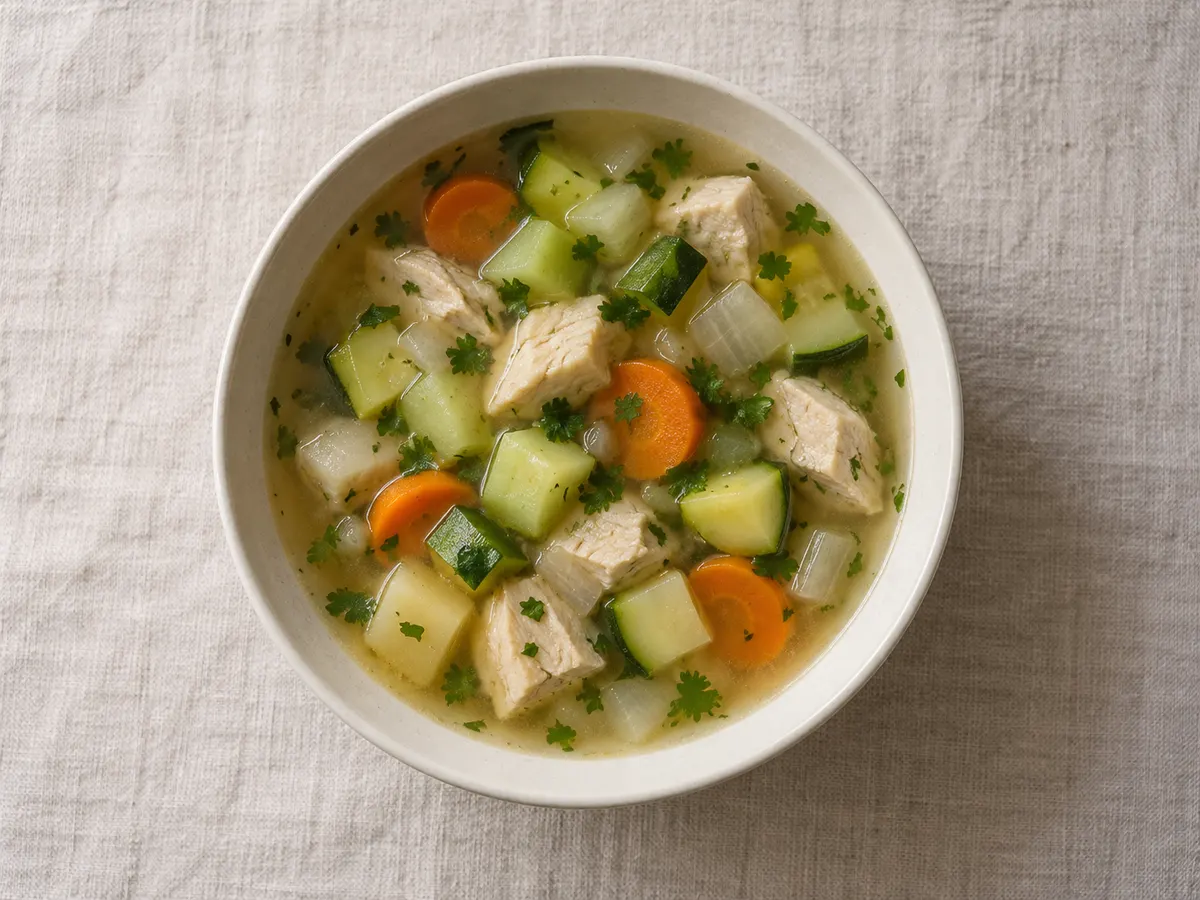 Chicken and vegetable soup22 g protein per serving
Satiety
The 1 to 5 score is our own estimate: it starts at 1 point, adds points for low energy density, for protein and fiber per 100 kcal, and for the water in solid foods, and subtracts points for drinks with calories. It is useful for comparing foods with each other; it is not a measurement in people.
What to keep in mind on a GLP-1 medication
Frequently asked questions about cooked chayote
How many grams of protein are in a 150 g (5.5 oz) serving of cooked chayote?
100 g (3.5 oz) of cooked chayote has 0.6 g of protein. A typical 150 g (5.5 oz) serving has about 0.9 g of protein. That is 2.6 g of protein per 100 kcal.
How many kcal are in a 150 g (5.5 oz) serving of cooked chayote?
100 g (3.5 oz) of cooked chayote has 24 kcal. A typical 150 g (5.5 oz) serving has about 36 kcal. That is a very low energy density.
How much fiber is in a 150 g (5.5 oz) serving of cooked chayote?
100 g (3.5 oz) of cooked chayote has 2.8 g of fiber. A typical 150 g (5.5 oz) serving has about 4.2 g of fiber.
Does cooked chayote keep you full?
Yes, very filling for the calories it provides: our estimated satiety score is 5 out of 5. Calculation: 1 (base) + 2 (very low energy density: 24 kcal/100 g) + 0 (protein: 2.6 g/100 kcal) + 2 (fiber: 11.7 g/100 kcal) + 1 (solid food with 93.4 g of water) = 6; capped at 5. It is an estimate based on its composition, not a measurement in people.
What should I know about cooked chayote if I take Ozempic, Wegovy, Mounjaro, or Zepbound and feel nauseous?
Based on our tags, this is what matters about cooked chayote on a GLP-1 medication. “Easy to digest”: a soft or low-fat food that many people tolerate well when they feel nauseous or get full quickly. “Low energy density”: plenty of volume for few calories; make sure it does not push protein foods off your plate. “Hydrating”: a lot of water, which contributes to hydration when you eat and drink less. These are general guidelines, not medical advice: everyone tolerates foods differently.
What is a typical serving of cooked chayote?
We use 150 g (5.5 oz) as a typical serving, about 1 cup. That amount provides about 36 kcal, 0.9 g of protein, and 4.2 g of fiber. It is a reference for calculations, not a recommendation of how much to eat.
Similar foods
Sources
Sources for the data on this page, with the access date.
- Official databaseU.S. Department of Agriculture, Agricultural Research Service.USDA FoodData Central: Chayote, fruit, cooked, boiled, drained, without salt (FDC ID 170403).accessed .
- InstitutionRoyal Spanish Academy and Association of Academies of the Spanish Language (RAE-ASALE).Diccionario de la lengua española (Dictionary of the Spanish Language, 23rd ed., online version): "chayote" (in Spanish).accessed .
- InstitutionAssociation of Academies of the Spanish Language (ASALE).Diccionario de americanismos (Dictionary of Americanisms): "chayote" (in Spanish).accessed .
- InstitutionAssociation of Academies of the Spanish Language (ASALE).Diccionario de americanismos (Dictionary of Americanisms): "güisquil" (in Spanish).accessed .
- InstitutionAssociation of Academies of the Spanish Language (ASALE).Diccionario de americanismos (Dictionary of Americanisms): "guatila" (in Spanish).accessed .
- InstitutionAssociation of Academies of the Spanish Language (ASALE).Diccionario de americanismos (Dictionary of Americanisms): "chayota" (in Spanish).accessed .
- InstitutionAssociation of Academies of the Spanish Language (ASALE).Diccionario de americanismos (Dictionary of Americanisms): "tayota" (in Spanish).accessed .
- Clinical guidelineObesity (Wiley).Mozaffarian D, et al. Nutritional priorities to support GLP-1 therapy for obesity: A joint Advisory from the American College of Lifestyle Medicine, the American Society for Nutrition, the Obesity Medicine Association, and The Obesity Society. Obesity. 2025;33(8):1475-1503. doi:10.1002/oby.24336.accessed .
- RegulatorOfficial Journal of the European Union (EUR-Lex).Regulation (EC) No 1924/2006 on nutrition and health claims made on foods (Annex).accessed .
- InstitutionWorld Health Organization.Healthy diet (fact sheet, section on fruits, vegetables and fibre).accessed .
- Meta-analysisFoods (MDPI).Arista-Ugalde TL, et al. Hypoglycemic Effects of Sechium edule (Chayote) in Older Adults: A Systematic Review and Meta-Analysis of Clinical and Preclinical Trials. Foods. 2025;14(17):2937. doi:10.3390/foods14172937.accessed .