Grains and bread
Cooked white rice
A typical 150 g (5.5 oz, about 1 cup) serving of cooked white rice has about 195 kcal and 0.6 g of fiber, from 130 kcal per 100 g.
Estimated satietyHow it is calculated
Estimated satiety: 2 out of 5
| Starting point | +1 |
|---|---|
| Low energy density | +1 |
Our own estimate from the values per 100 g: useful for comparing foods with each other, not a measurement in people. Holt index (1995): 138 (white bread = 100).
- Prepared by
- Alex Gonzalez
- Last updated
- Next review
- Sources
- 6 primary
- Data
- USDA FDC 168878
No clinical review. No advertising from drug companies and no affiliate links.How we work
Nutrition facts
- Calories
- 195 kcal per serving
- 130 kcal per 100 g (3.5 oz)
- Protein
- 4 g per serving
- 2.7 g per 100 g (3.5 oz)
- Carbohydrates
- 42.3 g per serving
- 28.2 g per 100 g (3.5 oz)
- of which sugars
- 0.1 g per serving
- 0.1 g per 100 g (3.5 oz)
- Fiber
- 0.6 g per serving
- 0.4 g per 100 g (3.5 oz)
- Fat
- 0.4 g per serving
- 0.3 g per 100 g (3.5 oz)
- of which saturated
- 0.1 g per serving
- 0.1 g per 100 g (3.5 oz)
- Water
- 102.6 g per serving
- 68.4 g per 100 g (3.5 oz)
Source: USDA FoodData Central: Rice, white, long-grain, regular, enriched, cooked (FDC ID 168878), accessed September 23, 2026.
A typical 150 g (5.5 oz, about 1 cup) serving provides about 195 kcal, 4 g of protein, and 0.6 g of fiber.
What it is and how to eat it
White rice is rice that has had the bran and germ polished off in addition to the husk, which is why it has less fiber than brown rice. Spain distinguishes round rice, such as the bomba used for paella, from long-grain rice, which cooks up looser; in Latin America long-grain rice is widely used, the white rice served with beans in so many dishes. This page covers cooked, enriched long-grain white rice (with added iron and B vitamins), with 130 kcal, 2.69 g of protein and 0.4 g of fiber per 100 g according to USDA.
A 150 g (5.3 oz) serving provides 195 kcal but only 4 g of protein and 0.6 g of fiber, so it works as a side to the protein, as in the shredded chicken with vegetables and rice, the lean beef picadillo with vegetables or the mild chicken curry with yogurt and spinach. It is soft, low in fiber and almost fat-free, and is usually well tolerated in the first few days of treatment, when the 2025 nutrition advisory on GLP-1 therapy suggests avoiding fatty and very high-fiber foods, and after a dose increase. If your appetite is small, start with the protein, as the same advisory suggests, and leave the rice for last or serve half a portion.
What the evidence says
In the 2008 international tables of glycemic index, boiled white rice has an average index of 73, against 68 for brown rice, a small difference. In a crossover trial with 15 healthy adults, cooked rice kept in the refrigerator at 4 °C (39 °F) for 24 hours and then reheated had more resistant starch (1.65 g per 100 g, against 0.64 g freshly cooked) and raised blood glucose less (Asia Pacific Journal of Clinical Nutrition, 2015). A meta-analysis of 7 cohorts with 352,384 people, published in the BMJ in 2012, linked the highest white rice intake with a 55% higher risk of type 2 diabetes in Asian populations, who ate three to four servings a day, but found no significant association in Western populations, who ate one to two servings a week. In the Holt satiety index (1995), white rice scored 138, above the white bread reference (100).
Recipes with this food
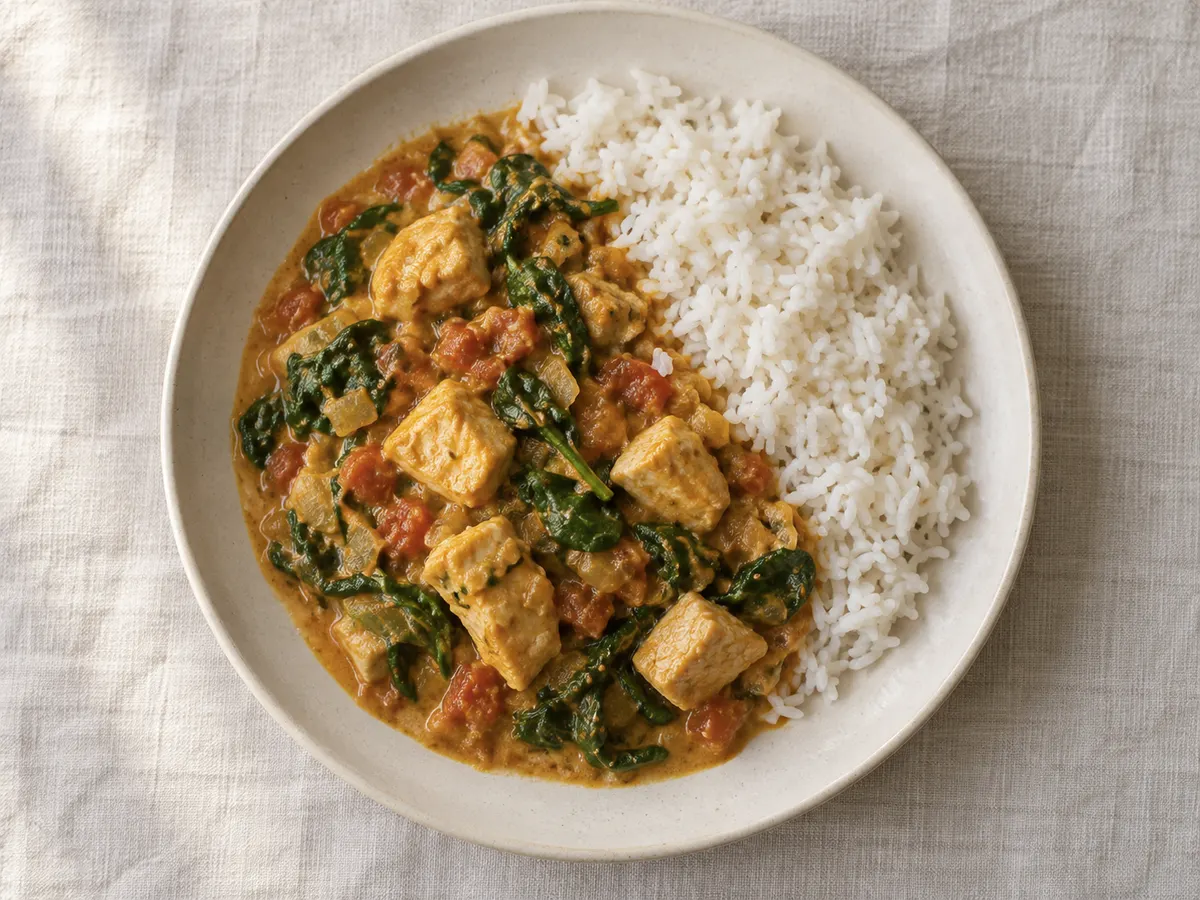 Mild chicken curry with yogurt and spinach37.3 g protein per serving
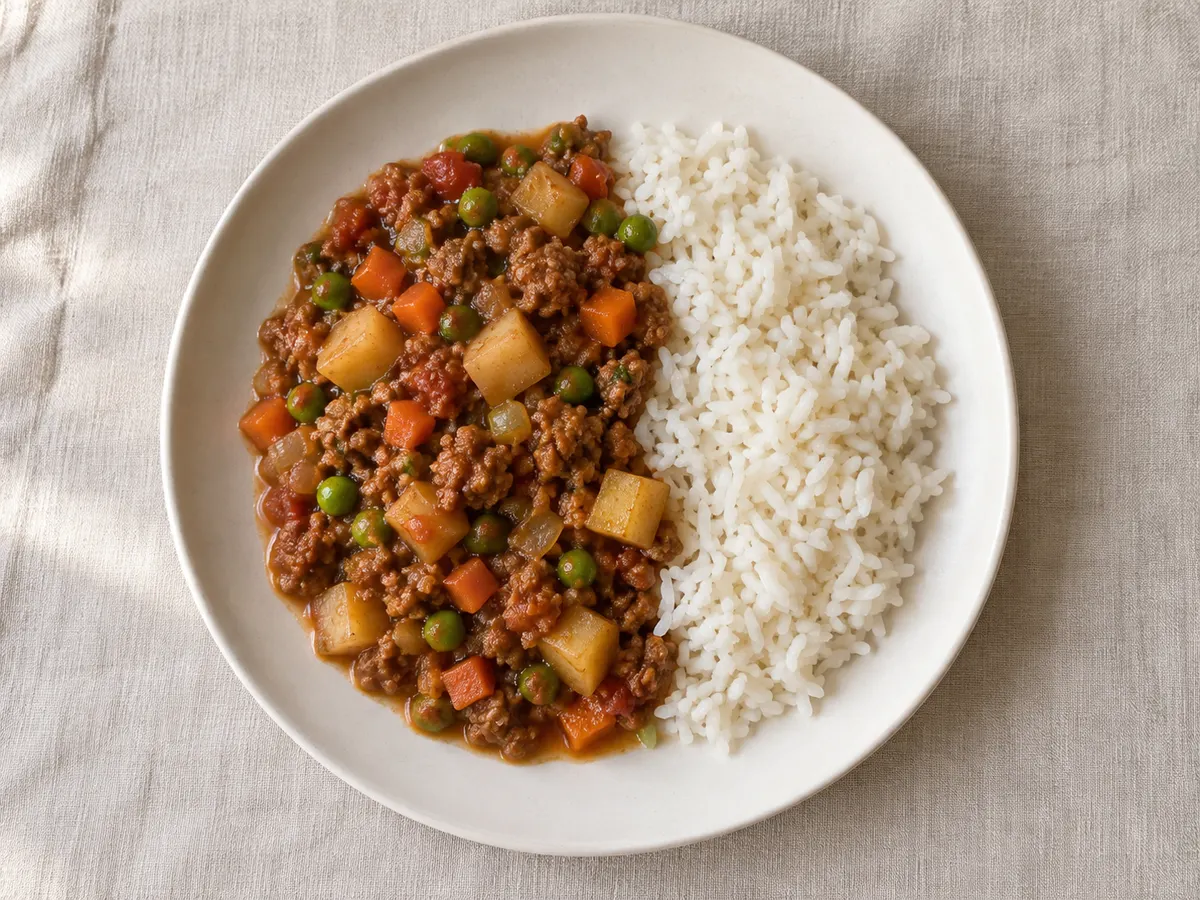 Lean beef picadillo with vegetables31.9 g protein per serving
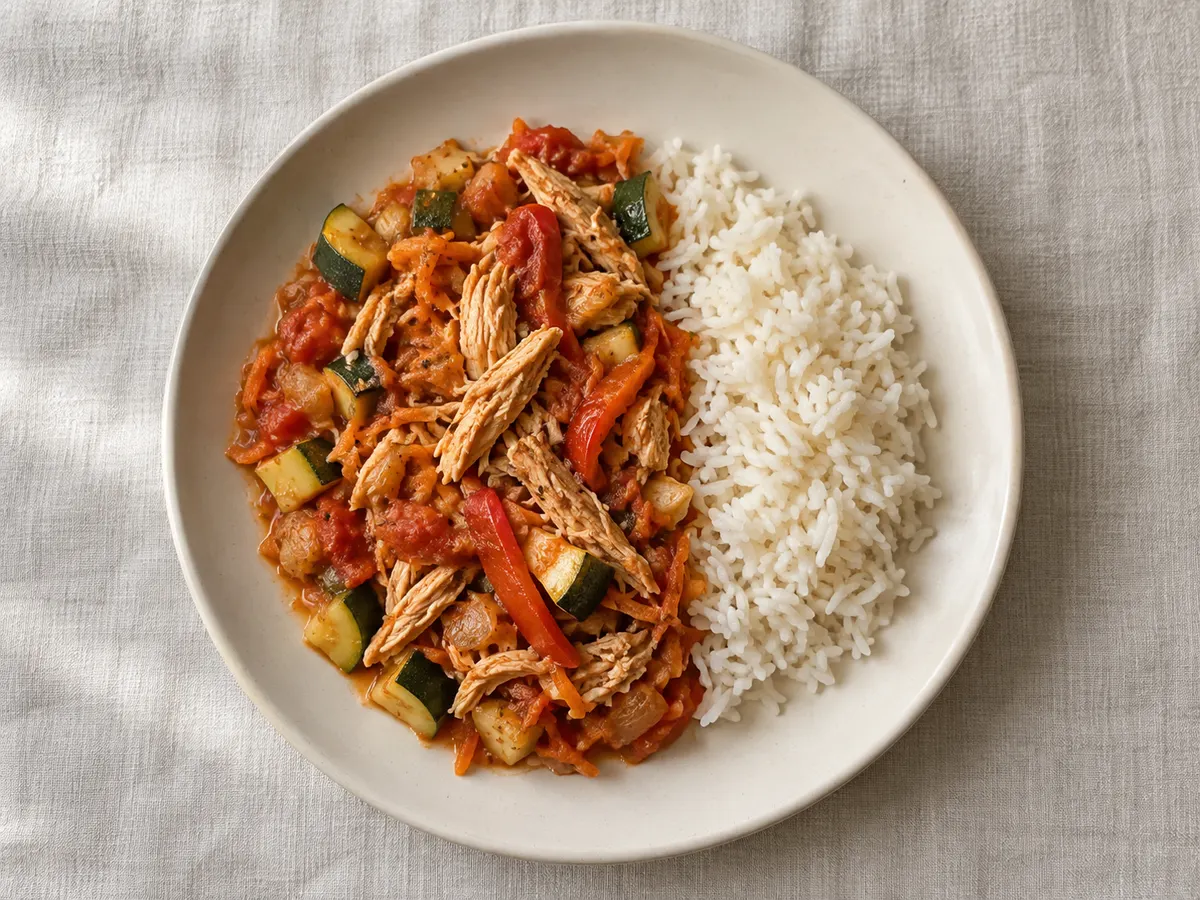 Shredded chicken with vegetables and rice33.7 g protein per serving
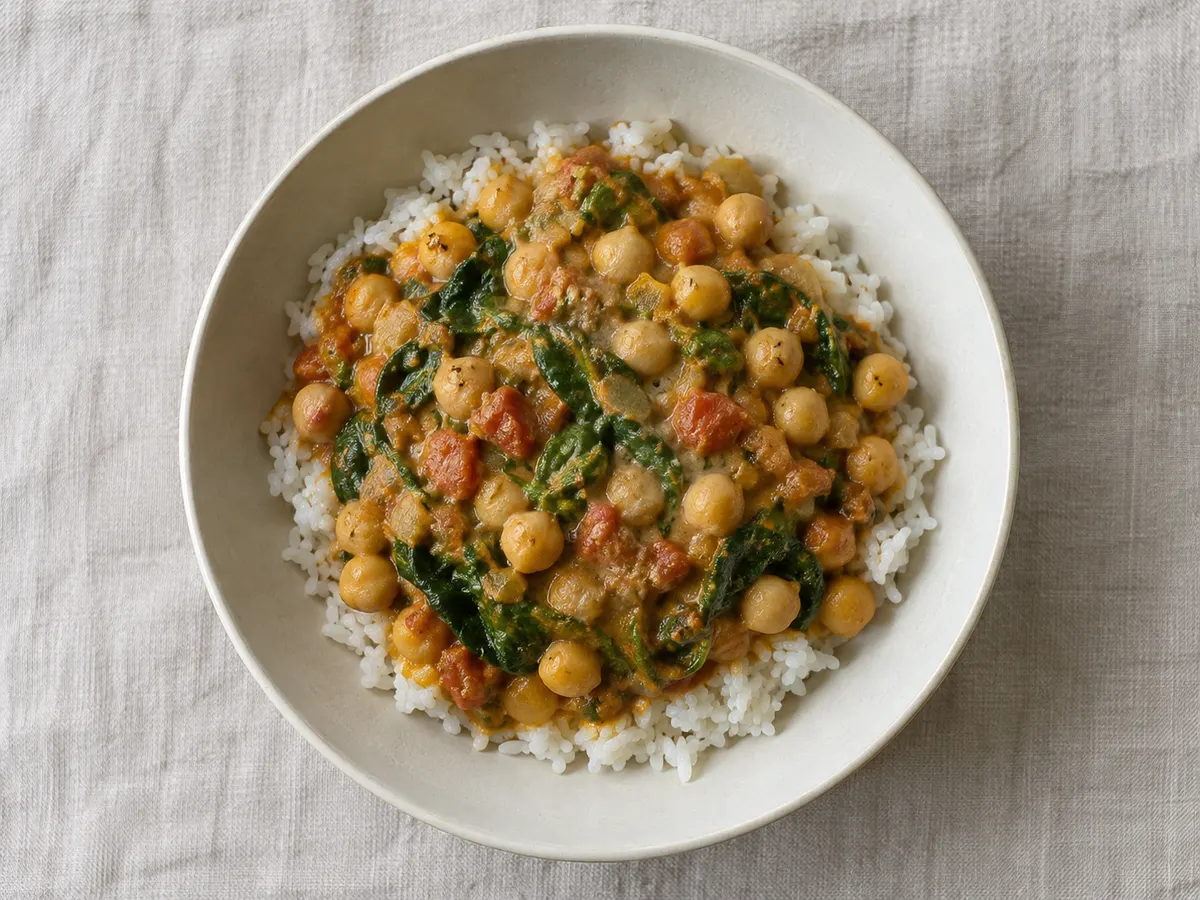 Mild chickpea and spinach curry20.1 g protein per serving
Satiety
The 1 to 5 score is our own estimate: it starts at 1 point, adds points for low energy density, for protein and fiber per 100 kcal, and for the water in solid foods, and subtracts points for drinks with calories. It is useful for comparing foods with each other; it is not a measurement in people.
This food was measured in people: in the satiety index by Holt and colleagues (1995), which compared 240 kcal servings of 38 foods over two hours, it scored 138 versus 100 for white bread. In other words, it was more filling than the same calories of white bread. Source: Holt SH, Miller JC, Petocz P, Farmakalidis E. A satiety index of common foods. Eur J Clin Nutr. 1995;49(9):675-90.
What to keep in mind on a GLP-1 medication
Frequently asked questions about cooked white rice
How much protein is in a 150 g (5.5 oz) serving of cooked white rice?
100 g (3.5 oz) of cooked white rice has 2.7 g of protein. A typical 150 g (5.5 oz) serving has about 4 g of protein. That is 2.1 g of protein per 100 kcal.
How many calories does a 150 g (5.5 oz) serving of cooked white rice have?
100 g (3.5 oz) of cooked white rice has 130 kcal. A typical 150 g (5.5 oz) serving has about 195 kcal. That is a low energy density.
Does cooked white rice have fiber?
100 g (3.5 oz) of cooked white rice has 0.4 g of fiber. A typical 150 g (5.5 oz) serving has about 0.6 g of fiber.
Is cooked white rice filling?
Not very filling for the calories it provides: our estimated satiety score is 2 out of 5. It is based on: low energy density. It was also measured in people: in the Holt satiety index (1995), with 240 kcal servings, it scored 138 versus 100 for white bread.
How does cooked white rice sit with nausea from a GLP-1 medication?
Based on our tags, this is what matters about cooked white rice on a GLP-1 medication. “Easy to digest”: a soft or low-fat food that many people tolerate well when they feel nauseous or get full quickly. These are general guidelines, not medical advice: everyone tolerates foods differently.
What counts as a normal serving of cooked white rice?
We use 150 g (5.5 oz) as a typical serving, about 1 cup. That amount provides about 195 kcal, 4 g of protein, and 0.6 g of fiber. It is a reference for calculations, not a recommendation of how much to eat.
Compare with…
Similar foods
Sources
Sources for the data on this page, with the access date.
- Official databaseU.S. Department of Agriculture, Agricultural Research Service.USDA FoodData Central: Rice, white, long-grain, regular, enriched, cooked (FDC ID 168878).accessed .
- Clinical trialEuropean Journal of Clinical Nutrition.Holt SH, Miller JC, Petocz P, Farmakalidis E. A satiety index of common foods. Eur J Clin Nutr. 1995;49(9):675-90.accessed .
- Clinical guidelineObesity (Wiley).Mozaffarian D, et al. Nutritional priorities to support GLP-1 therapy for obesity: A joint Advisory from the American College of Lifestyle Medicine, the American Society for Nutrition, the Obesity Medicine Association, and The Obesity Society. Obesity. 2025;33(8):1475-1503. doi:10.1002/oby.24336.accessed .
- Official databaseDiabetes Care (American Diabetes Association).Atkinson FS, Foster-Powell K, Brand-Miller JC. International tables of glycemic index and glycemic load values: 2008. Diabetes Care. 2008;31(12):2281-2283. doi:10.2337/dc08-1239.accessed .
- Clinical trialAsia Pacific Journal of Clinical Nutrition.Sonia S, Witjaksono F, Ridwan R. Effect of cooling of cooked white rice on resistant starch content and glycemic response. Asia Pac J Clin Nutr. 2015;24(4):620-625. doi:10.6133/apjcn.2015.24.4.13.accessed .
- Meta-analysisBMJ.Hu EA, Pan A, Malik V, Sun Q. White rice consumption and risk of type 2 diabetes: meta-analysis and systematic review. BMJ. 2012;344:e1454. doi:10.1136/bmj.e1454.accessed .