Grains and bread
Rye bread
Per 100 g (3.5 oz), rye bread combines 5.8 g of fiber and 8.5 g of protein with 259 kcal, a moderate energy density.
Estimated satietyHow it is calculated
Estimated satiety: 2 out of 5
| Starting point | +1 |
|---|---|
| Moderate energy density: 259 kcal/100 g | 0 |
| Protein: 3.3 g/100 kcal | 0 |
| Fiber: 2.2 g/100 kcal | +1 |
| Solid food with 37.3 g of water, under 70 | 0 |
Our own estimate from the values per 100 g: useful for comparing foods with each other, not a measurement in people. Holt index (1995): this food was not measured.
- Prepared by
- Alex Gonzalez
- Last updated
- Next review
- Sources
- 7 primary
- Data
- USDA FDC 172684
No clinical review. No advertising from drug companies and no affiliate links.How we work
Nutrition facts
- Calories
- 104 kcal per serving
- 259 kcal per 100 g (3.5 oz)
- Protein
- 3.4 g per serving
- 8.5 g per 100 g (3.5 oz)
- Carbohydrates
- 19.3 g per serving
- 48.3 g per 100 g (3.5 oz)
- of which sugars
- 1.5 g per serving
- 3.9 g per 100 g (3.5 oz)
- Fiber
- 2.3 g per serving
- 5.8 g per 100 g (3.5 oz)
- Fat
- 1.3 g per serving
- 3.3 g per 100 g (3.5 oz)
- of which saturated
- 0.3 g per serving
- 0.6 g per 100 g (3.5 oz)
- Water
- 14.9 g per serving
- 37.3 g per 100 g (3.5 oz)
Source: USDA FoodData Central: Bread, rye (FDC ID 172684), accessed September 23, 2026.
A typical 40 g (1.5 oz) serving provides about 104 kcal, 3.4 g of protein, and 2.3 g of fiber.
What it is and how to eat it
In Spain, the bread quality standard (Real Decreto 308/2019) only allows "pan de centeno" (rye bread) or "pan 100 % de centeno", without percentages, for bread made exclusively with rye flour; if it is mixed with wheat flour, each cereal highlighted in the name must be followed by the percentage of its flour. In Latin America it is found mostly sliced, as rye pan de caja or pan lactal, and the ingredient list is the best clue to how much rye it contains. This page uses USDA's rye bread, with 259 kcal, 8.5 g of protein and 5.8 g of fiber per 100 g; a bread with more rye or with whole kernels will have different values.
A 40 g (1.4 oz) slice provides 104 kcal, 3.4 g of protein and 2.3 g of fiber. The 2025 nutrition advisory on GLP-1 therapy recommends whole grains, so check whether the rye flour is whole-grain, and suggests eating the protein part of a meal first: bread works best on the side, like the thin slice in the cottage cheese with cucumber and dill. If fiber bothers you in the first few days of treatment or after a dose increase, start with half a slice: the same advisory suggests increasing fiber gradually.
What the evidence says
With 5.8 g of fiber per 100 g it is a "source of fibre" (at least 3 g), but it falls short of "high fibre", which requires 6 g per 100 g or 3 g per 100 kcal, against 2.2 g per 100 kcal here (Regulation (EC) No 1924/2006). That is why it cannot carry the authorized claim "rye fibre contributes to normal bowel function", which the EU reserves for foods high in that fibre (Regulation (EU) No 432/2012). In the 2008 international glycemic index tables, rye breads give very different values depending on the recipe: 41 for a Swedish bread with 80% whole rye kernels, 50 for a Turkish bread with half rye and half wheat flour, and 78 for a Finnish bread with 69% whole-grain rye flour, against 75 for white wheat bread. Rye contains gluten and is one of the cereals the EU requires labels to highlight as an allergen (Regulation (EU) No 1169/2011).
Recipes with this food
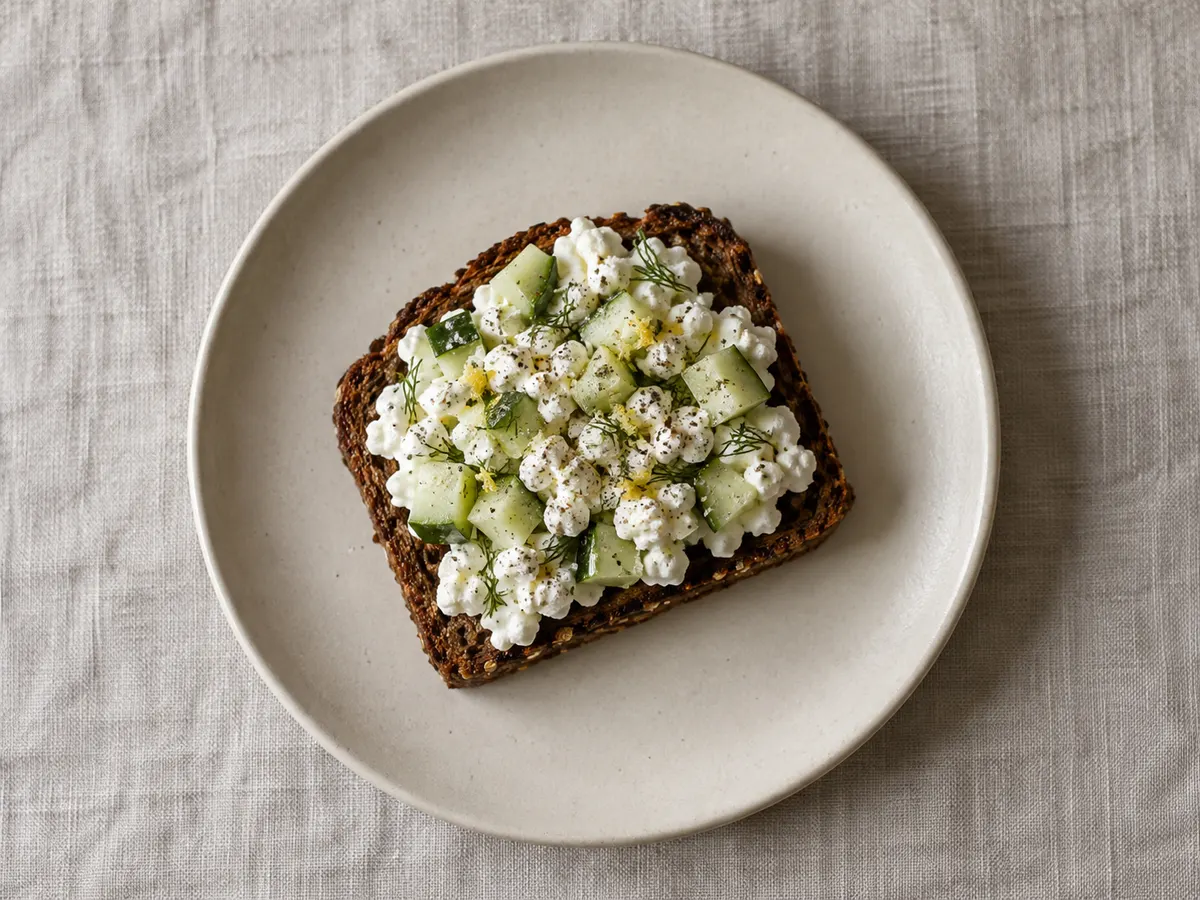 Cottage cheese with cucumber and dill18.9 g protein per serving
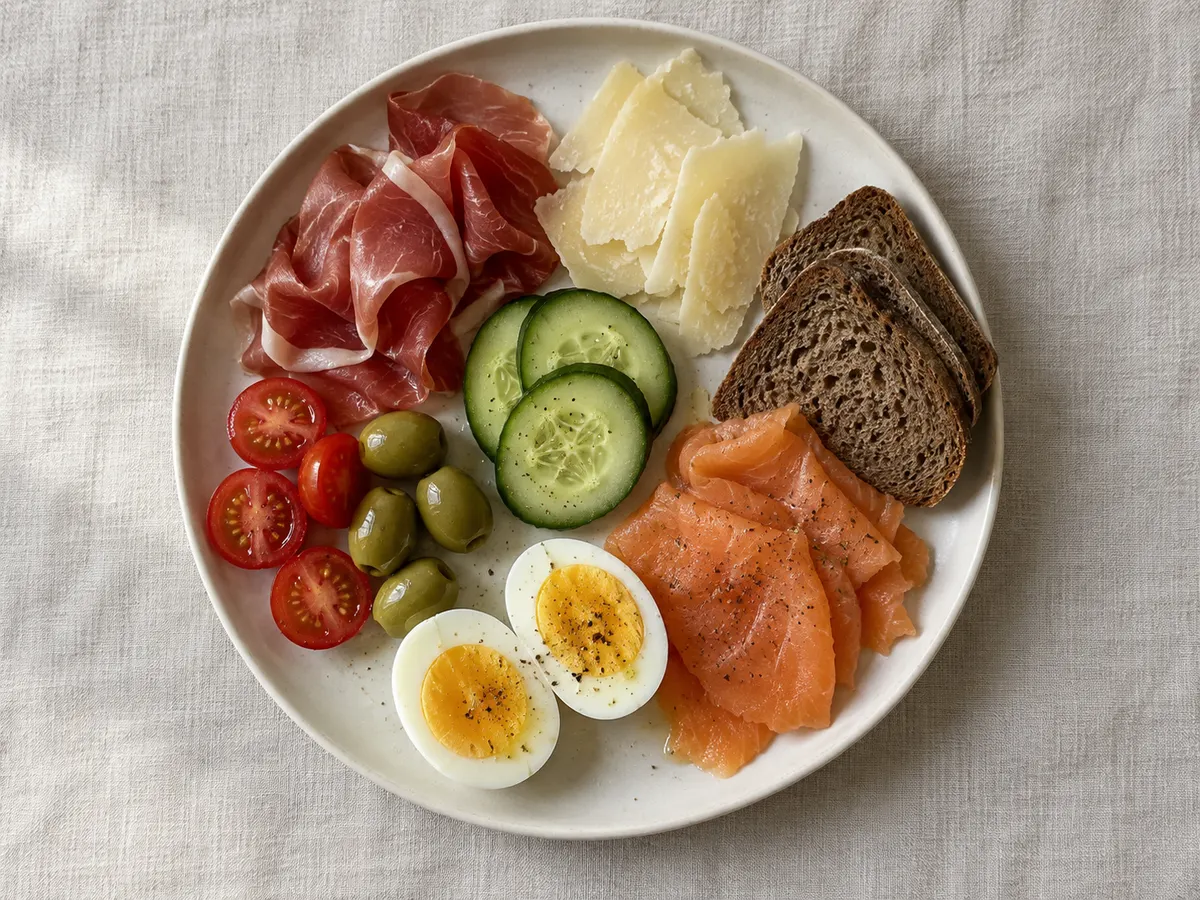 Holiday appetizer board with ham, smoked salmon, and eggs16.5 g protein per serving
Satiety
The 1 to 5 score is our own estimate: it starts at 1 point, adds points for low energy density, for protein and fiber per 100 kcal, and for the water in solid foods, and subtracts points for drinks with calories. It is useful for comparing foods with each other; it is not a measurement in people.
What to keep in mind on a GLP-1 medication
Frequently asked questions about rye bread
How much protein is in a 40 g (1.5 oz) serving of rye bread?
100 g (3.5 oz) of rye bread has 8.5 g of protein. A typical 40 g (1.5 oz) serving has about 3.4 g of protein. That is 3.3 g of protein per 100 kcal.
How many calories does a 40 g (1.5 oz) serving of rye bread have?
100 g (3.5 oz) of rye bread has 259 kcal. A typical 40 g (1.5 oz) serving has about 104 kcal. That is a moderate energy density.
Does rye bread have fiber?
100 g (3.5 oz) of rye bread has 5.8 g of fiber. A typical 40 g (1.5 oz) serving has about 2.3 g of fiber. It carries our “High in fiber” tag.
Is rye bread filling?
Not very filling for the calories it provides: our estimated satiety score is 2 out of 5. Calculation: 1 (base) + 0 (moderate energy density: 259 kcal/100 g) + 0 (protein: 3.3 g/100 kcal) + 1 (fiber: 2.2 g/100 kcal) + 0 (solid food with 37.3 g of water, under 70) = 2. It is an estimate based on its composition, not a measurement in people.
What should I know about rye bread on a GLP-1 medication?
Based on our tags, this is what matters about rye bread on a GLP-1 medication. “High in fiber”: a good amount of fiber, which helps keep you regular; it is easier to tolerate when you increase it gradually and drink enough water. These are general guidelines, not medical advice: everyone tolerates foods differently.
What counts as a normal serving of rye bread?
We use 40 g (1.5 oz) as a typical serving. That amount provides about 104 kcal, 3.4 g of protein, and 2.3 g of fiber. It is a reference for calculations, not a recommendation of how much to eat.
Compare with…
Similar foods
Sources
Sources for the data on this page, with the access date.
- Official databaseU.S. Department of Agriculture, Agricultural Research Service.USDA FoodData Central: Bread, rye (FDC ID 172684).accessed .
- RegulatorBoletín Oficial del Estado (Spain's official gazette).Real Decreto 308/2019, de 26 de abril, por el que se aprueba la norma de calidad para el pan (Spain's bread quality standard; Article 4.4, bread made with cereal flours).accessed .
- Clinical guidelineObesity (Wiley).Mozaffarian D, et al. Nutritional priorities to support GLP-1 therapy for obesity: A joint Advisory from the American College of Lifestyle Medicine, the American Society for Nutrition, the Obesity Medicine Association, and The Obesity Society. Obesity. 2025;33(8):1475-1503. doi:10.1002/oby.24336.accessed .
- RegulatorOfficial Journal of the European Union (EUR-Lex).Regulation (EC) No 1924/2006 on nutrition and health claims made on foods (Annex).accessed .
- RegulatorOfficial Journal of the European Union (EUR-Lex).Commission Regulation (EU) No 432/2012 establishing a list of permitted health claims made on foods.accessed .
- Official databaseDiabetes Care (American Diabetes Association).Atkinson FS, Foster-Powell K, Brand-Miller JC. International tables of glycemic index and glycemic load values: 2008. Diabetes Care. 2008;31(12):2281-2283. doi:10.2337/dc08-1239.accessed .
- RegulatorOfficial Journal of the European Union (EUR-Lex).Regulation (EU) No 1169/2011 on the provision of food information to consumers (Annex II, substances or products causing allergies or intolerances).accessed .