Vegetables and starchy roots
Romaine lettuce
Romaine lettuce is 95% water, so 100 g (3.5 oz) brings only 17 kcal and 2.1 g of fiber.
Estimated satietyHow it is calculated
Estimated satiety: 5 out of 5
| Starting point | +1 |
|---|---|
| Very low energy density | +2 |
| Moderate protein per calorie | +1 |
| A lot of fiber per calorie | +2 |
| High water content | +1 |
| Sum | 7 |
| Capped at 5 | 5 |
Our own estimate from the values per 100 g: useful for comparing foods with each other, not a measurement in people. Holt index (1995): this food was not measured.
- Prepared by
- Alex Gonzalez
- Last updated
- Next review
- Sources
- 6 primary
- Data
- USDA FDC 169247
No clinical review. No advertising from drug companies and no affiliate links.How we work
Nutrition facts
- Calories
- 14 kcal per serving
- 17 kcal per 100 g (3.5 oz)
- Protein
- 1 g per serving
- 1.2 g per 100 g (3.5 oz)
- Carbohydrates
- 2.6 g per serving
- 3.3 g per 100 g (3.5 oz)
- of which sugars
- 1 g per serving
- 1.2 g per 100 g (3.5 oz)
- Fiber
- 1.7 g per serving
- 2.1 g per 100 g (3.5 oz)
- Fat
- 0.2 g per serving
- 0.3 g per 100 g (3.5 oz)
- of which saturated
- 0 g per serving
- 0 g per 100 g (3.5 oz)
- Water
- 75.7 g per serving
- 94.6 g per 100 g (3.5 oz)
Source: USDA FoodData Central: Lettuce, cos or romaine, raw (FDC ID 169247), accessed September 23, 2026.
A typical 80 g (3 oz, about 1 3/4 cups) serving provides about 14 kcal, 1 g of protein, and 1.7 g of fiber.
What it is and how to eat it
Romaine lettuce, also called cos, has long, firm, crunchy leaves with a prominent central rib, and it goes by lechuga romana in Spain and almost all of Latin America. In Spain, cogollos, small compact lettuces of the same type, are also very common, and romaine is sold whole, as hearts or chopped in ready-to-eat bags. This page covers raw romaine lettuce, with 17 kcal, 2.1 g of fiber and 94.6 g of water per 100 g according to USDA.
An 80 g (2.8 oz) serving provides about 14 kcal, 1.7 g of fiber and 76 g of water but only 1 g of protein, so it works as a base for protein, as in the tuna salad with egg and corn or the chicken salad with apple, celery, and yogurt. If you eat very little, a large salad can fill you up before you get to the protein, which the 2025 nutrition advisory on GLP-1 therapy suggests eating first, and the same advisory suggests increasing fiber gradually. If you take a blood thinner such as warfarin, the Office of Dietary Supplements at the US National Institutes of Health advises getting about the same amount of vitamin K every day, and this lettuce has 102 µg per 100 g according to USDA, so any change in how much you eat is worth discussing with your doctor.
What the evidence says
In a crossover trial with 42 women, eating a compulsory large first-course salad of 300 g with a low energy density, achieved by changing the amount and type of dressing and cheese, cut the energy eaten across the whole meal by 12% compared with no first course, while the same amount of a higher-calorie salad increased it by 17% (Journal of the American Dietetic Association, 2004). It was funded by the US National Institutes of Health, each condition was tested at a single meal, and it was not done in people taking GLP-1 medications. In its guide to safer food choices, the US CDC lists unwashed fresh fruits and vegetables, lettuce included, among the riskier options and washed ones among the safer ones, and advises rinsing them under running water before eating; this is a kitchen precaution, not a reason to stop eating it.
Recipes with this food
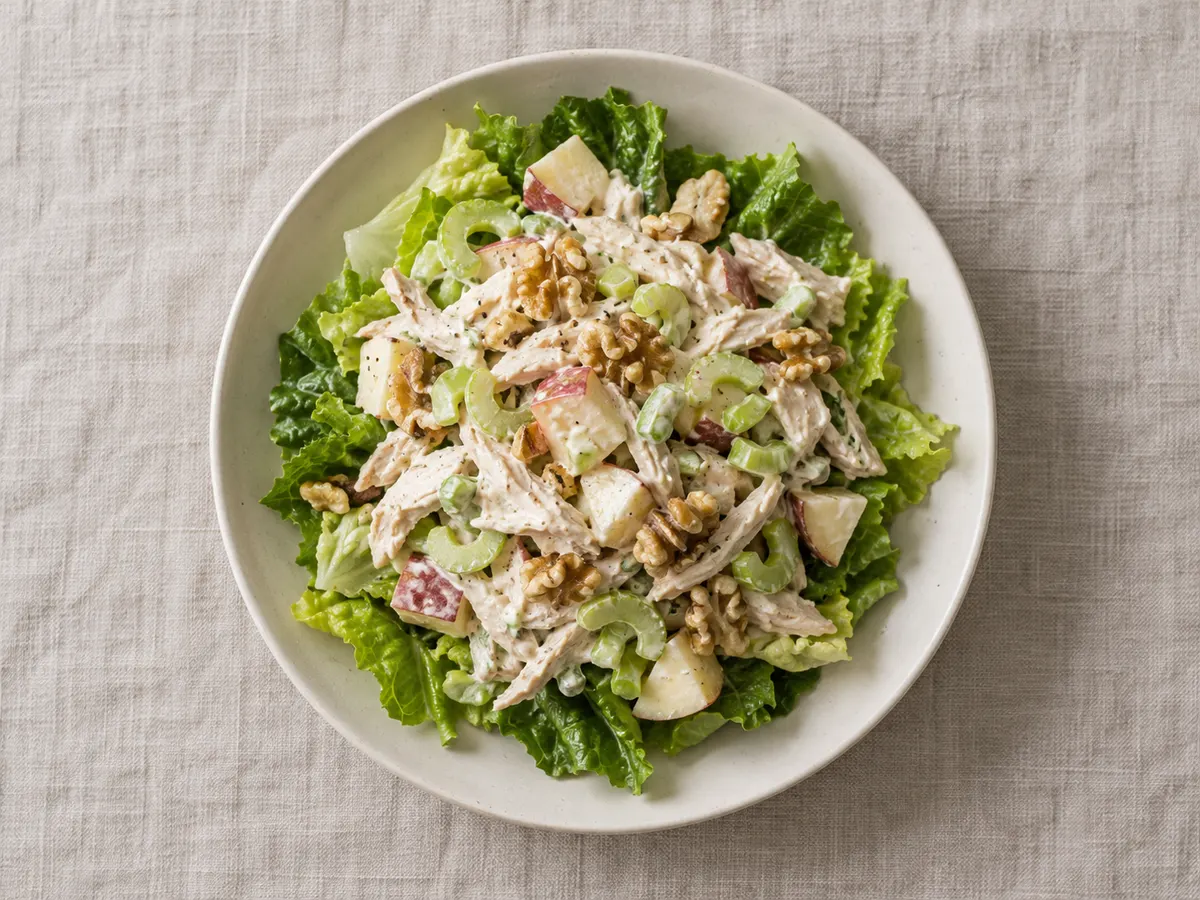 Chicken salad with apple, celery, and yogurt33.5 g protein per serving
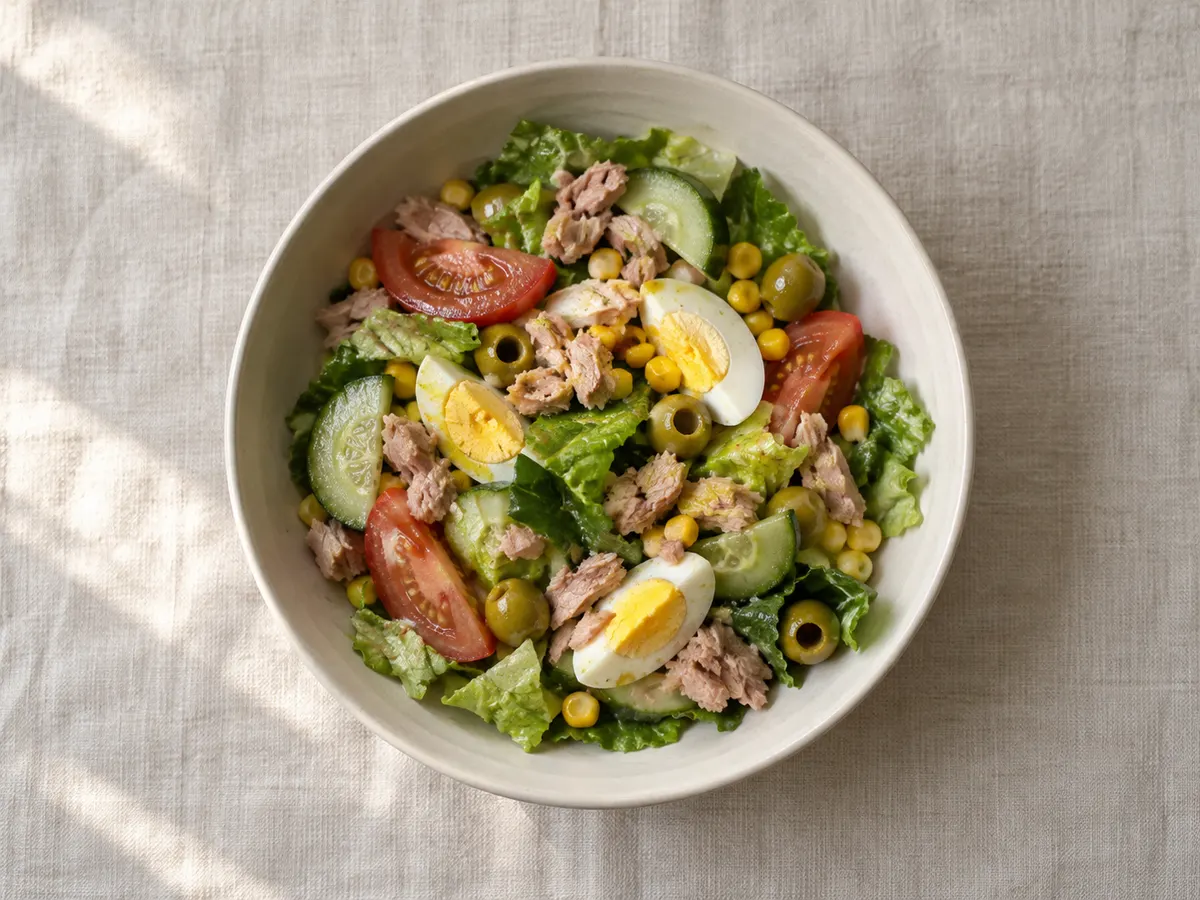 Tuna salad with egg and corn30.4 g protein per serving
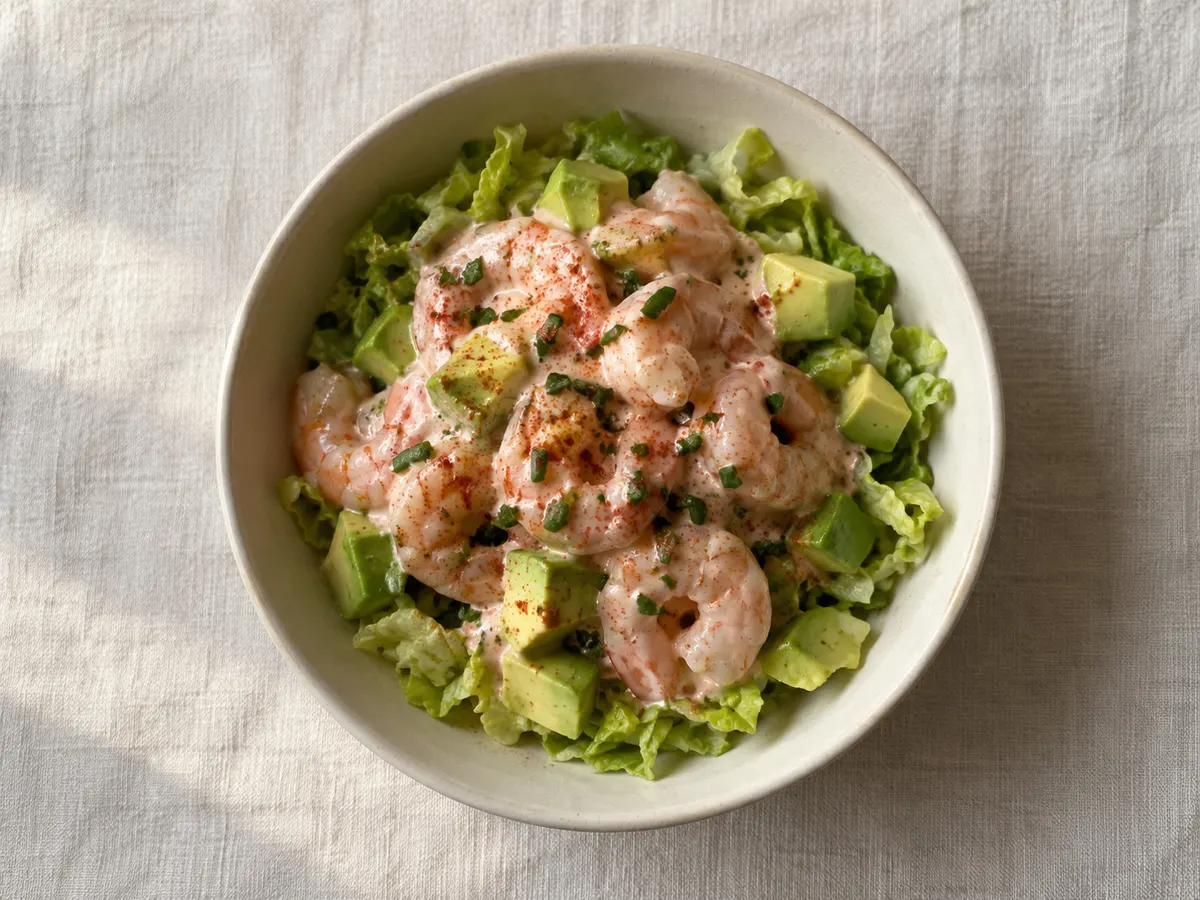 Shrimp cocktail with pink yogurt sauce28.1 g protein per serving
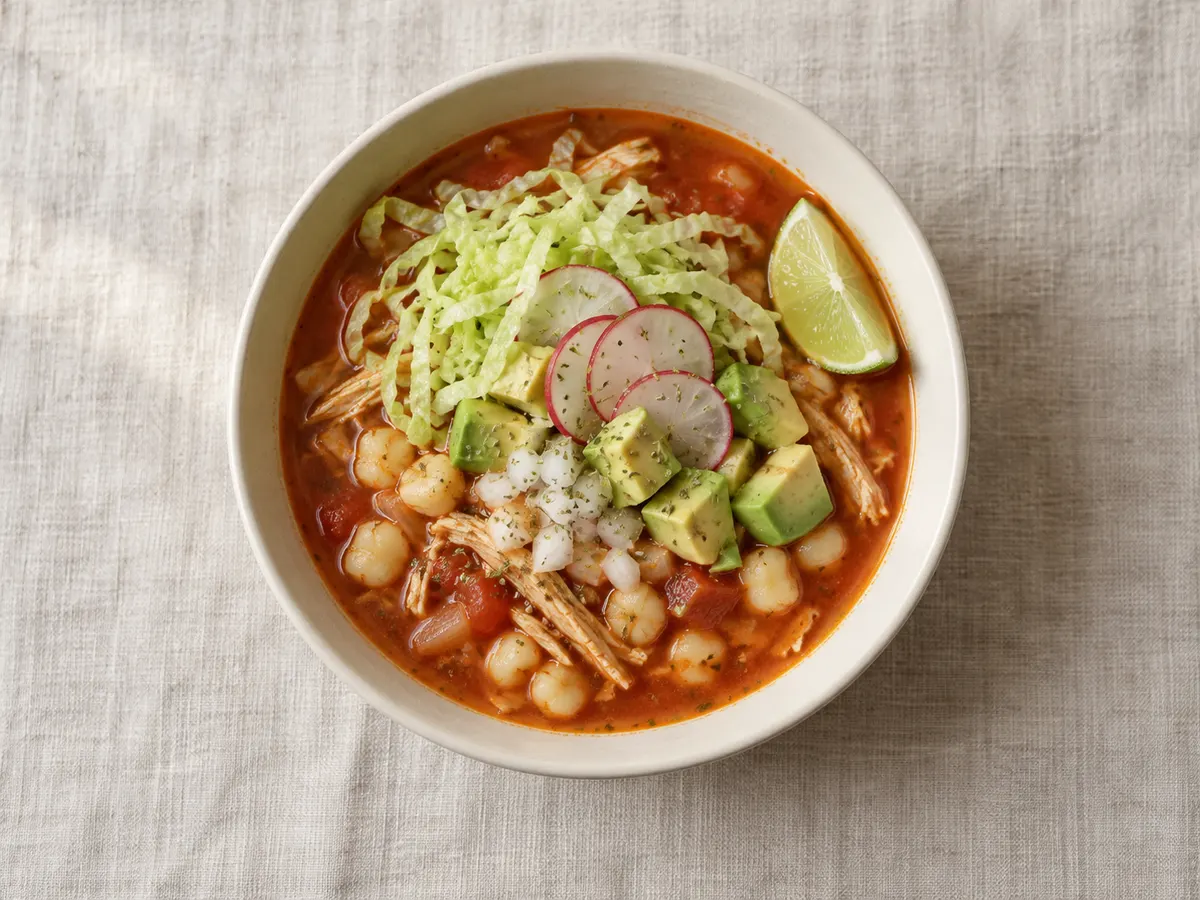 Light red pozole with chicken31.6 g protein per serving
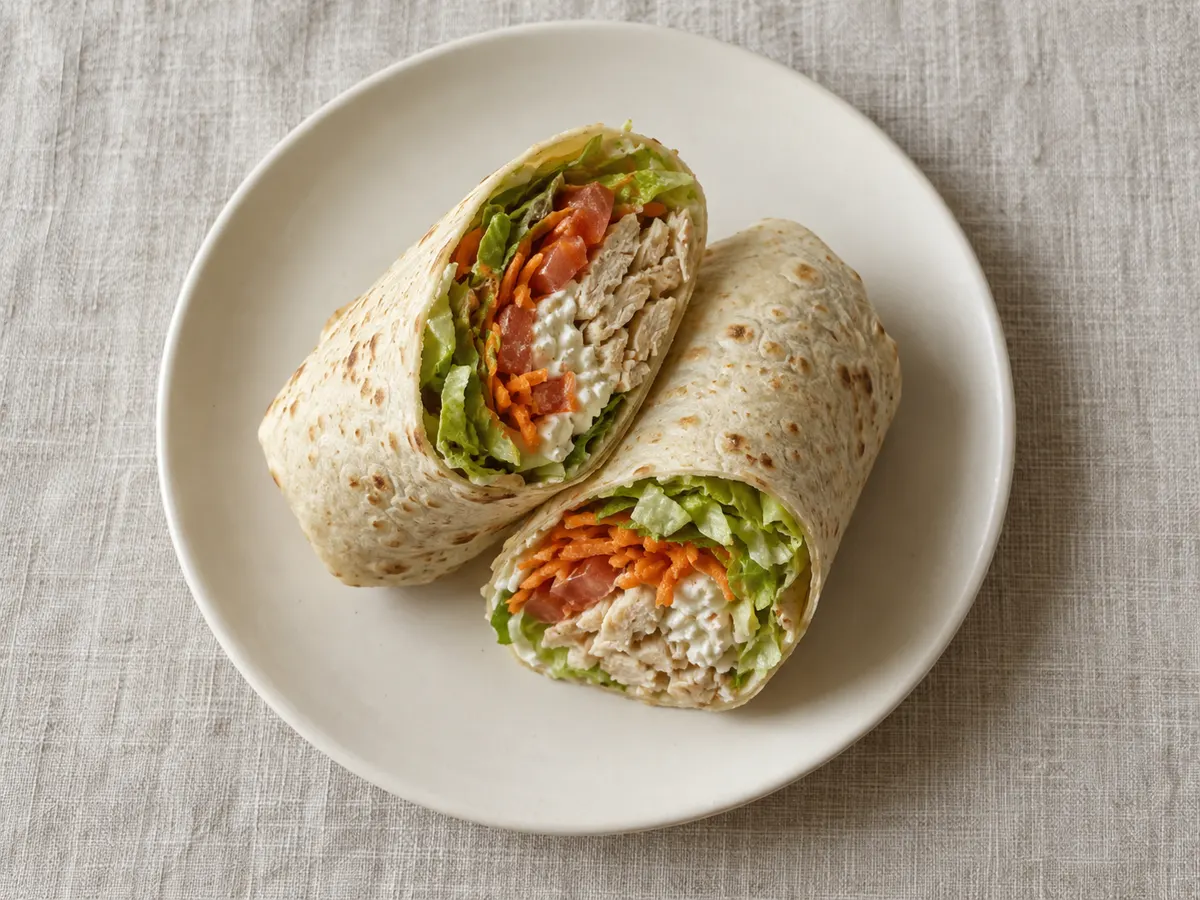 Chicken wrap with cottage cheese and vegetables35.3 g protein per serving
Satiety
The 1 to 5 score is our own estimate: it starts at 1 point, adds points for low energy density, for protein and fiber per 100 kcal, and for the water in solid foods, and subtracts points for drinks with calories. It is useful for comparing foods with each other; it is not a measurement in people.
What to keep in mind on a GLP-1 medication
Frequently asked questions about romaine lettuce
How many grams of protein are in a 80 g (3 oz) serving of romaine lettuce?
100 g (3.5 oz) of romaine lettuce has 1.2 g of protein. A typical 80 g (3 oz) serving has about 1 g of protein. That is 7.2 g of protein per 100 kcal.
How many kcal are in a 80 g (3 oz) serving of romaine lettuce?
100 g (3.5 oz) of romaine lettuce has 17 kcal. A typical 80 g (3 oz) serving has about 14 kcal. That is a very low energy density.
How much fiber is in a 80 g (3 oz) serving of romaine lettuce?
100 g (3.5 oz) of romaine lettuce has 2.1 g of fiber. A typical 80 g (3 oz) serving has about 1.7 g of fiber.
Does romaine lettuce keep you full?
Yes, very filling for the calories it provides: our estimated satiety score is 5 out of 5. It is based on: very low energy density; moderate protein per calorie; a lot of fiber per calorie; high water content. It is an estimate based on its composition, not a measurement in people.
How does romaine lettuce fit into eating on Ozempic, Wegovy, Mounjaro, or Zepbound?
Based on our tags, this is what matters about romaine lettuce on a GLP-1 medication. “Low energy density”: plenty of volume for few calories; make sure it does not push protein foods off your plate. “Hydrating”: a lot of water, which contributes to hydration when you eat and drink less. These are general guidelines, not medical advice: everyone tolerates foods differently.
What is a typical serving of romaine lettuce?
We use 80 g (3 oz) as a typical serving, about 1 3/4 cups. That amount provides about 14 kcal, 1 g of protein, and 1.7 g of fiber. It is a reference for calculations, not a recommendation of how much to eat.
Compare with…
Similar foods
Sources
Sources for the data on this page, with the access date.
- Official databaseU.S. Department of Agriculture, Agricultural Research Service.USDA FoodData Central: Lettuce, cos or romaine, raw (FDC ID 169247).accessed .
- Clinical guidelineObesity (Wiley).Mozaffarian D, et al. Nutritional priorities to support GLP-1 therapy for obesity: A joint Advisory from the American College of Lifestyle Medicine, the American Society for Nutrition, the Obesity Medicine Association, and The Obesity Society. Obesity. 2025;33(8):1475-1503. doi:10.1002/oby.24336.accessed .
- InstitutionNIH Office of Dietary Supplements.Vitamin K: Fact Sheet for Consumers.accessed .
- Clinical trialJournal of the American Dietetic Association (Elsevier).Rolls BJ, Roe LS, Meengs JS. Salad and satiety: energy density and portion size of a first-course salad affect energy intake at lunch. J Am Diet Assoc. 2004;104(10):1570-1576. doi:10.1016/j.jada.2004.07.001.accessed .
- InstitutionU.S. Centers for Disease Control and Prevention.Safer Food Choices.accessed .
- InstitutionU.S. Centers for Disease Control and Prevention.Preventing Food Poisoning.accessed .