Grains and bread
Rolled oats
Rolled oats packs 379 kcal into 100 g (3.5 oz), so a typical 40 g (1.5 oz) serving already adds up to about 152 kcal.
Estimated satietyHow it is calculated
Estimated satiety: 1 out of 5
| Starting point | +1 |
|---|---|
| High energy density: 379 kcal/100 g | −1 |
| Protein: 3.5 g/100 kcal | 0 |
| Fiber: 2.7 g/100 kcal | +1 |
| Solid food with 10.8 g of water, under 70 | 0 |
Our own estimate from the values per 100 g: useful for comparing foods with each other, not a measurement in people. Holt index (1995): this food was not measured.
- Prepared by
- Alex Gonzalez
- Last updated
- Next review
- Sources
- 9 primary
- Data
- USDA FDC 173904
No clinical review. No advertising from drug companies and no affiliate links.How we work
Nutrition facts
- Calories
- 152 kcal per serving
- 379 kcal per 100 g (3.5 oz)
- Protein
- 5.3 g per serving
- 13.2 g per 100 g (3.5 oz)
- Carbohydrates
- 27.1 g per serving
- 67.7 g per 100 g (3.5 oz)
- of which sugars
- 0.4 g per serving
- 1 g per 100 g (3.5 oz)
- Fiber
- 4 g per serving
- 10.1 g per 100 g (3.5 oz)
- Fat
- 2.6 g per serving
- 6.5 g per 100 g (3.5 oz)
- of which saturated
- 0.4 g per serving
- 1.1 g per 100 g (3.5 oz)
- Water
- 4.3 g per serving
- 10.8 g per 100 g (3.5 oz)
Source: USDA FoodData Central: Cereals, oats, regular and quick, not fortified, dry (FDC ID 173904), accessed September 23, 2026.
A typical 40 g (1.5 oz) serving provides about 152 kcal, 5.3 g of protein, and 4 g of fiber.
What it is and how to eat it
The DLE, the Spanish-language dictionary, gives copos de avena as its example of copo, a portion of a substance shaped like a flake, and the Diccionario de americanismos records hojuela in Mexico, Ecuador and Bolivia for a dehydrated cereal shaped like a small flake, used to make soups and desserts with milk. For its soluble fiber health claim, the FDA describes rolled oats as dehulled oat groats that are steamed, cut, rolled and flaked. This page covers dry rolled oats, regular or quick and not fortified, according to USDA, with 379 kcal, 13.2 g of protein, 10.1 g of fiber and 6.52 g of fat per 100 g.
A 40 g (1.4 oz) dry serving provides 152 kcal, 5.3 g of protein and 4 g of fiber, and when cooked in water or milk it absorbs liquid and swells. The 2025 nutrition advisory on GLP-1 therapy lists oats among the whole grains to encourage and suggests eating protein-rich foods first: cooked with 200 ml of reduced-fat milk it adds up to about 11.9 g of protein and 252 kcal (my calculation with USDA's figures), and egg whites raise it further, as in the creamy egg white oatmeal with strawberries. The same advisory suggests avoiding fatty or high-fiber foods in the first days of treatment and, for constipation, increasing fiber gradually, so in those days half a serving may be enough.
What the evidence says
The EU allows the claim "beta-glucans contribute to the maintenance of normal blood cholesterol levels" if the food provides at least 1 g of beta-glucans from oats or barley per serving and consumers are told the effect comes with 3 g a day (Regulation (EU) No 432/2012). USDA does not measure beta-glucans, but the FDA definition requires rolled oats to have at least 4% on a dry-weight basis; at that minimum, 40 g would provide about 1.4 g, and it would take about 84 g a day to reach 3 g (my calculation). The other authorized claim, that consuming beta-glucans from oats or barley as part of a meal "contributes to the reduction of the blood glucose rise after that meal", requires 4 g per 30 g of available carbohydrates in the serving, and 40 g of oats, with about 23 g of available carbohydrates, would need about 3.1 g, more than twice what they would provide at the FDA minimum (my calculation). With 10.1 g of fiber per 100 g it meets the 6 g the EU requires for a "high fibre" claim (Regulation (EC) No 1924/2006), and in the 2008 international tables the glycemic index of rolled oat porridge is 55 and that of instant oat porridge 79.
Recipes with this food
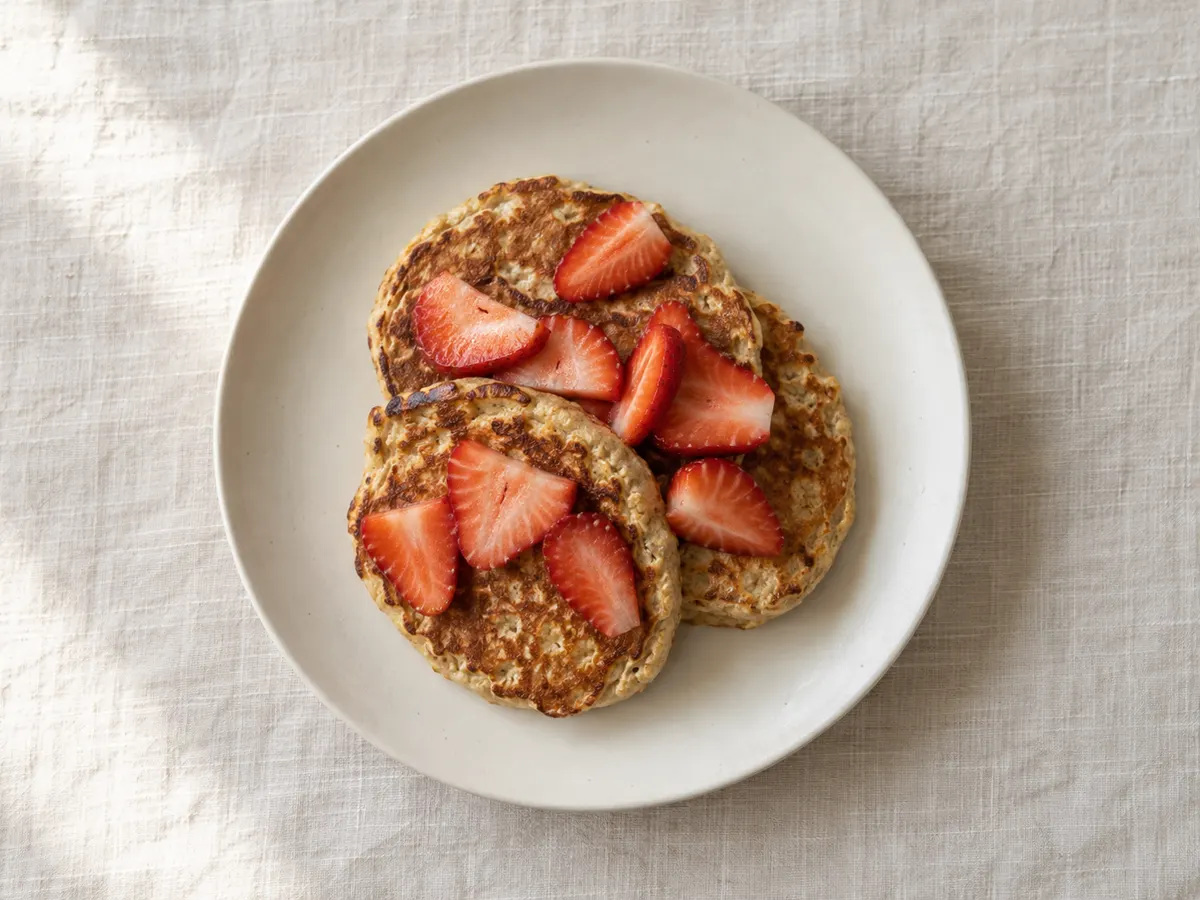 Cottage cheese and oat pancakes with strawberries22.1 g protein per serving
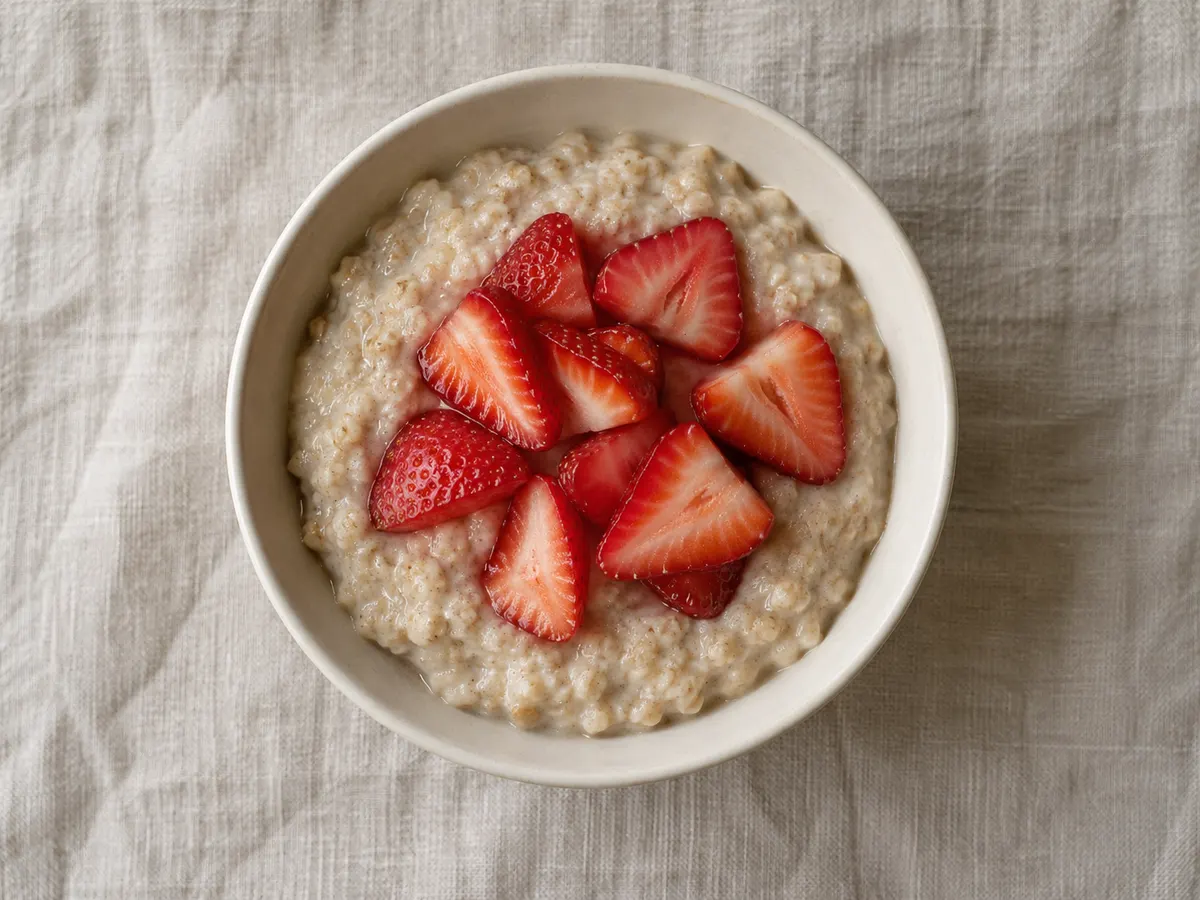 Creamy egg white oatmeal with strawberries18.8 g protein per serving
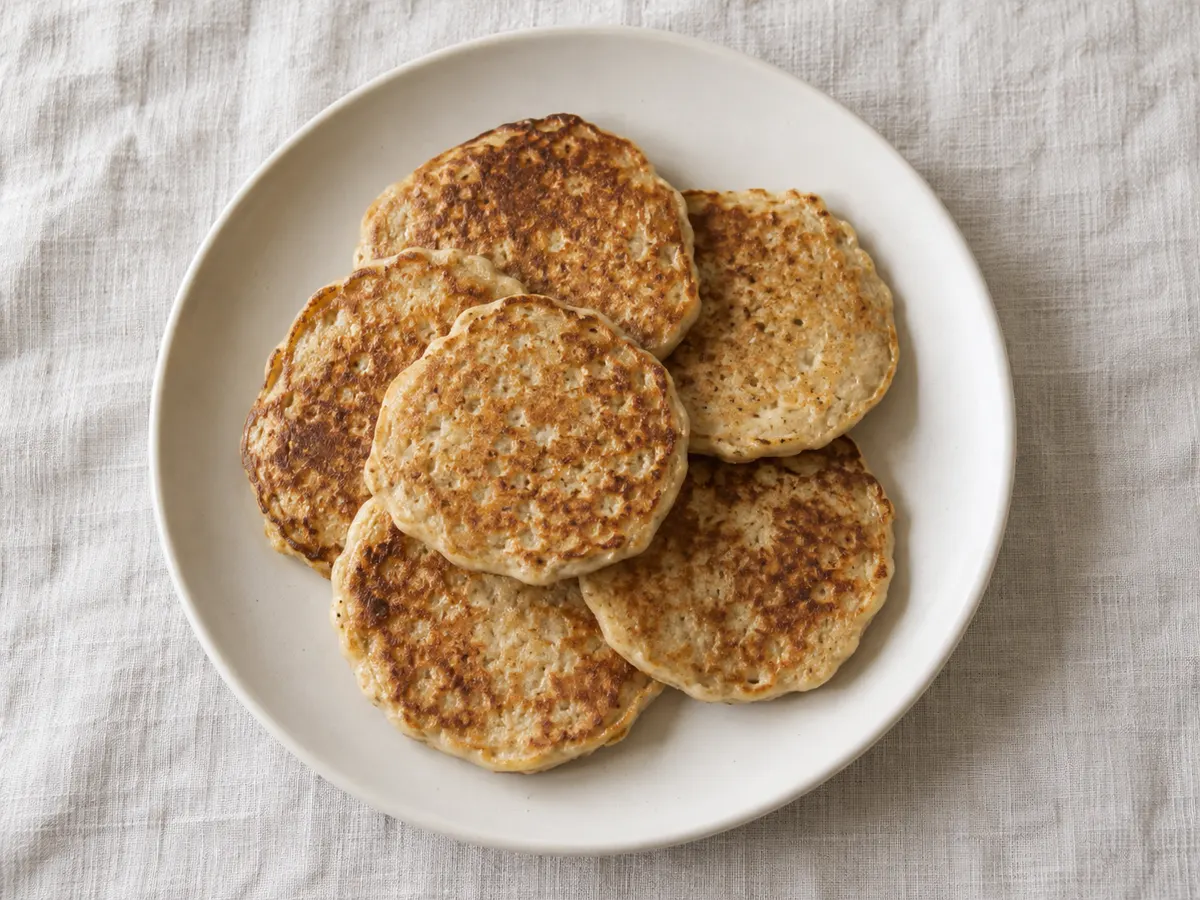 Egg white, oat, and banana pancakes18.1 g protein per serving
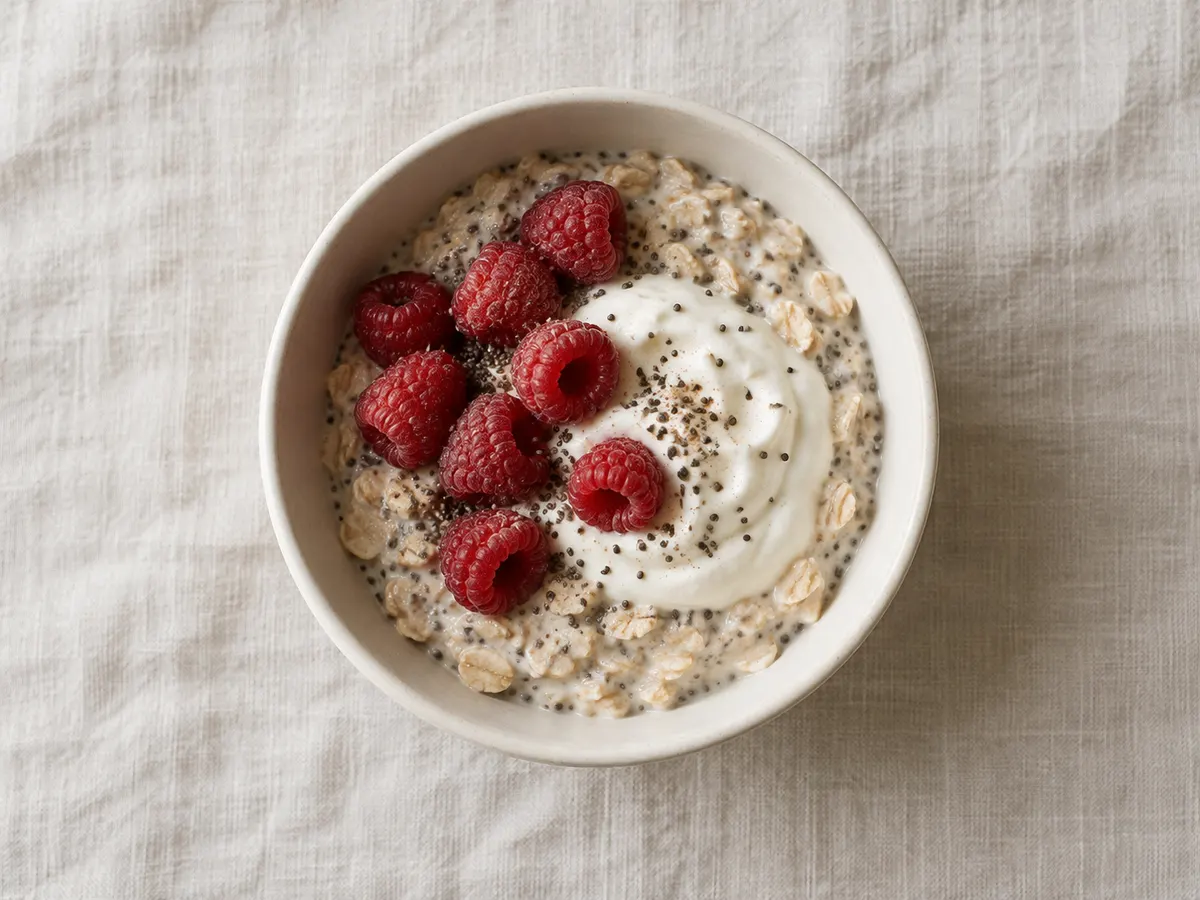 Overnight oats with Greek yogurt and raspberries20.4 g protein per serving
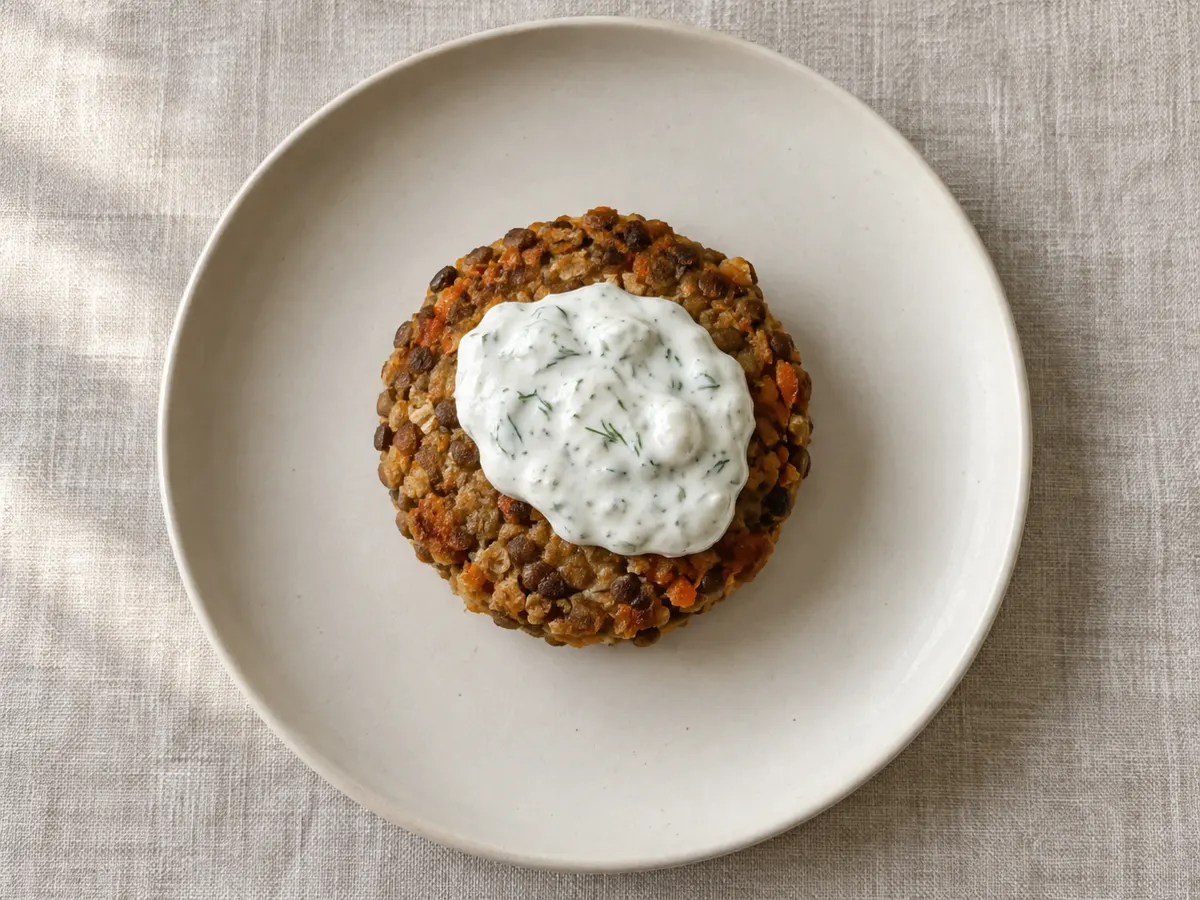 Baked lentil burgers with yogurt sauce15.4 g protein per serving
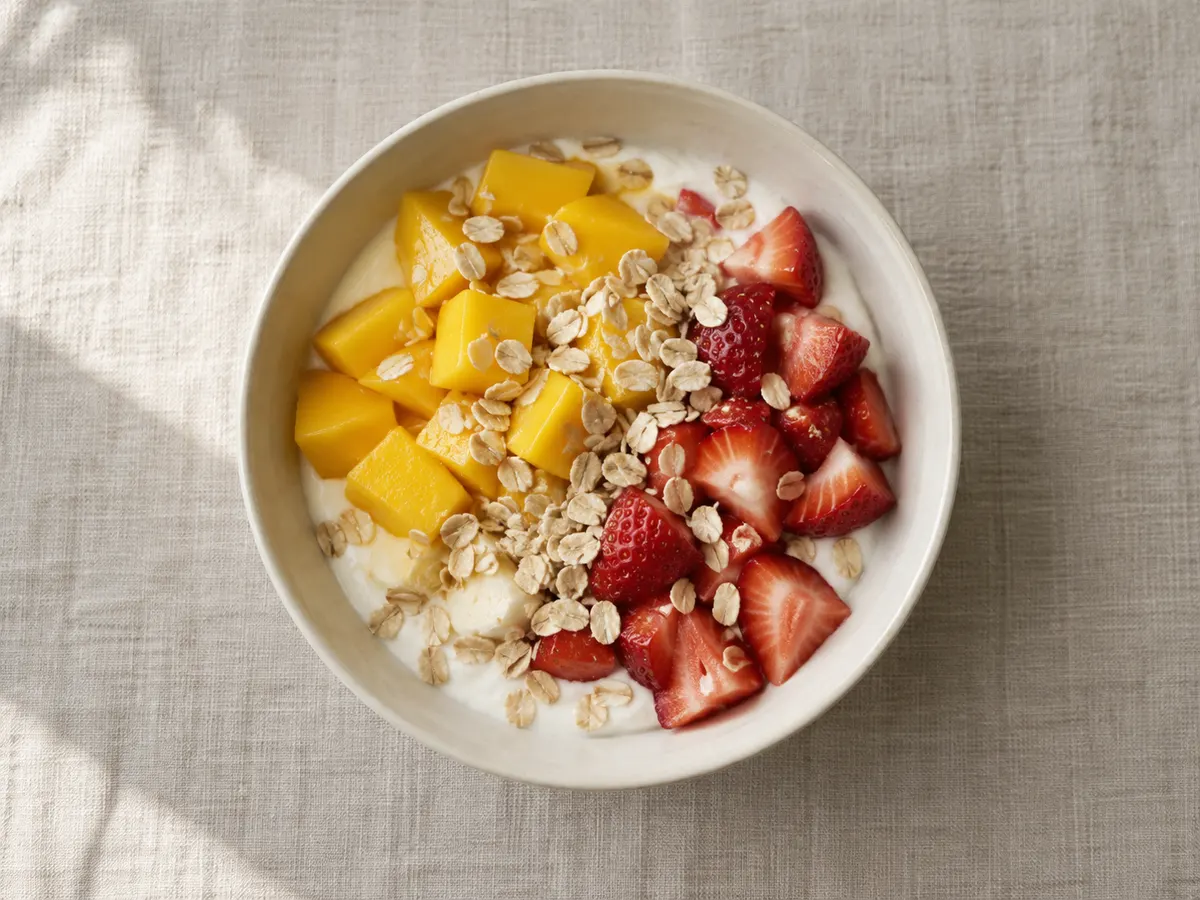 Kefir bowl with mango, strawberries, and oats15.9 g protein per serving
Satiety
The 1 to 5 score is our own estimate: it starts at 1 point, adds points for low energy density, for protein and fiber per 100 kcal, and for the water in solid foods, and subtracts points for drinks with calories. It is useful for comparing foods with each other; it is not a measurement in people.
What to keep in mind on a GLP-1 medication
Frequently asked questions about rolled oats
How much protein is in a 40 g (1.5 oz) serving of rolled oats?
100 g (3.5 oz) of rolled oats has 13.2 g of protein. A typical 40 g (1.5 oz) serving has about 5.3 g of protein. That is 3.5 g of protein per 100 kcal.
How many calories does a 40 g (1.5 oz) serving of rolled oats have?
100 g (3.5 oz) of rolled oats has 379 kcal. A typical 40 g (1.5 oz) serving has about 152 kcal. That is a high energy density.
Does rolled oats have fiber?
100 g (3.5 oz) of rolled oats has 10.1 g of fiber. A typical 40 g (1.5 oz) serving has about 4 g of fiber. It carries our “High in fiber” tag.
Is rolled oats filling?
Barely filling for the calories it provides: our estimated satiety score is 1 out of 5. Calculation: 1 (base) − 1 (high energy density: 379 kcal/100 g) + 0 (protein: 3.5 g/100 kcal) + 1 (fiber: 2.7 g/100 kcal) + 0 (solid food with 10.8 g of water, under 70) = 1. It is an estimate based on its composition, not a measurement in people.
What should I know about rolled oats on a GLP-1 medication?
Based on our tags, this is what matters about rolled oats on a GLP-1 medication. “High in fiber”: a good amount of fiber, which helps keep you regular; it is easier to tolerate when you increase it gradually and drink enough water. “High energy density”: a lot of energy in a small volume; when your appetite is very low, a small serving can help you meet your needs. These are general guidelines, not medical advice: everyone tolerates foods differently.
What counts as a normal serving of rolled oats?
We use 40 g (1.5 oz) as a typical serving. That amount provides about 152 kcal, 5.3 g of protein, and 4 g of fiber. It is a reference for calculations, not a recommendation of how much to eat.
Compare with…
Similar foods
Sources
Sources for the data on this page, with the access date.
- Official databaseU.S. Department of Agriculture, Agricultural Research Service.USDA FoodData Central: Cereals, oats, regular and quick, not fortified, dry (FDC ID 173904).accessed .
- Official databaseU.S. Department of Agriculture, Agricultural Research Service.USDA FoodData Central: Milk, reduced fat, fluid, 2% milkfat, with added vitamin A and vitamin D (FDC ID 171267).accessed .
- InstitutionRoyal Spanish Academy and Association of Academies of the Spanish Language (RAE-ASALE).Diccionario de la lengua española (Dictionary of the Spanish Language, 23rd ed., online version): "copo" (in Spanish).accessed .
- InstitutionAssociation of Academies of the Spanish Language (ASALE).Diccionario de americanismos (Dictionary of Americanisms): "hojuela" (in Spanish).accessed .
- RegulatorU.S. Food and Drug Administration (Electronic Code of Federal Regulations).21 CFR 101.81, Health claims: soluble fiber from certain foods and risk of coronary heart disease (CHD).accessed .
- Clinical guidelineObesity (Wiley).Mozaffarian D, et al. Nutritional priorities to support GLP-1 therapy for obesity: A joint Advisory from the American College of Lifestyle Medicine, the American Society for Nutrition, the Obesity Medicine Association, and The Obesity Society. Obesity. 2025;33(8):1475-1503. doi:10.1002/oby.24336.accessed .
- RegulatorOfficial Journal of the European Union (EUR-Lex).Commission Regulation (EU) No 432/2012 establishing a list of permitted health claims made on foods.accessed .
- RegulatorOfficial Journal of the European Union (EUR-Lex).Regulation (EC) No 1924/2006 on nutrition and health claims made on foods (Annex).accessed .
- Official databaseDiabetes Care (American Diabetes Association).Atkinson FS, Foster-Powell K, Brand-Miller JC. International tables of glycemic index and glycemic load values: 2008. Diabetes Care. 2008;31(12):2281-2283. doi:10.2337/dc08-1239.accessed .