Beans and legumes
Cooked lentils
Per 100 g (3.5 oz), cooked lentils combine 7.9 g of fiber and 9 g of protein with 116 kcal, a low energy density.
Estimated satietyHow it is calculated
Estimated satiety: 5 out of 5
| Starting point | +1 |
|---|---|
| Low energy density | +1 |
| Moderate protein per calorie | +1 |
| A lot of fiber per calorie | +2 |
Our own estimate from the values per 100 g: useful for comparing foods with each other, not a measurement in people. Holt index (1995): 133 (white bread = 100).
- Prepared by
- Alex Gonzalez
- Last updated
- Next review
- Sources
- 6 primary
- Data
- USDA FDC 172421
No clinical review. No advertising from drug companies and no affiliate links.How we work
Nutrition facts
- Calories
- 174 kcal per serving
- 116 kcal per 100 g (3.5 oz)
- Protein
- 13.5 g per serving
- 9 g per 100 g (3.5 oz)
- Carbohydrates
- 30.2 g per serving
- 20.1 g per 100 g (3.5 oz)
- of which sugars
- 2.7 g per serving
- 1.8 g per 100 g (3.5 oz)
- Fiber
- 11.9 g per serving
- 7.9 g per 100 g (3.5 oz)
- Fat
- 0.6 g per serving
- 0.4 g per 100 g (3.5 oz)
- of which saturated
- 0.1 g per serving
- 0.1 g per 100 g (3.5 oz)
- Water
- 104.4 g per serving
- 69.6 g per 100 g (3.5 oz)
Source: USDA FoodData Central: Lentils, mature seeds, cooked, boiled, without salt (FDC ID 172421), accessed September 23, 2026.
A typical 150 g (5.5 oz, about 3/4 cup) serving provides about 174 kcal, 13.5 g of protein, and 11.9 g of fiber.
What it is and how to eat it
Lentils are the dried seeds of a legume; unlike chickpeas, they need no long soak and are sold dry or ready-cooked in jars and cans. Common varieties include brown, green, French green (Puy-type) and red lentils, which are sold hulled, break down when cooked and work well in soups. This page covers lentils boiled without salt, with 116 kcal and 9 g of protein per 100 g according to USDA.
A 150 g (5.3 oz) serving provides 13.5 g of protein, 11.9 g of fiber and 174 kcal. The 2025 nutrition advisory on GLP-1 therapy lists lentils among the plant protein sources to encourage, but also suggests avoiding high-fiber foods in the first few days of treatment and, for constipation, increasing fiber gradually. If they make you bloated, start with half a serving, well cooked or pureed, as in the lentil and vegetable soup, and build up as you tolerate them. To add protein, pair them with eggs, as in the warm lentil salad with egg.
What the evidence says
A 2014 meta-analysis of 9 trials in Obesity found that meals with pulses (lentils, chickpeas, beans or peas) produced 31% more satiety than control meals with the same calories, although they did not reduce how much people ate at the next meal. Another meta-analysis of 21 trials, published in 2016 in the American Journal of Clinical Nutrition, found a modest weight loss of 0.34 kg over about 6 weeks with a daily serving of pulses. In the Holt satiety index (1995), lentils scored 133, above the white bread reference (100). With 7.9 g of fiber per 100 g, they easily meet the EU minimum of 6 g for a "high fibre" claim (Regulation (EC) No 1924/2006).
Recipes with this food
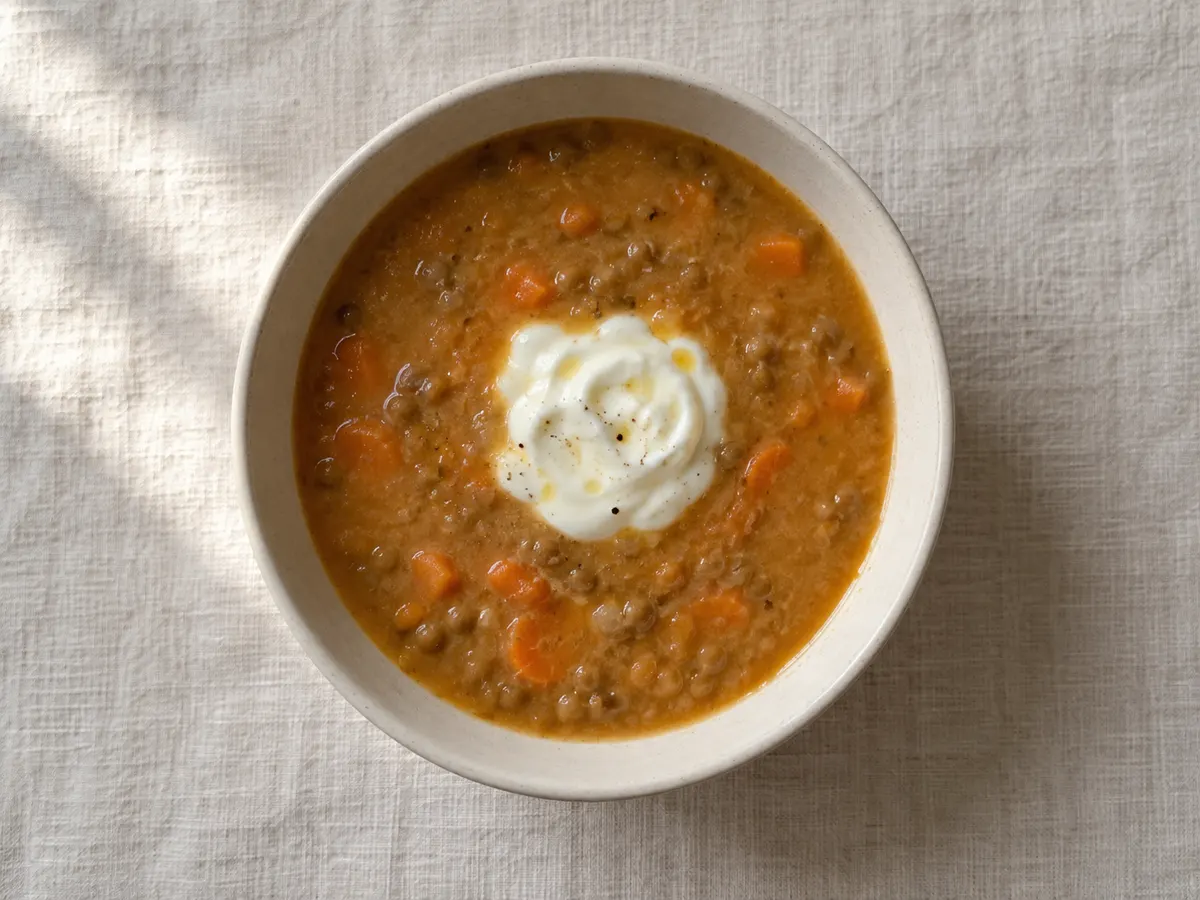 Creamy lentil and carrot soup with yogurt22.5 g protein per serving
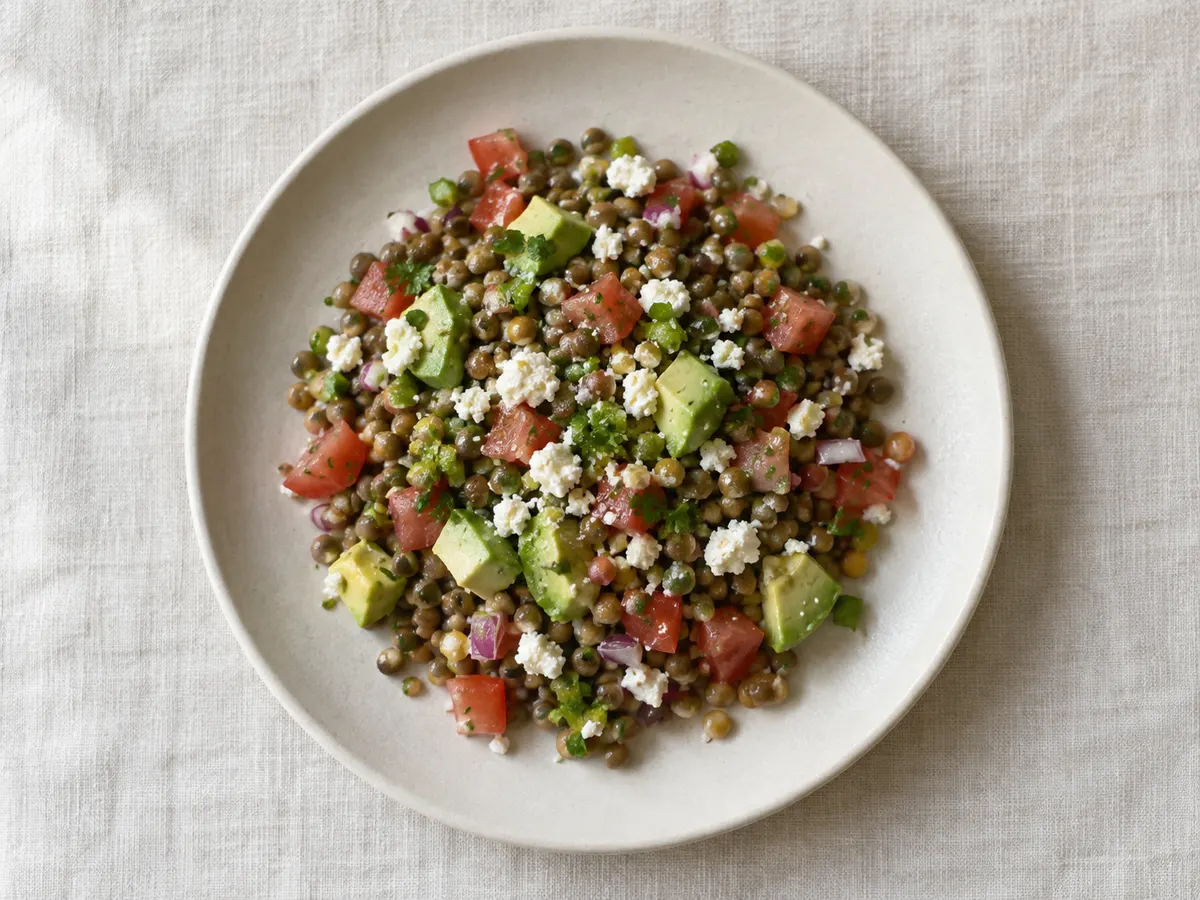 Lentil salad with pico de gallo and queso fresco23.1 g protein per serving
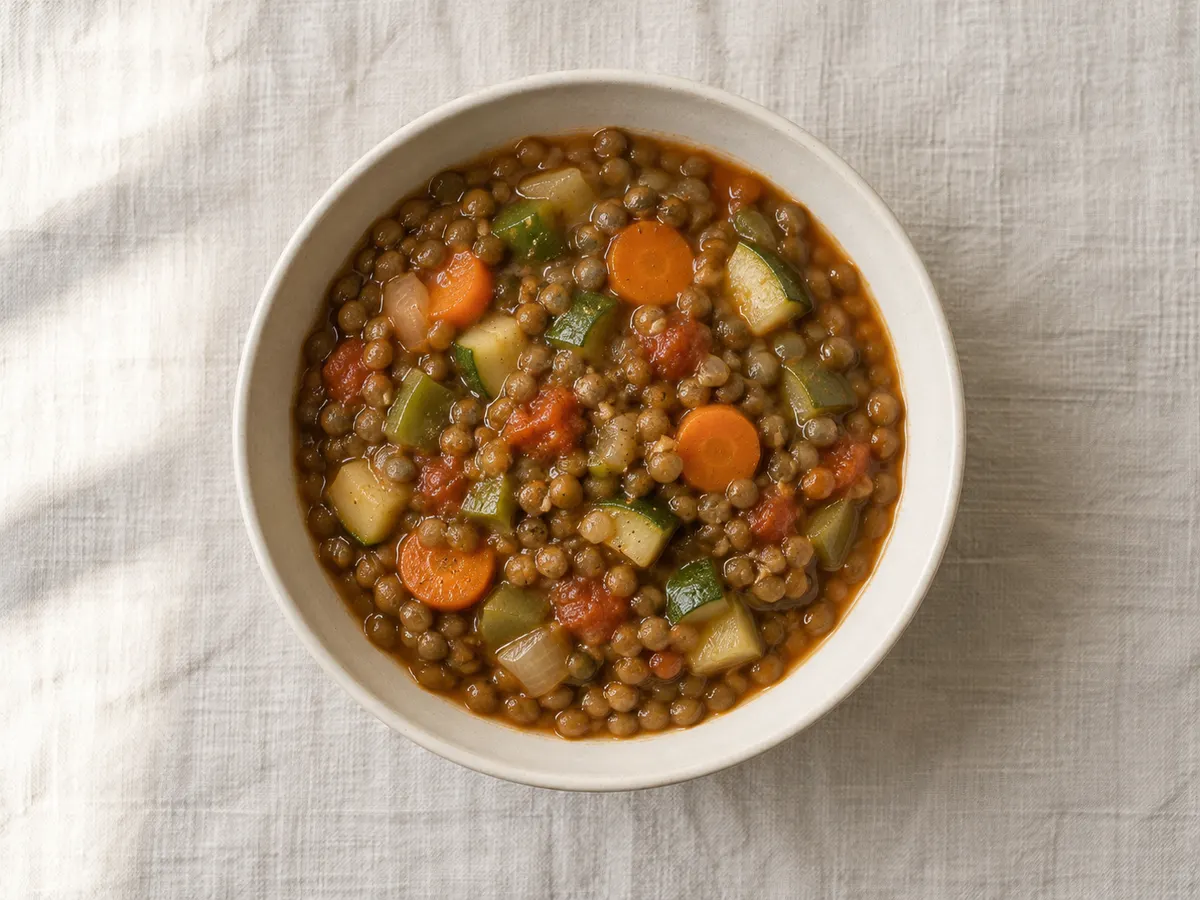 Stewed lentils with vegetables15.7 g protein per serving
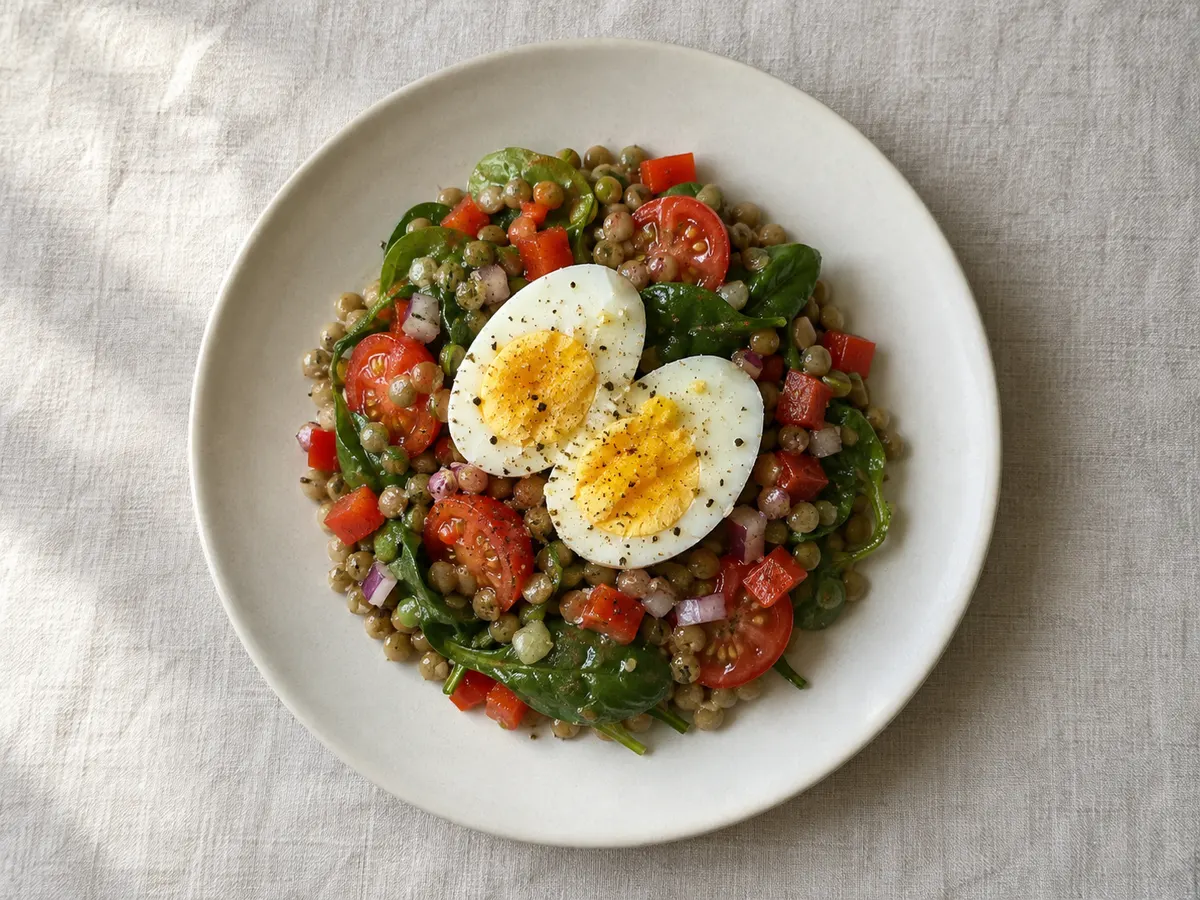 Warm lentil salad with egg22.5 g protein per serving
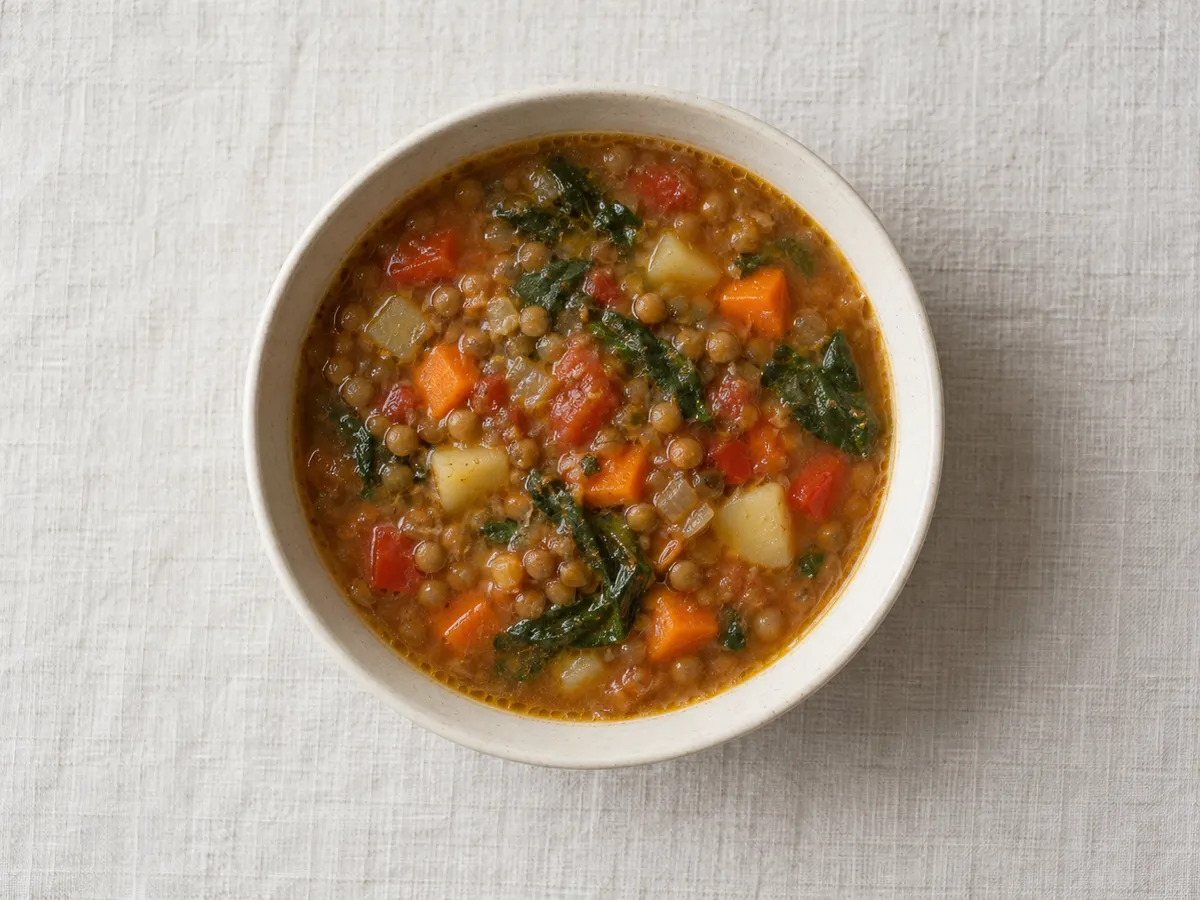 Lentil and vegetable soup14 g protein per serving
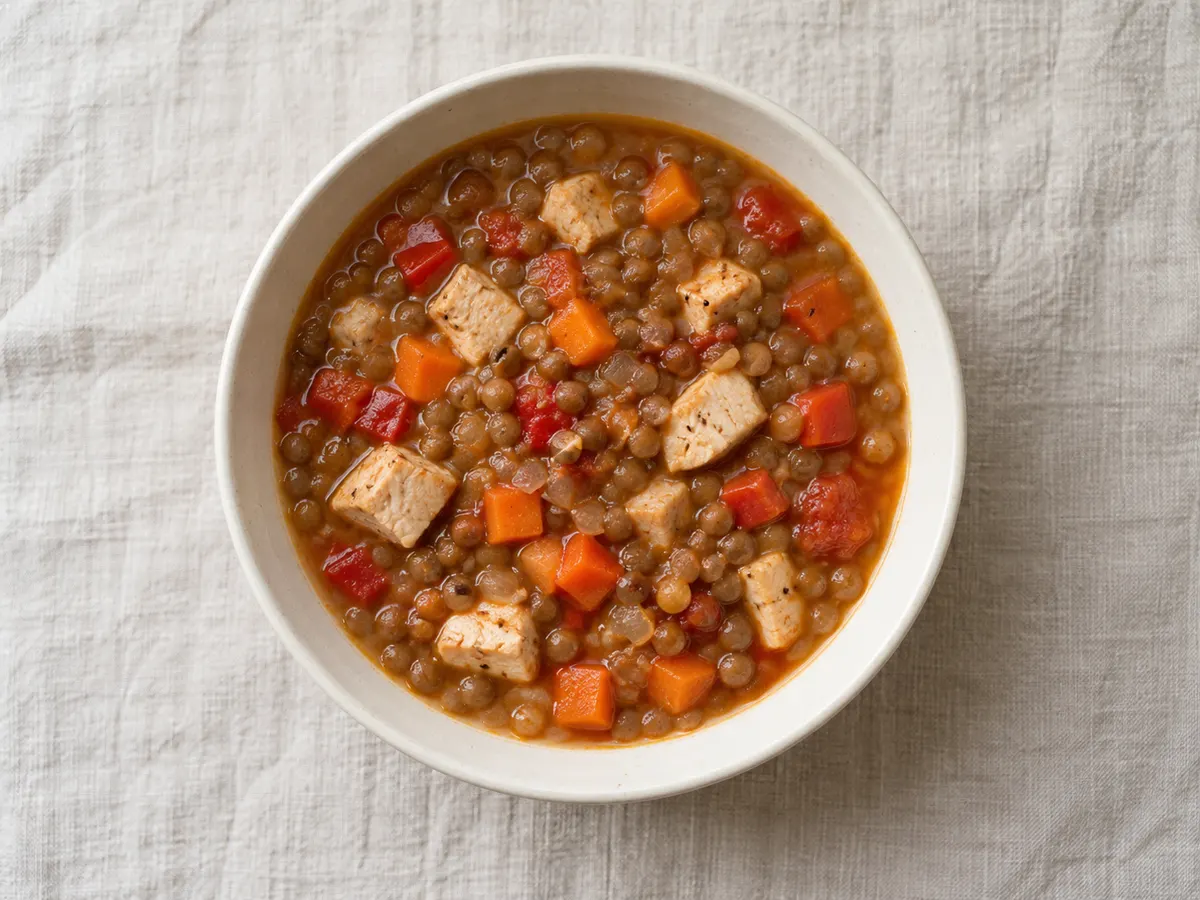 New Year's lentils with turkey and vegetables31.6 g protein per serving
Satiety
The 1 to 5 score is our own estimate: it starts at 1 point, adds points for low energy density, for protein and fiber per 100 kcal, and for the water in solid foods, and subtracts points for drinks with calories. It is useful for comparing foods with each other; it is not a measurement in people.
This food was measured in people: in the satiety index by Holt and colleagues (1995), which compared 240 kcal servings of 38 foods over two hours, it scored 133 versus 100 for white bread. In other words, it was more filling than the same calories of white bread. Source: Holt SH, Miller JC, Petocz P, Farmakalidis E. A satiety index of common foods. Eur J Clin Nutr. 1995;49(9):675-90.
What to keep in mind on a GLP-1 medication
Frequently asked questions about cooked lentils
How much protein does a 150 g (5.5 oz) serving of cooked lentils have?
100 g (3.5 oz) of cooked lentils has 9 g of protein. A typical 150 g (5.5 oz) serving has about 13.5 g of protein. That is 7.8 g of protein per 100 kcal.
How many calories are in a 150 g (5.5 oz) serving of cooked lentils?
100 g (3.5 oz) of cooked lentils has 116 kcal. A typical 150 g (5.5 oz) serving has about 174 kcal. That is a low energy density.
How many grams of fiber are in a 150 g (5.5 oz) serving of cooked lentils?
100 g (3.5 oz) of cooked lentils has 7.9 g of fiber. A typical 150 g (5.5 oz) serving has about 11.9 g of fiber. They carry our “High in fiber” tag.
How filling are cooked lentils?
Very filling for the calories they provide: our estimated satiety score is 5 out of 5. It is based on: low energy density; moderate protein per calorie; a lot of fiber per calorie. They were also measured in people: in the Holt satiety index (1995), with 240 kcal servings, they scored 133 versus 100 for white bread.
Are cooked lentils a good choice on a GLP-1 medication?
Based on our tags, this is what matters about cooked lentils on a GLP-1 medication. “High in fiber”: a good amount of fiber, which helps keep you regular; it is easier to tolerate when you increase it gradually and drink enough water. “May cause bloating”: it can cause gas or bloating in some people, and on a GLP-1 medication that feeling can be more noticeable. These are general guidelines, not medical advice: everyone tolerates foods differently.
How many grams or ounces are in a serving of cooked lentils?
We use 150 g (5.5 oz) as a typical serving, about 3/4 cup. That amount provides about 174 kcal, 13.5 g of protein, and 11.9 g of fiber. It is a reference for calculations, not a recommendation of how much to eat.
Compare with…
Similar foods
Sources
Sources for the data on this page, with the access date.
- Official databaseU.S. Department of Agriculture, Agricultural Research Service.USDA FoodData Central: Lentils, mature seeds, cooked, boiled, without salt (FDC ID 172421).accessed .
- Clinical trialEuropean Journal of Clinical Nutrition.Holt SH, Miller JC, Petocz P, Farmakalidis E. A satiety index of common foods. Eur J Clin Nutr. 1995;49(9):675-90.accessed .
- Clinical guidelineObesity (Wiley).Mozaffarian D, et al. Nutritional priorities to support GLP-1 therapy for obesity: A joint Advisory from the American College of Lifestyle Medicine, the American Society for Nutrition, the Obesity Medicine Association, and The Obesity Society. Obesity. 2025;33(8):1475-1503. doi:10.1002/oby.24336.accessed .
- Meta-analysisObesity (Wiley).Li SS, et al. Dietary pulses, satiety and food intake: a systematic review and meta-analysis of acute feeding trials. Obesity (Silver Spring). 2014;22(8):1773-1780. doi:10.1002/oby.20782.accessed .
- Meta-analysisAmerican Journal of Clinical Nutrition.Kim SJ, et al. Effects of dietary pulse consumption on body weight: a systematic review and meta-analysis of randomized controlled trials. Am J Clin Nutr. 2016;103(5):1213-1223. doi:10.3945/ajcn.115.124677.accessed .
- RegulatorOfficial Journal of the European Union (EUR-Lex).Regulation (EC) No 1924/2006 on nutrition and health claims made on foods (Annex).accessed .